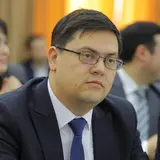
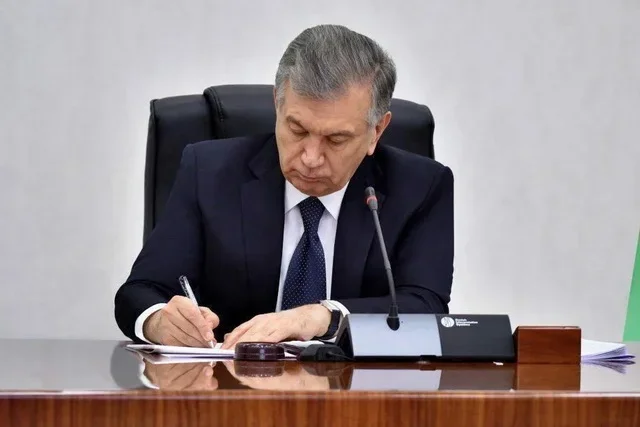
Tashkent, Uzbekistan (UzDaily.uz) — Uzbekistan’s President Shavkat Mirziyoyev has appointed Erkinjon Turdimov as first deputy prime minister and minister of education and science.
Following the appointment, Turdimov was relieved of his post as governor of Syrdarya Region. His candidacy had previously been approved by deputies of the Legislative Chamber of the Oliy Majlis.
A presidential decree has introduced the position of first deputy prime minister — minister of education and science within the executive structure of the Cabinet of Ministers. A Secretariat for Education, Science and Healthcare has also been established.
Within his remit, the new first deputy prime minister will provide overall leadership and coordinate the activities of heads of national executive bodies, including ministries, committees, agencies and inspectorates. He will also coordinate the work of the chairman of the Council of Ministers of the Republic of Karakalpakstan and regional and Tashkent city governors in carrying out tasks related to education, science and healthcare.
Saida Mirziyoyeva, head of the Presidential Administration of Uzbekistan, has been tasked with overseeing the organisation and implementation of instructions in these areas.
Education System Reform
Turdimov’s appointment comes amid a major restructuring of Uzbekistan’s education system. Under Presidential Decree No. UP-213 dated 3 October 2026, the Ministry of Preschool and School Education and the Ministry of Higher Education, Science and Innovation were merged into the Ministry of Education and Science.
Presidential press secretary Sherzod Asadov previously outlined the main areas of reform and the division of responsibilities between the new bodies. He said the changes would introduce new approaches to education management and clarify the division of powers between organising the educational process and ensuring its quality.
The Ministry of Education and Science will oversee preschool institutions, schools, vocational education organisations and universities. Its responsibilities will include ensuring their day-to-day operations, setting requirements for educational activities, and conducting accreditation and licensing.
The National Agency for Education Quality Assurance will be responsible for developing curricula, textbooks and teaching materials, introducing them into the educational process and assessing learning outcomes. It will also improve these materials based on identified shortcomings. The work will be guided by the “portrait of a school graduate” defined by the president.
The Presidential Administration and a special working group under it will help develop the new ministry’s structure, review operational processes and prepare proposals for improvements. They will also be responsible for developing the overall reform strategy.
Another area of reform concerns higher education. According to Asadov, the government plans to substantially reduce state intervention in universities and expand their autonomy.
The authorities also intend to create more opportunities for the development of the private higher education sector. Under the proposed approach, the quality of educational services should be shaped by free competition and market demand.