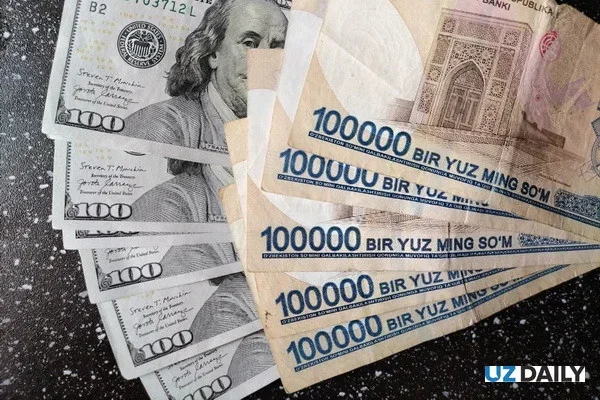
Tashkent, Uzbekistan (UzDaily.uz) — Uzbekistan’s Central Bank bought 8 tonnes of gold in August 2026. Its purchases since the start of the year have approached 50 tonnes.
This was reported in a review by the World Gold Council (WGC). According to the council, gold accounts for 90% of Uzbekistan’s total reserves, while the country’s gold holdings stand at around 439 tonnes.
Central banks worldwide increased their gold reserves by a net 39 tonnes in August. Their purchases since the start of the year totalled 170 tonnes. According to the WGC, China, Uzbekistan and Poland were the most active gold buyers in August.
The People’s Bank of China bought gold for the 22nd consecutive month, adding 20 tonnes to its reserves in August. Since the beginning of the year, China has increased its holdings by 80 tonnes, second only to Poland. China’s official gold reserves stand at around 2,387 tonnes, or 9% of its total reserves.
The National Bank of Poland bought 8 tonnes in August. Since the beginning of the year, it has acquired 98 tonnes and continues to lead in terms of purchases, although the WGC noted that China is catching up. Poland has accumulated 648 tonnes of gold in total, with a target of 700 tonnes.
The National Bank of Kazakhstan bought 7 tonnes of gold in August and nearly 36 tonnes since the beginning of the year. Gold accounts for 79% of Kazakhstan’s reserves, or around 377 tonnes.
The Czech National Bank has been buying gold for 42 consecutive months. In August, it acquired 2 tonnes, bringing its purchases since the beginning of the year to 14 tonnes. Its gold reserves have reached 86 tonnes, or 7% of total reserves.
The Central Bank of Türkiye bought 3 tonnes in August after three months of net sales. Since the beginning of the year, Türkiye has recorded net gold sales of 82 tonnes, most of them in the first quarter of 2026. Bolivia and Ghana also bought around 1 tonne each in August.
The Central Bank of Russia continued selling gold in August, disposing of another 6 tonnes. Since the beginning of the year, Russia has sold 56 tonnes, and its gold reserves stand at 2,271 tonnes. The Central Bank of Jordan sold 3 tonnes in August. At the same time, Jordan’s net purchases since the beginning of the year amounted to 2 tonnes, bringing its holdings to 75 tonnes, or around 37% of its reserves.
According to the WGC, the composition of buyers is as important as the overall amount of gold purchased in August. Demand was again driven by familiar market participants pursuing multi-year accumulation programmes.
In the council’s view, this indicates that central bank actions reflect long-term reserve management objectives, while month-to-month fluctuations are more likely linked to implementation patterns, market conditions and individual countries’ liquidity needs.
An analysis of purchases from 2016 to 2025 shows moderate seasonality: central banks generally bought the most gold in June, as well as in September and October. At the same time, the differences between individual years remain significant.
Rising economic or geopolitical uncertainty may also play a role, although additional analysis is needed to identify persistent factors, the WGC noted.
The council also pointed out that central banks have become more active in managing their gold holdings. On 2 September, De Nederlandsche Bank announced the transfer of 86 tonnes of gold from New York and Ottawa to London to improve the liquidity and tradability of its reserves. The Bank of France carried out a similar operation in 2025.