Tashkent, Uzbekistan (UzDaily.uz) — The Central Bank of Uzbekistan has approved the National Financial Technology Development Strategy for 2026–2030, setting out plans to build a comprehensive fintech ecosystem, expand digital financial services and create conditions for Uzbekistan to become a regional fintech hub.
The strategy is divided into three successive stages. In 2026–2027, the focus will be on developing the necessary infrastructure and launching basic market support mechanisms. The 2028–2029 period will include the introduction of Open Banking, further development of digital identification and integration of payment systems. By 2030, Uzbekistan aims to establish itself as a regional fintech hub.
A key element of the new system will be an Innovation Hub designed to bring together support for startups at different stages of development. Companies are expected to receive assistance from the initial idea stage through to entering international markets. The ecosystem will also include a regulatory sandbox, specialist training programmes, financing tools and mechanisms for cooperation between banks and fintech companies.
The regulatory sandbox will allow market participants to test new financial products and technologies in a controlled environment before their full-scale launch. Startups will subsequently be able to move through successive stages of incubation, testing, licensing and scaling.
The strategy presentation also outlines plans to establish a Fintech Office and Innovation Hub under the Central Bank with the participation of specialists from Singapore.
By 2030, the strategy aims to create conditions for attracting up to US$1 billion in investment to the fintech sector. It also envisages preparing 20–30 fintech startups each year to enter foreign markets.
Open Banking is a separate priority of the strategy. Open Banking and open APIs are expected to enable controlled sharing of financial data among banks, fintech companies and other market participants with customers’ consent.
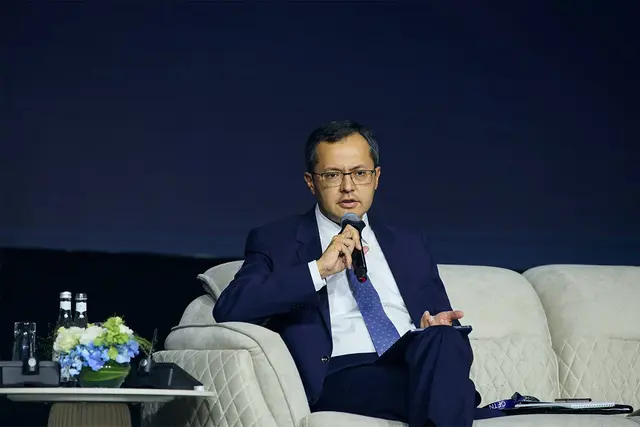
According to the regulator, this infrastructure will create conditions for new financial products and business models. Central Bank Governor Timur Ishmetov previously said that Open Banking would allow fintech companies to compete with traditional banks by offering individual banking products and encouraging innovation.
Digital customer identification will also be developed. Pilot projects using digital IDs are planned for 2026–2027, followed by the expansion of the relevant infrastructure across the financial sector in 2028–2029. The technology will be used for remote identification, reducing fraud risks and simplifying access to financial services.
In digital assets, the strategy provides for experiments involving the tokenization of real-world assets, including securities. Such projects are expected to be carried out in a controlled environment.
The strategy also envisages testing ways for different financial services to interact with one another.
Artificial intelligence is another area of technological development in the financial sector. The Central Bank plans to identify priority areas for AI applications and implement pilot projects.
AI is expected to be used in financial sector supervision and in detecting financial crimes.
As part of SupTech development, the strategy provides for automating information collection through APIs, monitoring operational incidents and strengthening cybersecurity oversight of financial organizations.
The strategy also includes the development of cross-border financial infrastructure. Among the initiatives under consideration is a wholesale central bank digital currency (wCBDC). Its development is being considered alongside the creation of interconnected regional payment systems.
The aim of these measures is to simplify international transactions and reduce the cost of remittances.
At the same time, the strategy envisages greater transparency of fees and exchange rates for cross-border transfers, as well as the introduction of digital solutions for trade finance.
Cross-border pilot projects and initiatives to connect regional payment systems are planned for 2028–2029.
To attract foreign market participants, the strategy envisages using the Innovation Hub, Enterprise Uzbekistan and the Tashkent International Financial Centre. It also plans to hold the Silk Road Finance & Technology Forum and develop partnerships with foreign fintech hubs.
By 2030, the strategy expects an increase in the number of international fintech companies operating in Uzbekistan and greater investment activity in the sector. In the longer term, these measures are intended to support deeper financial integration in Central Asia.
The strategy also provides for stronger protection of users of digital financial services.
Plans include establishing a unified system to combat fraud in the financial sector, increasing transparency of lending products, improving credit information infrastructure and expanding financial literacy programmes.
The regulatory approach will be based on risk levels, with requirements for market participants taking into account the scale and nature of their activities. At the same time, oversight of consumer rights and the quality of disclosure of financial product terms is expected to be strengthened.
The Central Bank said the strategy is intended to address several existing market challenges, including limited coverage of international money transfers, difficulties faced by small and medium-sized businesses in accessing finance, differences in the availability of financial services among population groups, new risks for users of digital services and a shortage of long-term financing.
According to the presentation, 94% of Uzbekistan’s population has access to the internet, while digital payments account for around 72% of payment use. The number of users of remote banking services has increased by almost 70%.
Among the main expected effects of the strategy, the Central Bank identifies expansion of the fintech market, increased foreign investment, improved access to financing for small and medium-sized businesses, greater security and accessibility of digital financial services, development of cross-border payments and further deepening of regional financial integration.