Tashkent, Uzbekistan (UzDaily.uz) — Uzbekistan's Ministry of Economy and Finance has proposed a comprehensive reform of the country's pension system aimed at strengthening its financial sustainability and reducing the Pension Fund's reliance on transfers from the state budget. The proposals are included in the Fiscal Strategy for 2027–2029.
The ministry said rising pension expenditures and the Pension Fund's limited revenue base are increasing pressure on the state budget. Pension Fund expenditures amounted to 64 trillion soums, or 4.2% of GDP, in 2024, rising to 76.7 trillion soums in 2025 while remaining at the same share of the economy. Over the same period, budget transfers increased from 16.3 trillion soums to 20.2 trillion soums.
For 2026, the fund's revenue has been approved at 64.7 trillion soums, while expenditures are projected at 86.1 trillion soums, equivalent to 4.1% of GDP. Additional transfers of 23 trillion soums from the republican budget have been allocated to cover the deficit.
The ministry warned that without reforms the pension system will continue to depend on budget financing throughout 2027–2029. It cited a high level of informal employment and existing social tax incentives for certain categories of legal entities as the main reasons.
One of the key proposals is to expand the number of social tax contributors. The ministry plans to gradually introduce mandatory social tax payments for registered self-employed individuals, who are currently exempt. Uzbekistan has 2.8 million registered self-employed citizens, of whom about 800,000 make voluntary contributions. The ministry also proposes allowing citizens with official incomes to voluntarily pay social tax on behalf of unemployed family members to help them build pension entitlements.
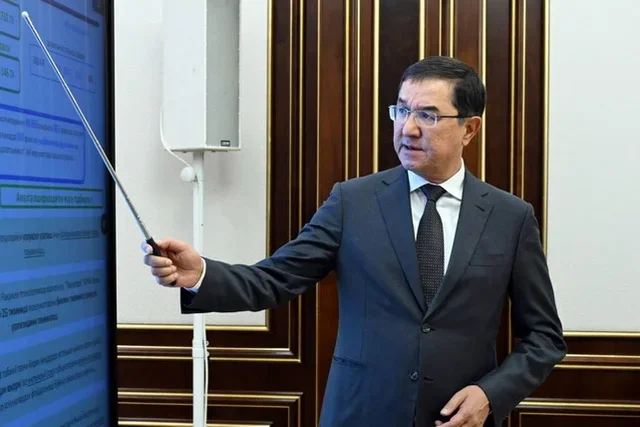
The ministry also proposes gradually limiting new social tax incentives and phasing out existing preferences. According to Deputy Minister of Economy and Finance Otabek Fozilkarimov, more than 65,000 enterprises benefited from such incentives in 2025, with the total value reaching 3.2 trillion soums.
Another group of proposals concerns changes to the pension calculation methodology. The ministry said pension payments should be more closely linked to the amount of social tax paid. It proposes extending the earnings period used to calculate pensions and gradually reviewing the current upper limit on earnings taken into account for pension calculations.
The strategy also proposes simplifying the verification of employment records for periods where complete electronic data are unavailable, with the aim of reducing the administrative burden on citizens.
Another initiative calls for gradually increasing the minimum employment period required to qualify for a pension. According to the ministry, the current requirements do not provide sufficient incentives for formal employment. The strategy does not specify the proposed new thresholds.
The ministry also places significant emphasis on developing the funded pension system. To make it more attractive, it proposes introducing a state co-financing mechanism for pension savings of low-income citizens. Under the proposed model, if a citizen earning up to 7.6 million soums per month contributes 5% of their income to a funded pension account, the government would contribute an additional 2.5%.
The ministry is also considering introducing a "carve out" mechanism to encourage the declaration of higher official incomes, although details of its implementation have not yet been disclosed.
In addition, the ministry proposes gradually allowing citizens to participate in the management of their own pension savings, which it believes would improve the transparency of the system and strengthen public confidence.
The Ministry of Economy and Finance expects the proposed measures to expand pension system coverage, strengthen incentives for formal employment and income declaration, improve the Pension Fund's financial sustainability and gradually reduce its dependence on the state budget.