Tashkent, Uzbekistan (UzDaily.uz) — Uzbekistan plans to implement 11 projects to generate electricity by burning municipal solid waste in 2026–2027, with a total investment of US$1.558 billion. Companies from China, Singapore and South Korea are participating in the projects. The plans were presented to President Shavkat Mirziyoyev on 10 September.
Six projects worth a combined US$933 million are being implemented with Chinese companies in Kashkadarya, Samarkand, Tashkent, Andijan, Ferghana and Namangan regions. As of 1 September, US$286.8 million had already been invested, while purchases of locally produced goods and services amounted to US$76.6 million. Around 2,000 local workers are employed in construction.
Two plants, in Kashkadarya and Samarkand regions, are scheduled to start operations in 2026, while the remaining four are planned for 2027. Once operating at full capacity, the six plants will be able to process 3.6 million tonnes of municipal solid waste annually and generate 1.6 billion kWh of electricity.
Another five investment projects, worth a combined US$625 million, have been proposed by companies from Singapore, South Korea and China. They are planned for Karakalpakstan and Jizzakh, Surkhandarya, Bukhara and Khorezm regions.
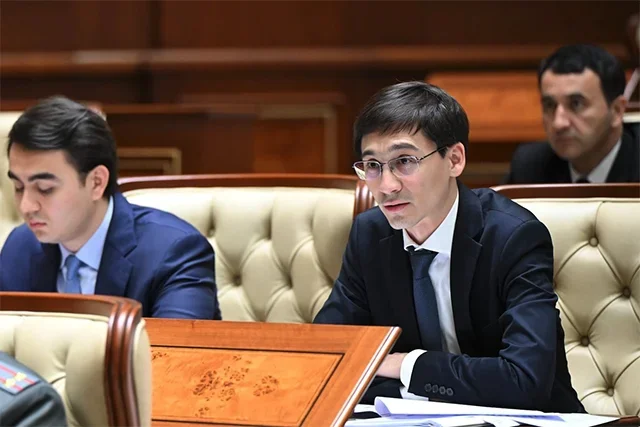
According to Sharifbek Khasanov, director of the Agency for Waste Management and Circular Economy Development, the five new plants are expected to be commissioned by the end of 2027. They will additionally process 1.9 million tonnes of waste annually and generate 635 million kWh of electricity.
The projects are also expected to create 500 jobs, save 158 million cubic metres of natural gas annually and reduce greenhouse gas emissions by 316,000 tonnes. Khasanov discussed the figures with Uzbekistan 24 television.
According to him, the projects are expected to reduce the amount of waste sent to landfills and ease the pressure on existing landfill sites. In the future, gardens and parks are planned to be created on former landfill sites.
Khasanov said the plants would operate using environmentally friendly technologies. Incineration will produce ash, which investors plan to process into value-added products. Some of these products are expected to be exported.
In October 2024, President Shavkat Mirziyoyev described projects to process household waste and generate electricity and products from it as “not simply plants, but one of the issues that will determine our future.” In March 2025, he signed a resolution on implementing projects to generate electricity by burning municipal solid waste.
One such project is being implemented in Samarkand jointly with Chinese company Shanghai SUS Environment. The SUS Environment Samarkand plant is being built on the territory of the central landfill in the Navruz mahalla of the Khushrav massif. Fifteen hectares of the landfill’s 100-hectare territory have been allocated for the project. The foundation stone was laid on 18 July 2025.
Waste-to-energy plants use thermal processing technology for industrial and municipal solid waste. The heat generated by combustion is used to produce thermal and electrical energy.