Uzbekistan, OECD Advance Public Governance Reform

Tashkent, Uzbekistan (UzDaily.uz) — Improving the efficiency of the public administration system in Uzbekistan remains a key priority in the context of introducing international experience and strengthening strategic governance approaches.
Special importance is attached to cooperation with the Organisation for Economic Co-operation and Development (OECD), which supports ongoing reforms and institutional development.
Between 2022 and 2024, the OECD conducted a comprehensive assessment of Uzbekistan’s public governance system across six key dimensions.
Based on the findings, a Public Governance Review was prepared, after which both sides agreed to continue cooperation to support reform implementation.
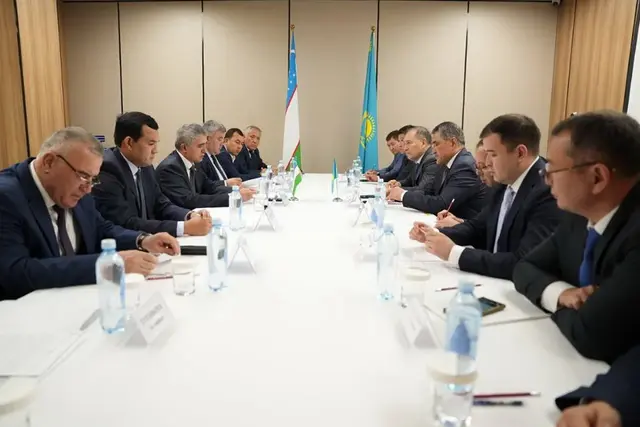
A bilateral meeting was held between the leadership of the Agency for Strategic Development and Reforms and OECD representatives. Participants included OECD official Calleweart Simon, representative of the German Agency for International Cooperation (GIZ) Viktor Kessler, and international experts.
First Deputy Director of the Agency A. Abdukodirov briefed participants on ongoing reforms in public administration and economic modernization implemented under the leadership of President Shavkat Mirziyoyev.
It was noted that recommendations contained in the OECD review are being consistently implemented and serve as a methodological framework for further improvements in governance.
It was also reported that broad consultations were held during the refinement of the “Uzbekistan–2030” strategy, taking into account international experience, and that approaches are being developed for a decentralization strategy extending to 2030.
OECD representatives positively assessed the reforms, highlighting the importance of strategic planning. During the discussions, the sides exchanged views on further improving governance systems, deepening decentralization, and supporting regional development.
At the conclusion of the meeting, the parties agreed to continue cooperation, including expert and methodological support at all stages of reform implementation.
The dialogue laid the foundation for more systematic engagement aimed at improving governance efficiency and ensuring sustainable socio-economic development.