Uzbekistan's Economy Grows 8.5% in First Half of Year

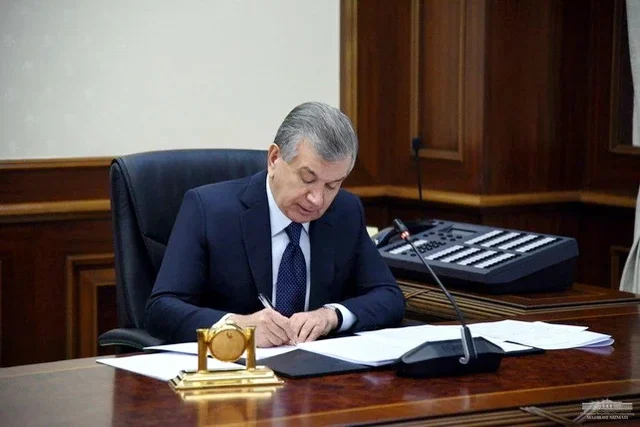
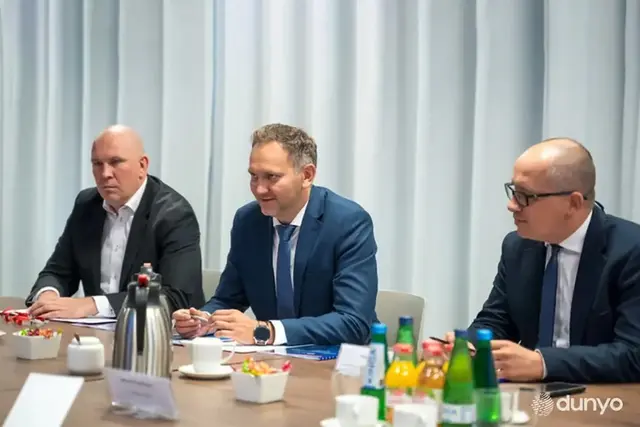
Tashkent, Uzbekistan (UzDaily.uz) — The President of Uzbekistan Shavkat Mirziyoyev chaired a videoconference meeting on the results of the country's socio-economic development in the first half of the year and priority tasks for the remainder of the year.
Shavkat Mirziyoyev said that officials presenting at the meeting should not limit themselves to reports on work completed. He said each official must clearly explain what new internal reserves have been identified, what mechanisms have been created to use them effectively, and what specific results are planned to be achieved by the end of the year.
The president also stressed that, given the changing global situation, every official must work with additional development scenarios and be prepared for various possible outcomes.
Since the start of the year, Uzbekistan's economy has grown by 8.5%. Industrial production rose 8%, services 16.9%, construction 13.8%, and agriculture 4.7%.
Investment volume reached US$28 billion, and exports reached US$14.4 billion. International rating agencies Fitch and Moody's each raised Uzbekistan's sovereign credit rating by one notch.
At the same time, the president stressed that further improving living standards for the population, which has reached 40 million people, requires the country to secure sustainable economic growth of 9-10%.
The meeting included a critical review of the fulfillment of six-month plans by regional and sectoral leaders.
It was noted that in a number of regions, existing potential was not fully used to boost gross regional product, develop the construction sector, and attract investment.
The president said that amid continued instability in the global economy, additional financial resources are being allocated to regions, districts and cities for projects in entrepreneurship and social infrastructure development.
At the same time, the president said that if the work of every minister and hokim does not produce tangible improvements in people's quality of life and does not ease conditions for doing business, then the figures achieved remain merely "numbers on paper."
The president also said firmly that under current conditions, no minister, hokim or sectoral head who fails to meet monthly, quarterly or annual plans has the right to work without consequence.
Particular attention was given at the meeting to the introduction of a new model for organizing the work of the "mahalla seven" system. It was noted that last week all main approaches were explained in detail and specific tasks were assigned to those responsible.
As part of this work, a program called "Relevant 40 Days" was announced, under which a fundamentally new system of work organization has begun to be introduced in the two thousand most problematic mahallas.
In these mahallas, tripartite agreements between hokims, mahalla chairpersons and territorial employment service units have been revised.
Hokims have been given personal responsibility for the timely resolution of issues related to electricity, gas and water supply, as well as road infrastructure, in the two thousand most problematic mahallas.
Heads of the employment system will work directly in the field, providing targeted assistance to residents in need, organizing vocational training, and helping with employment and income growth.
Mahalla system leaders were also given specific tasks for improving all 8,992 mahallas in the country, including street and residential improvement, planting trees and saplings, and maintaining irrigation canals in proper condition.
The president said he was completely dissatisfied with how banks operate at the mahalla level. Sharp criticism was directed at heads of territorial departments of the Central Bank and directors of state bank branches.
It was noted that the current year will be a testing period and a year of practical evaluation for heads of regional and district banks, as well as mahalla system organizations. Over the next three months, only those leaders who demonstrate real results will keep their positions; those who fail to deliver positive change will be removed.
The Prosecutor General's Office and the Accounts Chamber were instructed to monitor how work is organized in each mahalla and what real changes are occurring on the ground.
The meeting also gave a critical assessment of mahalla improvement work, sanitary order, living culture, and cooperation with private households. The importance of extending the activity of management companies to individual residential construction was emphasized.
The president said the country is creating all necessary conditions for citizens to start their own businesses and enter foreign markets.
Currently, 51 ministries and agencies are authorized to impose financial fines across 322 areas. Between 2024 and 2026, the total amount of fines imposed reached almost 3 trillion soums.
The president said that heads of agencies with sanctioning powers must change their attitude toward entrepreneurs and their approach to work. He said that before punishing businesses, government agencies should learn to give entrepreneurs the opportunity to correct violations and help them find the right solutions.
Amid intensifying competition in foreign markets, the meeting also raised the issue of reducing payments and fees charged to producers and exporters.
As an example, it was noted that exporting a single truckload of cherries incurs additional costs — customs fees, fumigation, certification and customs broker services — reaching 5 million soums.
Following the discussion, all ministers and sector heads were instructed to submit proposals to the Presidential Administration within a week for drastically cutting bureaucratic procedures, fines, payments and fees in their respective sectors, as well as for improving the business environment.
The meeting critically reviewed the results of work in industry and exports for the first half of the year.
It was noted that following the first quarter, hokims of 13 districts that failed to meet industrial production targets, along with hokims of 15 districts that saw declines in export volumes, faced disciplinary action. According to the president, most officials drew the appropriate conclusions and ensured fulfillment of the six-month forecast indicators.
At the same time, it was noted that in a number of districts and cities, industrial growth rates remain unsatisfactory.
In Yangiabad district, for example, the projected industrial growth of 5.7% resulted in an actual figure of only 1.8%. Declining growth rates were also noted in the city of Gazgan, as well as in Muzrabad, Kiziriq and Oltiariq districts.
The export situation also drew criticism. It was noted that a number of districts and cities failed to achieve positive change, with concerns raised regarding the leaders of Kasbi, Denov, Tashkent, Pakhtaabad, Jomboy, Taylak, Bandikhon, Mirzachul and Yazyavan districts, as well as the cities of Jizzakh, Navoi, and Bektemir district in Tashkent.
Following the discussion, the prime minister was instructed to review, that same day, whether 17 hokims are fit for their positions.
The president also warned that if the situation does not change by the end of nine months, tough measures will also be taken against deputy regional hokims.
The meeting separately reviewed the expenses of strategically important enterprises.
It was noted that sectoral agencies had previously reported reductions in overall costs in percentage terms, presenting this as a reduction in cost of production. However, an analysis of the cost per unit of output provided a more objective picture.
At the Navoi Mining and Metallurgical Combinat, the cost of producing one ounce of gold increased by 8.2%, and the company's total expenses rose by 6.2 trillion soums, or 22%, compared to the previous year.
At the Uzbek Metallurgical Combinat, the cost of producing steel balls rose 5.4%. At Uzkimyosanoat, the cost of producing urea rose 11.1%, and ammonium nitrate rose 8.3%.
It was also noted that Franklin Templeton conducted an analysis of 13 large enterprises being considered for initial public offerings (IPOs).
As an example, the operations of Uzbekistan Airways were reviewed. It was noted that due to a suboptimal route network, long intervals between flights, a significant number of delays, and a lack of competition in in-flight catering and maintenance services, the company loses out on around US$120 million in revenue annually.
The meeting noted that Uzbekistan will need US$8 billion over the next ten years to develop its energy infrastructure.
At the same time, it was noted that efforts to increase revenue by reducing losses in power networks remain insufficient. In the first half of the year, electricity losses amounted to 17.2%, or 4.8 billion kilowatt-hours.
Losses in gas distribution networks reached 7.6%, equivalent to 797 million cubic meters of gas. It was also noted that labor productivity at territorial gas distribution network enterprises is 1.5 to 2 times lower than in neighboring countries.
According to Franklin Templeton's analysis, the market value of Hududiy Elektr Tarmoqlari could be doubled.
The company also estimated potential to increase the market value of Uzbekistan Airways by 40%, and of Uzbektelecom by 50%.
The meeting noted that existing opportunities to increase tax revenue are not being fully utilized.
Since the start of the year, tax revenue has grown by 27%, exceeding 130 trillion soums.
At the same time, the annual plan for additional tax revenue was only 40% fulfilled, amounting to 12 trillion soums. Criticism was directed at first deputy hokims of regions, who were said to be insufficiently engaged with enterprises on tax revenue matters.
As an example, Bukhara region was cited, where 162 enterprises with annual turnover exceeding 100 million soums have operated at a loss for three consecutive years and, as a result, have not paid a single soum in profit tax.
It was also noted that 1,500 enterprises, without paying value-added tax, limited themselves to using the VAT offset mechanism. As a result, the first deputy hokim of Bukhara region was removed from office.
It was also noted that as of 1 July, authority to administer taxes for 498 large taxpayers has been transferred to the regional level. The president stressed that there is now no excuse for failing to fulfill assigned tasks.
First deputy hokims of regions and heads of territorial tax authorities were instructed to work closely with these enterprises and ensure timely and full tax payments to the budget.
The meeting noted that 16 textile enterprises are currently effectively non-operational due to prolonged litigation related to loan repayment, even though most of them have modern production facilities.
As a result, the economy loses out on approximately 5 trillion soums worth of output annually, with unrealized exports reaching US$400 million.
It was also noted that some banks already have successful experience restoring the operations of such enterprises.
As an example, the Toshkent Cotton enterprise was cited, where an external management team was introduced. Thanks to measures taken, the enterprise's operations were restored, and this year it has already exported US$10 million worth of products.
Following the discussion, officials were instructed to assign curators to the remaining enterprises and ensure full restoration of their production activities.
The meeting noted that since the start of the year, 57 sectoral and 76 territorial enterprises have reduced production volumes by a combined 11 trillion soums.
The deputy prime minister was instructed to conduct, together with regional hokims and sector heads, a detailed analysis of each enterprise's operations within ten days. It was emphasized that all identified problems must be resolved directly at the local level.
The Industry Council was tasked with preparing proposals to compensate for the 11 trillion soum shortfall in production across 133 enterprises.
It was also noted that 3,000 state assets worth a combined 22 trillion soums are currently up for auction. The president criticized hokims for lacking a systematic approach to the sale of state property.
The president also announced that a new privatization program will soon begin. Under it, 1,300 real estate assets worth a combined 100 trillion soums, 8,000 hectares of land, and state stakes in 66 enterprises will be put up for auction.
For entrepreneurs acquiring state assets, payment terms will be eased: the down payment will be reduced from 30% to 15%, with the remaining amount payable in interest-free installments.
The meeting noted that banks currently hold 2,411 properties worth a combined 9.3 trillion soums on their balance sheets that remain unsold.
The president ordered an analysis of the justification for each such property remaining on bank balance sheets. It was emphasized that where demand for a property exists but its sale is being artificially delayed, strict adherence to the rule of law must be ensured.
The president also criticized the situation in a number of regions where import growth significantly outpaces export growth.
It was noted that last year, imports exceeded exports by US$1.9 billion in Tashkent region and US$1.4 billion in Samarkand region.
In Andijan region, the gap reached US$866 million; in Jizzakh region, US$792 million; and in Bukhara region, US$662 million.
The president said each hokim must analyze in detail the reasons behind this situation and take specific measures to develop import-substituting industries as well as increase output of export-oriented products.
The meeting noted that over the past three years, 509 new production facilities oriented toward export output have been commissioned in the country, with total project value of US$11 billion.
At the same time, it was noted that 208 enterprises have still not begun exporting. According to the president, if they directed even 30-40% of their output to foreign markets, the country could earn an additional US$1.5-2 billion in foreign currency revenue.
The operations of special economic zones also drew criticism. Since the start of the year, 29 of the country's 47 special economic zones recorded no exports at all, while the combined exports of the remaining 18 zones did not exceed US$500 million.
Officials were instructed to form special task forces and deploy them to the 208 enterprises and 29 special economic zones. These groups are to quickly resolve issues related to obtaining certificates, securing working capital, finding markets, and organizing logistics.
It was also noted that equipment worth a combined US$300 million across 219 units has gone unused for two years, and construction and installation work remains unfinished on another 154 units of equipment worth US$619 million.
The president ordered an on-site review of the situation at each such facility within one month, and measures to eliminate all identified shortcomings and obstacles preventing their commissioning.
The meeting also addressed support for national brands, noting that the number of domestic brands continues to grow under the system introduced.
Over the past two years, 15.5 billion soums has been allocated to support national brands. At the same time, of 309 domestic enterprises that have registered their own brands, about a third have still not entered foreign markets.
The president said entrepreneurs who have created their own brands have already won consumer trust in the domestic market through product quality, competitive pricing and guarantees, and that with the necessary support they could also succeed in establishing themselves in foreign markets.
The discussion also noted that the import of certain goods at dumping prices, as well as the import of counterfeit products, negatively affects the competitiveness of domestic producers.
Following the meeting, officials were instructed to develop a comprehensive national brand support program within two weeks.
The meeting noted that 70% of foreign trade cargo, or 46 million tonnes, is transported by rail, while noting a large number of complaints and grievances from entrepreneurs in this area.
Since the start of the year, cement producers have not been provided with 2,800 railcars needed for cargo transport. It was also noted that the plan to produce an additional 1,300 freight cars in the second half of the year is not sufficient to meet demand.
Officials were instructed to prepare, within 10 days, calculations for attracting, together with the private sector, 10,000 idle railcars from partner countries.
It was also noted that the "Angren-Pap," "Toshguzar-Kumkurgan" and "Tashkent-Samarkand" railway lines are operating under increased load.
By the end of the year, the task is to reach an agreement to attract US$200 million from the World Bank for railway infrastructure development.
The Prosecutor General's Office was instructed to examine the use of funds allocated for expanding the freight railcar fleet, as well as the current system for distributing railcars among entrepreneurs, and to submit proposals for ensuring its transparency.
It was noted that in recent years, 52 high-level visits resulted in agreements on 1,617 investment projects worth a combined US$213 billion. However, it was noted that oversight of the implementation of these projects shows shortcomings and insufficient effectiveness.
As a result, it was decided that maintaining "roadmaps" for implementing agreements reached will be assigned to the Accounts Chamber and the Ministry of Foreign Affairs.
The prime minister was instructed to hold weekly discussions of the "roadmaps," broken down by country and specific project, together with sector heads, hokims and ambassadors.
The president also noted numerous concerns regarding the work of Uzbekistan's diplomatic missions abroad. In particular, it was noted that the ambassador to Belarus was removed from office due to insufficient attention to investment and foreign trade matters. It was also noted that the work of ambassadors in France, Austria, Spain, Italy, Oman, Indonesia, Malaysia and Singapore has not yet shown expected results.
Head of the Presidential Administration Saida Mirziyoyeva was instructed to form a commission to analyze the work of diplomatic missions in the areas of economic diplomacy, investment attraction and export development, and to submit proposals for replacing leaders who fail to fulfill assigned tasks with young, modern specialists.
The meeting addressed one of the key issues of economic stability — the inflation rate. The president recalled the task of curbing price growth by increasing the supply of goods and services on the market.
Regional hokims had set a target of keeping inflation growth under 3% in January-June. However, apart from Samarkand region, no region managed to achieve this target.
It was noted that meat prices rose 6-8% in April-June. In response, 300 billion soums was allocated to compensate for the cost of air-freighting imported meat. Entrepreneurs from the capital and Tashkent region have already air-freighted in 1,300 tonnes of meat, while other regions have not shown sufficient initiative in this area.
The president said hokims and responsible officials must review the balance of meat consumption and supply by region, and develop a clear plan for when, in what volume, and from which countries meat products should be imported.
The meeting reviewed the results of the agricultural census, which revealed the actual state of the livestock sector. According to the data obtained, compared to previously published figures, the number of cattle was found to be lower by 2.1 million head, and the number of sheep and goats lower by 1.5 million head.
In Kashkadarya region alone, the number of cattle was found to be lower by 171,000 head, and sheep and goats by 288,000 head. This means that due to the data revision, the market will receive around 50,000 tonnes less meat and 120 million liters less milk from this region alone.
In May, 1 trillion soums was allocated from the Agriculture Fund for livestock sector projects. An additional US$50 million will be allocated from the Fund for Reconstruction and Development.
These funds will be used to provide preferential loans at 10% annual interest: up to 5 billion soums for creating livestock complexes, and up to 20 billion soums for developing pedigree livestock breeding. Loans will be issued for a term of 10 years with a 4-year grace period.
By the end of the year, the task is to import 100,000 head of cattle and 150,000 head of sheep and goats.
In addition, the benefit compensating air-freight costs for meat will be extended through the end of the year.
The meeting noted that due to poor organization of the intervention procurement system, potato prices fell sharply at the local level during the peak harvest period. Due to a lack of economic incentive for farmers, 325,000 tonnes of potatoes remain unsold to date.
The president stressed the need to purchase potatoes into reserve at a price that ensures profit for farmers, and to sell them on the market during periods of shortage in order to maintain price stability.
The state of cold storage facility development for fruit and vegetable products also drew criticism. Despite six months having passed, not a single cold storage facility has been commissioned in the Republic of Karakalpakstan, or in Andijan, Jizzakh, Surkhandarya and Tashkent regions.
By the end of the year, the task is to launch 340 cold storage facilities with a combined capacity of 87,000 tonnes.
It was also noted that hokims were required to increase food fund volumes 2.5-fold this year, to 500 billion soums. However, apart from a few regions, no hokim has transferred funds into these funds.
The deputy prime minister was instructed to approve, within three days, a schedule setting monthly transfer volumes for hokims into the food funds.
The president said no one can predict in advance how long the current uncertainties in the global economy will persist. A slowdown in economic activity in major partner countries could affect domestic enterprises, particularly exporters.
In this regard, it was emphasized that all officials must be prepared to mobilize available reserves in view of possible risks.
"Think tanks" have already been assigned to every sector and region. An Economic Council and working groups covering nine areas will now be established.
The working groups, together with the think tanks, are to develop scientifically grounded proposals by 15 August, broken down by sector and region. These proposals will be aimed at the comprehensive development of the interconnected chain: "resources — infrastructure — project — production — budget revenue — exports."
The president stressed that macroeconomic parameters, and budget, investment and export programs for 2027 must be prepared based on a fundamentally new approach — a "mobilization scenario."
During the meeting, ministers, sector heads and hokims presented reports and outlined plans for carrying out the tasks assigned at the meeting at the local level.