Tashkent, Uzbekistan (UzDaily.uz) — The Institute for Strategic and Regional Studies under the President of Uzbekistan hosted a scientific and practical seminar in Tashkent on 26 August 2026 dedicated to the country's development as a responsible middle power.
Participants discussed the transformation of Uzbekistan's foreign policy, its regional role in Central Asia, and the expansion of its international agency.
The discussion centered on an analytical report titled "Uzbekistan as a Responsible Middle Power," prepared by a team of ISRS authors. The report examines the evolution of the country's foreign policy course during its years of independence, as well as changes that have occurred over the past decade.
Opening the seminar, ISRS Director Eldor Aripov noted that over 35 years of independence, Uzbekistan has established itself as an independent actor in international relations and developed its own foreign policy school. He said that over the past decade, while maintaining principles of sovereignty, non-interference, peaceful settlement of disputes, pragmatism, and mutual benefit, the country's foreign policy has become more open and proactive.
Aripov also noted that the foreign academic and expert community increasingly views Uzbekistan through the lens of a modern middle power. He said the task of the ISRS was to analyze the extent to which this assessment corresponds to changes in the country's foreign policy.
Presenting the report, Akramjon Nematov, First Deputy Director of the ISRS, emphasized that middle-power status is determined not only by a state's size, but also by its ability to conduct an independent foreign policy, assume regional responsibility, and achieve practical international results.
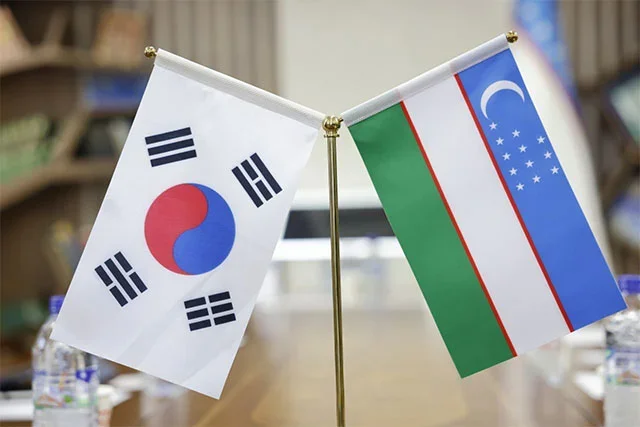
The report notes that Uzbekistan is developing relations with Russia, China, the United States, the European Union, Türkiye, the Gulf states, South Asia, Japan, the Republic of Korea, and other partners. The authors assess that this does not represent a policy of equal distance, but rather an expansion of strategic choice and a desire to avoid involvement in confrontation between major power centers.
Special attention was paid to proactive diplomacy. According to the ISRS, Uzbekistan increasingly introduces its own initiatives on Central Asia, Afghanistan, transport connectivity, climate, the Aral Sea region, interfaith dialogue, youth, and sustainable development. By August 2026, the UN General Assembly had adopted 15 special resolutions initiated by Uzbekistan.
Participants also linked the expansion of the country's foreign policy capabilities to its domestic resources, including economic dynamics, demographic potential, geographic location, human capital, resource base, and transport connectivity development.
A significant portion of the discussion focused on Central Asia. Sherzod Fayziev, Deputy Director of the International Institute for Central Asia, noted that the region serves as an important indicator of a state's foreign policy maturity. In Uzbekistan's case, he said this is demonstrated through strengthening good-neighborly relations, settling border issues, restoring transport links, growing trade, and seeking solutions to water and energy issues.
Participants emphasized that Uzbekistan's growing role should not be viewed as a redistribution of influence within Central Asia. On the contrary, the development of cooperation among Kazakhstan, Kyrgyzstan, Tajikistan, Turkmenistan, and Uzbekistan is viewed as a factor in increasing the international weight of the entire region.
Ravshan Alimov, Director of the Center for Afghanistan and South Asia Studies at the Institute for Advanced International Studies, noted the importance of regional coordination. He assessed that aligning positions allows Central Asia to interact more actively with external partners, develop ties with South Asia, and utilize the region's geographic position as a development resource.
Participants cited two UN General Assembly resolutions adopted on 20 May 2026 as examples. The resolution titled "Strengthening regional cooperation and economic integration to achieve sustainable development in the Central Asian region," introduced by Uzbekistan on behalf of the five Central Asian states, received 66 co-sponsors. On the same day, a resolution titled "Peaceful settlement of border disputes," introduced by Kyrgyzstan jointly with Tajikistan and Uzbekistan, was adopted with 40 co-sponsors.
Seminar participants also discussed the global dimension of Uzbekistan's responsibility. They assessed that the country's international role is manifested not only in promoting its own initiatives, but also in providing platforms for international dialogue. Tashkent, Samarkand, Bukhara, Khiva, Ferghana, and Termez host multilateral events, while Uzbekistan's initiatives on the Aral Sea region, climate, transport connectivity, religious tolerance, and sustainable development receive support in international forums.
Summarizing the results, Eldor Aripov emphasized that the concept of a responsible middle power should be understood not as a formal status, but as a higher level of responsibility. He said expanding state capabilities requires improving the quality of diplomacy, economic and technological resilience, human capital development, and the ability to fulfill international obligations.
Participants noted that the presented report is not a final definition of Uzbekistan's international status, but is intended to serve as a foundation for further professional discussion.