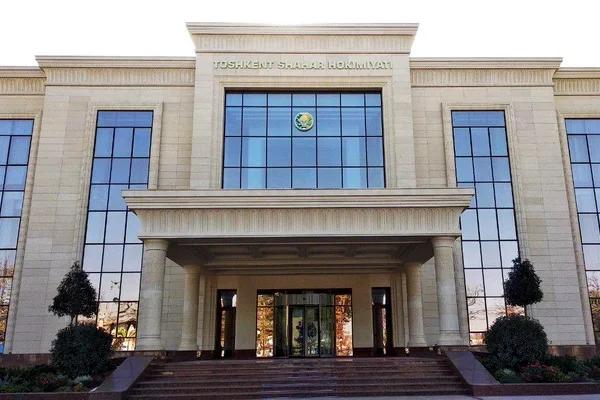
Tashkent, Uzbekistan (UzDaily.uz) — An information meeting in Tashkent focused on social support measures for the population and ways to improve energy efficiency.
Participants discussed existing mechanisms for compensating households for electricity and natural gas costs, proposals to expand assistance to families in need, and state subsidies for the introduction of energy-efficient technologies.
The event was organised in cooperation with the Green Economy Projects Centre Project Office under Uzbekistan’s Ministry of Economy and Finance, the National Agency for Social Protection under the President of Uzbekistan, the National Agency for Energy Efficiency under the Cabinet of Ministers, and the Yuksalish movement.
Representatives of government agencies, non-governmental non-profit organisations, businesses and the media attended the meeting.
Social support: existing mechanisms and new proposals
Madina Azizova, chief specialist at the National Agency for Social Protection, outlined assistance measures for families in need during tariff reforms, the procedures for receiving electricity and natural gas compensation, and proposals to expand the coverage of social assistance.
A total of 156.6 billion soums was allocated for compensation payments in 2025 and the first nine months of 2026. More than 470,000 families benefited from the support, according to the information presented at the meeting.
Under the current system, eligible families can receive monthly compensation of up to 37,500 soums for electricity and between 135,000 and 225,000 soums for natural gas, depending on the season.
Particular attention was given to proposals to strengthen social protection during the 2026–2027 autumn and winter period.
The proposals included one-time financial assistance of 1 million soums for 1.017 million families, raising the income threshold for compensation eligibility from 1.5 to twice the minimum consumer expenditure level, and extending social assistance to an additional 166,000 families.
Participants also discussed proposals to extend electricity and natural gas compensation until 1 April 2028, compensate households for the cost of purchasing coal and liquefied gas, and increase the basic electricity consumption allowance from 200 to 350 kWh during the heating season in areas where gas supplies are unavailable or limited.
Energy efficiency: subsidies and incentives
Obid Akhmedov, head of a department at the National Agency for Energy Efficiency, presented existing subsidies and financial incentives designed to improve energy efficiency among households and businesses.
Current support measures provide for full reimbursement of the cost of energy audits for residential properties, compensation for 20% of the cost of solar panels and up to 40% of the cost of heat pumps.
Businesses are also eligible for financial incentives to introduce renewable energy sources and conduct energy audits.
Open dialogue and cooperation
Shokhijakhon Khurramzoda, head of the project team for iCRAFT, which is implemented by the World Bank, also took part in the discussion on social assistance and energy efficiency.
He emphasised the importance of cooperation between government agencies, civil society and other stakeholders.
The meeting included an open discussion in which participants asked government representatives questions, raised practical difficulties encountered when applying for assistance and explored opportunities for further cooperation.
Following the meeting, participants highlighted the need to improve public awareness of government support programmes, expand access to energy-efficient technologies and strengthen cooperation between the government, civil society and businesses.