Uzbek-Kyrgyz Expert Council Holds Second Meeting in Bishkek

Uzbek-Kyrgyz Expert Council Holds Second Meeting in Bishkek
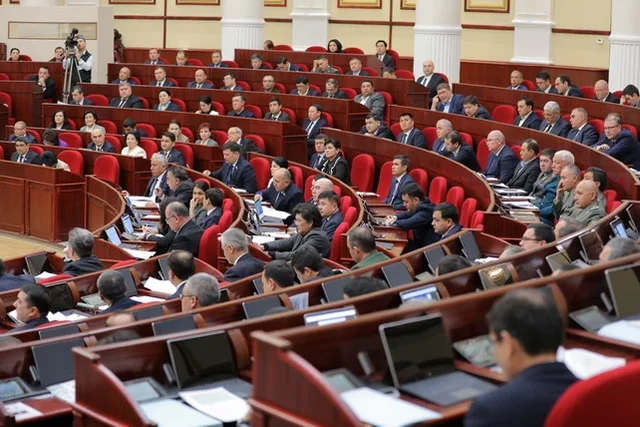
Tashkent, Uzbekistan (UzDaily.uz) — The second meeting of the Uzbek-Kyrgyz Expert Council, titled "Uzbekistan and Kyrgyzstan: Strategic Partnership and Prospects for Its Further Development," was held in Bishkek on 21 July.
The Uzbek delegation included representatives of leading analytical centres, relevant ministries and government agencies, sectoral organizations and the business community.
Opening the meeting, Eldor Aripov, Director of the Institute for Strategic and Interregional Studies under the President of Uzbekistan, and Shumkarbek Adilbek uulu, Director of the National Institute for Strategic Initiatives under the President of the Kyrgyz Republic, highlighted the importance of the platform.
They said the Expert Council not only monitors and assesses the current state of bilateral relations but also develops new initiatives to deepen the strategic partnership.
Aripov said Uzbekistan and Kyrgyzstan are entering a new stage of cooperation in which the main task is no longer to resolve issues inherited from the past but to jointly shape the future. He added that the existing level of mutual trust provides a solid foundation for implementing large-scale projects and creating a shared space for sustainable development.
The meeting focused on strengthening the strategic partnership, coordinating approaches to regional stability and security, expanding trade and economic ties, industrial cooperation and entrepreneurship, and developing transport and energy connectivity.
Participants paid particular attention to economic cooperation, noting that bilateral trade has experienced not only rapid growth but also significant structural transformation. Trade turnover increased from about US$50 million in 2016 to US$1.2 billion last year, nearly a 24-fold increase. During the first half of this year, bilateral trade grew by a further 40%. Against this backdrop, participants noted that the leaders of the two countries have set a new target of increasing trade to US$2 billion.
They also noted changes in the composition of trade. While bilateral trade had previously been based mainly on agricultural products, around 85% of exports now consist of higher value-added goods, including finished products (37%), industrial goods (36%), chemical products and food products.
Participants said the work of the Intergovernmental Commission, which has held 12 meetings, including its latest session on 22–23 June 2026 in Cholpon-Ata, and the Business Council has provided a strong impetus to bilateral cooperation. They also highlighted the contribution of the Uzbek-Kyrgyz Development Fund and the growing number of joint ventures to improving the business environment.
The meeting also noted the high level of interregional cooperation. Four meetings of the Council of Heads of Border Regions have laid the groundwork for holding a full-scale Forum of the Regions of the two countries in the fourth quarter of 2026.
Experts also focused on projects of strategic importance for Central Asia, including the China-Kyrgyzstan-Uzbekistan railway and the Kambarata HPP-1 project. They said the successful, predictable and secure implementation of these projects would strengthen the competitiveness of the region as a whole.
The participants also noted that strong bilateral relations are complemented by active cultural and humanitarian cooperation and record tourist flows. According to the meeting, 3.31 million citizens of Kyrgyzstan visited Uzbekistan in 2025, while 1.53 million visited during the first five months of 2026.
The programme of the Uzbek delegation's visit also includes meetings between representatives of relevant ministries and agencies, an expert seminar on Central Asian regional identity and discussions with business representatives from both countries.
At the conclusion of the meeting, the Institute for Strategic and Interregional Studies under the President of Uzbekistan and the National Institute for Strategic Initiatives under the President of the Kyrgyz Republic signed a cooperation plan.
The document provides for deeper expert dialogue, joint research, the exchange of analytical materials, and the organization of regular events and meetings.