Tashkent, Uzbekistan (UzDaily.uz) — The eighth Assembly of the Global Environment Facility (GEF), held in Samarkand, became one of the most significant international environmental events of 2026. It was the first time the GEF’s largest forum had been hosted in Central Asia, highlighting Uzbekistan’s growing role in shaping global dialogue on climate change, biodiversity conservation and sustainable development.
From 30 May to 6 June, Samarkand brought together representatives of 186 countries, international organisations, financial institutions, the scientific community, businesses and civil society. The scale of the event underscored the increasing importance of Central Asia as a region at the forefront of efforts to address climate change, land degradation and water scarcity.
From recipient to donor
One of the forum’s key political signals was Uzbekistan’s announcement of its intention to become a donor country to the GEF. The move reflects a significant transformation in the country’s role within the international environmental system.
Where international cooperation previously focused primarily on attracting financial and technical assistance, Uzbekistan is now positioning itself as an active participant in global environmental governance, prepared to contribute to addressing worldwide challenges.
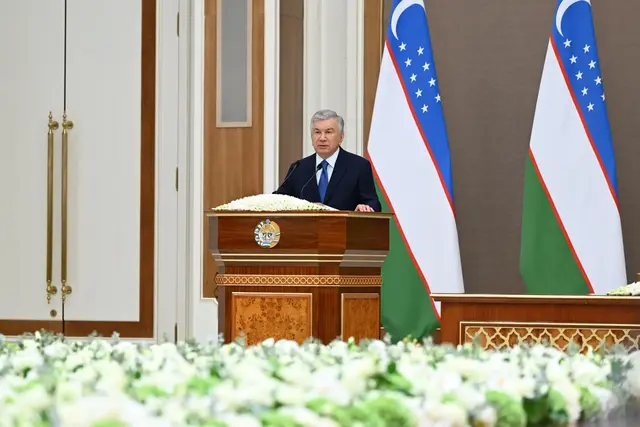
Another significant initiative was the proposal by the President of Uzbekistan to grant Samarkand the status of the “Green Capital of Investment and Innovation of Central Asia”. The initiative effectively envisages the creation of a new regional centre for environmental diplomacy, green technologies and sustainable finance.
A new environmental architecture for Central Asia
Regional cooperation was a major focus of the forum. Central Asia faces shared challenges, including climate change, shrinking water resources, ecosystem degradation and the consequences of the environmental crisis in the Aral Sea region.
Against this backdrop, one of the Assembly’s notable outcomes was the launch of the Central Asia Water and Land Nexus (CAWLN) programme, aimed at integrated management of water and land resources.
In addition, regional countries agreed to develop a joint programme for the conservation of big cats and their natural ecosystems within the framework of the new GEF-9 funding cycle. Such initiatives demonstrate a shift from individual national projects to long-term cross-border cooperation.
Environment as a driver of investment
A practical outcome of the forum was agreements on the implementation of national and regional environmental projects with a total value exceeding US$80 million.
An additional mechanism for attracting investment was the Eco Expo Central Asia 2026 international exhibition, held alongside the Assembly. The exhibition brought together around 10,000 participants from more than 150 countries and served as a platform for presenting environmental technologies, startups and innovative solutions.
According to the results of the exhibition, agreements were reached on approximately 300 green projects with a total value of around US$520 million. These figures demonstrate that environmental issues are increasingly viewed not only as a matter of environmental protection but also as a source of economic growth, innovation and job creation.
Focus on people and local communities
One of the distinguishing features of this year’s Assembly was greater attention to inclusiveness and public participation in environmental policy implementation.
During discussions, participants repeatedly stressed that achieving climate and conservation goals is impossible without the active involvement of young people, women, civil society representatives, Indigenous peoples and local communities.
Under the new GEF-9 cycle, at least 20% of the fund’s resources are expected to be directed towards supporting local communities and Indigenous peoples. This approach reflects the global trend towards a Whole-of-Society Approach, which promotes participation by all segments of society in addressing environmental challenges.
International recognition of Uzbekistan’s environmental diplomacy
The forum’s international profile was reflected in media monitoring results, which showed that the Assembly received around 500 media mentions across more than 70 countries and in 15 languages.
For Uzbekistan, hosting the forum represented not only an organisational success but also an important diplomatic achievement. The country strengthened its position as a responsible international partner capable of bringing together governments, international organisations and businesses to address global environmental challenges.
Overall, the eighth GEF Assembly demonstrated that environmental issues are becoming one of the key drivers of international cooperation and sustainable development.
The decisions adopted in Samarkand, together with the new programmes and investment initiatives launched during the forum, are expected to influence the development of global environmental policy in the years ahead, while Samarkand has further consolidated its status as one of the leading international platforms for environmental dialogue.