International Experience in Femicide Prevention Discussed in Tashkent

International Experience in Femicide Prevention Discussed in Tashkent
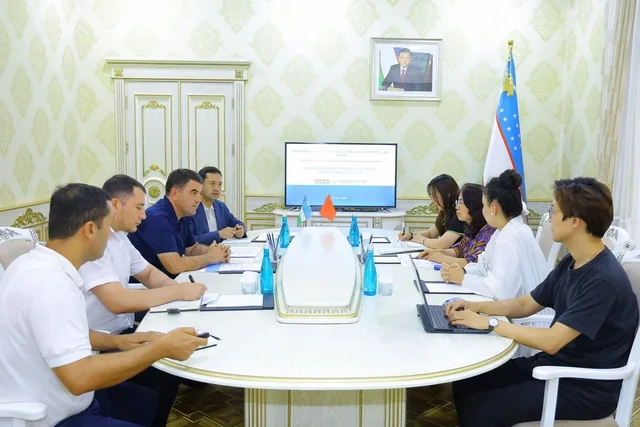
Tashkent, Uzbekistan (UzDaily.uz) — The National Center of the Republic of Uzbekistan for Human Rights hosted an international round table titled "Legal Mechanisms for the Prevention of Femicide: From International Standards to National Practice."
The event brought together representatives of state bodies, the judiciary, law enforcement agencies, international organizations, the scientific community, and civil society institutions to discuss effective approaches to preventing gender-based violence. The organizers included the National Center of the Republic of Uzbekistan for Human Rights, the OSCE Project Co-ordinator in Uzbekistan, UN Women, the Supreme Court of the Republic of Uzbekistan, and the General Prosecutor's Office.
Opening the event, Dilnoza Muratova, Deputy Director of the National Center for Human Rights, noted that protecting women from violence remains a priority of state policy in the field of human rights. She recalled that in recent years, Uzbekistan has consistently implemented legislative reforms aimed at strengthening safety guarantees for women. In particular, in 2025, the mandatory reconciliation period for spouses during a divorce in cases of domestic violence was abolished, and a presidential decree was adopted providing for systemic measures to counter violence against women.
Participants paid special attention to the implementation of the Comprehensive Program of Measures to Achieve Gender Equality until 2030. The document provides for studying international practices of recognizing femicide as an independent criminal offense and preparing proposals for further improvement of national legislation.
A significant part of the discussion focused on international experience in preventing gender-based killings of women. Lara Scarpitta, OSCE Senior Gender Adviser, emphasized that effective prevention is impossible without a comprehensive approach that includes improving legislation, developing prevention systems, interagency cooperation, and high-quality statistical records. According to her, in most cases, femicide is preceded by prolonged episodes of domestic violence, so the main task of the state is not only to investigate crimes but also to timely identify women at risk and ensure their protection.
In a video message, Jeren Guven Gures, Head of the UN Women Central Asia Coordination Office, positively assessed the reforms being implemented in Uzbekistan. She noted that the republic has already established a solid legislative foundation for combating violence against women and was among the first five countries in Eastern Europe and Central Asia to criminalize domestic violence as a separate criminal offense.
During the round table, the results of the OSCE study "Trends in Countering Femicide in the OSCE Region" were presented, containing an analysis of international practices, prevention mechanisms, and recommendations for improving public policy. Separately, the preliminary results of the first regional study on femicide in Central Asian countries, prepared by UN Women, were reviewed. The data obtained is intended to serve as a basis for the further development of legislation and preventive mechanisms in the region.
Experts also familiarized themselves with the national experience of Uzbekistan in preventing violence against women. Representatives of internal affairs agencies, the prosecutor's office, the judiciary, and public organizations presented practices for providing assistance to victims, the operation of crisis mechanisms, and interaction between state institutions and civil society.
Following the discussion, participants concluded that effective femicide prevention requires a comprehensive state policy based on improving legislation, early identification of risk factors, developing interagency cooperation, creating a modern system of statistical accounting, and expanding interaction with international organizations and civil society institutions.
The intention to continue cooperation between Uzbekistan, the OSCE, UN Women, and other international partners was also confirmed to further strengthen institutional mechanisms for protecting women's rights and developing an effective system for preventing gender-based violence.
According to United Nations data, approximately 85 thousand women and girls fall victim to intentional homicide annually, with nearly 60% of such crimes committed by current or former partners or other family members. In this regard, the prevention of femicide is viewed by the international community as one of the key directions of state policy in the field of protecting women's rights and ensuring the right to life.