Uzbekistan to expand logistics infrastructure on Afghan border

Uzbekistan to expand logistics infrastructure on Afghan border
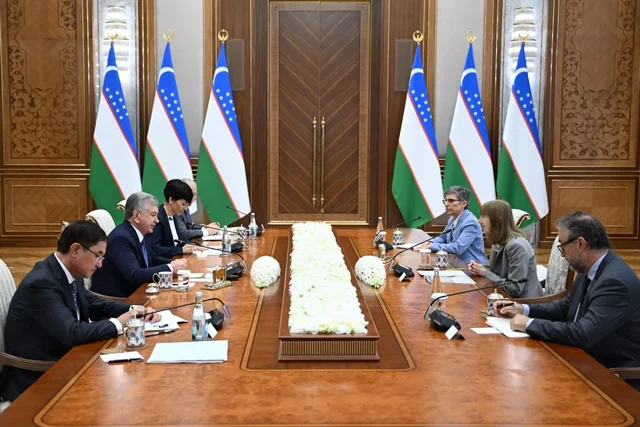
Tashkent, Uzbekistan (UzDaily.uz) — Uzbekistan President Shavkat Mirziyoyev reviewed the development of the Trans-Afghan railway logistics system and improvements to border transport infrastructure on 1 July 2026. Surkhandarya region Hokim Ulugbek Kosimov announced the development in an interview with the Uzbekistan 24 television channel.
According to Kosimov, the meeting focused on a draft resolution providing for the development of border logistics, investor incentives, and land allocation for the construction of a new logistics center.
The regional head noted that capacity at the Uzbek-Afghan border has increased significantly in recent times. The number of transport corridors grew from four to twelve, raising the daily flow of cargo trucks from 350–400 units to 1,000–1,200 units. Rail freight capacity also rose from 250 cars to nearly 500 cars per day.
Kosimov stated that cargo transport through the river port is also showing substantial growth. While more than 250,000 tons of cargo moved through the port during the entirety of last year, the figure reached 220,000 tons in the first six months of this year alone.
The hokim noted that demand for logistics services from foreign investors and domestic businesses continues to rise. In response, the draft resolution provides for the allocation of 50 hectares of land in the border zone to establish a modern logistics center, alongside the provision of several incentives. Proposals prepared based on requests from Afghan entrepreneurs and Uzbek logistics companies also received endorsement.
One of the issues considered was the creation of a "green corridor" for Afghan entrepreneurs, which will allow them to utilize existing international air routes. A special commission is planned to implement this initiative.
Proposals to simplify the re-export of products from Afghanistan were also discussed. According to Kosimov, this primarily concerns organic agricultural goods, which face specific difficulties during sale. These initiatives were supported, and a commission will be established to finalize them.
The Surkhandarya region hokim noted that the decisions create additional opportunities for entrepreneurs and are expected to boost the investment attractiveness of the border territory.
Plans to specialize the Termez district as the "gateway to the Trans-Afghan corridor" were previously announced during a presentation to the head of state. The district is intended to become a key logistics hub on the China — Central Asia — Trans-Afghan Corridor — Pakistan route. The meeting also addressed the construction of logistics centers, the digitalization of the transport industry, and the acceleration of cargo clearance at border checkpoints.