Uzbekistan to Change Procedure for Appointing Officials

Tashkent, Uzbekistan (UzDaily.uz) — Uzbekistan will change the procedure for appointing and dismissing certain deputy heads of central executive bodies, local authorities, tax bodies and the Ministry of Internal Affairs.
The changes are provided for by the Constitutional Law “On the Administration of the President of the Republic of Uzbekistan,” signed on 14 August.
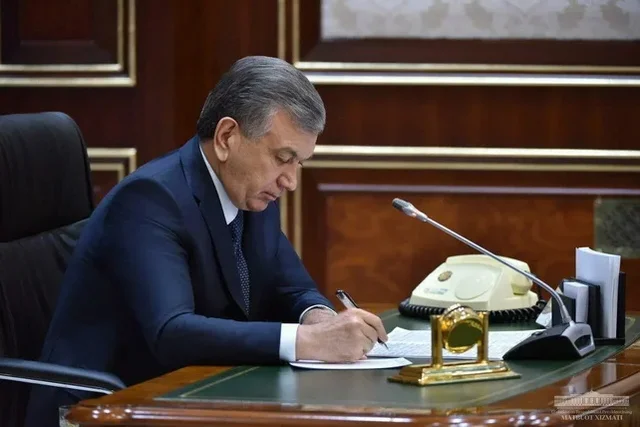
The key change is the replacement in several legislative acts of the wording “appointed by the President” and “in coordination with the President” with “in accordance with the procedure determined by the President.” The specific procedure for appointing and dismissing the relevant officials will therefore be established by a separate presidential act.
The new procedure will apply, in particular, to first deputy hokims and deputy hokims of regions and Tashkent. Currently, they are appointed and dismissed by the relevant hokim in coordination with the President, after which the decision is submitted for approval to the relevant Council of People’s Deputies. Once the amendments take effect, the procedure will be determined in accordance with the procedure established by the President.
The changes will also affect the tax system. Currently, deputy chairmen of the Tax Committee and heads of tax departments in Karakalpakstan, the regions and Tashkent are appointed and dismissed directly by the President. Under the amendments, these personnel decisions will be made in accordance with a procedure determined by the President.
A similar mechanism is being introduced for deputy ministers of internal affairs. They are currently appointed and dismissed directly by the President. In the future, the procedure will be determined by the head of state. The provision governing the appointment and dismissal of the minister of internal affairs will remain unchanged.
More systemic changes are envisaged in the law “On the Cabinet of Ministers.” The heads of central executive bodies, including ministries, committees, agencies and inspectorates, will continue to be appointed and dismissed by the President.
Their deputies, however, will be appointed and dismissed in accordance with a procedure determined by the President. This removes from legislation the distinction under which deputy ministers were appointed by the President, while deputies of other central executive bodies were appointed by the Cabinet of Ministers in coordination with the President.
The amendments are linked to the adoption on 14 August of the Constitutional Law “On the Administration of the President of the Republic of Uzbekistan.”
The document establishes in detail, for the first time, the legal status, tasks and powers of the Presidential Administration.
Under the law, the Administration is directly subordinate and accountable to the President. It coordinates the activities of state bodies and organizations in implementing the head of state’s decisions and instructions, monitors their implementation, may issue binding instructions and orders to heads of state bodies, and assess the performance of officials.
The law also expands the powers of the Head of the Presidential Administration. The Head will be able to issue orders and instructions that are binding throughout the country on state bodies, enterprises, institutions, organizations and officials.
At the same time, amendments to the law “On Normative Legal Acts” add orders issued by the Head of the Presidential Administration to the list of independent types of normative legal acts.
They may also serve as a legal basis for normative decisions adopted by hokims and local Councils of People’s Deputies.