Uzbekistan and Japan Expand Cooperation on Urban Resilience

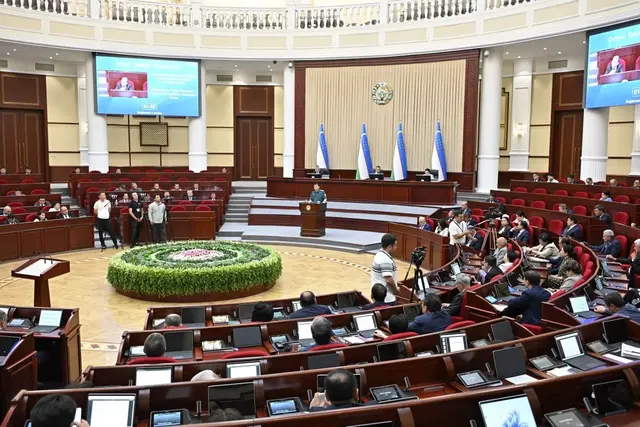
Tashkent, Uzbekistan (UzDaily.uz) — A high-level dialogue on strengthening the resilience of cities to natural disasters and the effects of climate change was held in Tashkent.
The event was organized by the United Nations Development Programme (UNDP), Uzbekistan’s National Committee on Ecology and Climate Change, Uzbekistan’s Ministry of Emergency Situations and Japan’s Ministry of Land, Infrastructure, Transport and Tourism (MLIT).
The meeting was held as part of two UNDP regional projects focused on strengthening the resilience of Central Asian cities to disaster and climate change risks and strengthening the regional disaster risk reduction system.
The projects are being implemented in cooperation with the Government of Japan.
Representatives of government agencies from Uzbekistan and Japan, international organizations and experts took part in the event. The discussions focused on integrating climate adaptation and disaster risk assessment into urban planning.
Aziz Abdukhakimov, Presidential Adviser on Ecology and chairman of the National Committee on Ecology and Climate Change, highlighted the importance of further developing Uzbek-Japanese cooperation in disaster risk reduction, early warning systems and sustainable urban development.
He said Uzbekistan is gradually developing air quality monitoring systems, green infrastructure, early warning mechanisms and urban planning approaches that take natural hazards into account. Sustainable infrastructure development, early warning systems and advanced environmental technologies were identified as promising areas for cooperation with Japanese companies and technical experts.
Japan’s State Minister of Land, Infrastructure, Transport and Tourism Hajime Sasaki said Japan was ready to share its experience, technologies and public-private partnership practices with Uzbekistan in disaster risk reduction.
During the dialogue, participants reviewed international experience and modern approaches to seismic safety, flood preparedness and risk-based urban planning. Japanese experts presented practical solutions for emergency response, while Uzbek representatives outlined national strategies and measures being implemented, including in Tashkent and Namangan.
Khursid Sotiyev, deputy minister of emergency situations of Uzbekistan, said the development of early warning systems, improved seismic safety and the introduction of risk-based approaches to urban planning are directly linked to public safety. He said the ministry was ready to support initiatives in these areas and expand practical cooperation.
Kenji Hirata, Japan’s ambassador to Uzbekistan, said disaster risk reduction, stronger urban resilience and action on climate change have been identified as important areas of cooperation under the “Central Asia plus Japan” format.
Particular attention is being paid to Namangan. According to Akiko Fujii, UNDP Resident Representative in Uzbekistan, the first Climate and Disaster Risk Profile for the city was developed as part of a joint initiative. The tool is intended to help incorporate climate and natural hazards more effectively into urban development planning.
UNDP also noted that the resilience of urban infrastructure is becoming increasingly important amid continued urbanization and the need to protect people from the effects of natural disasters and climate change.
The dialogue resulted in recommendations to strengthen institutional capacity, improve early warning systems and further develop regional cooperation on disaster risk reduction and climate adaptation.
Participants emphasized the importance of continuing the exchange of experience and technologies between Uzbekistan and Japan to create a safer and more resilient urban environment in Uzbekistan and Central Asia.