Tashkent, Uzbekistan (UzDaily.uz) — Tashkent district governors have published addresses to residents and entrepreneurs, outlining their plans for the coming period and reporting on current socioeconomic development indicators in their respective districts.
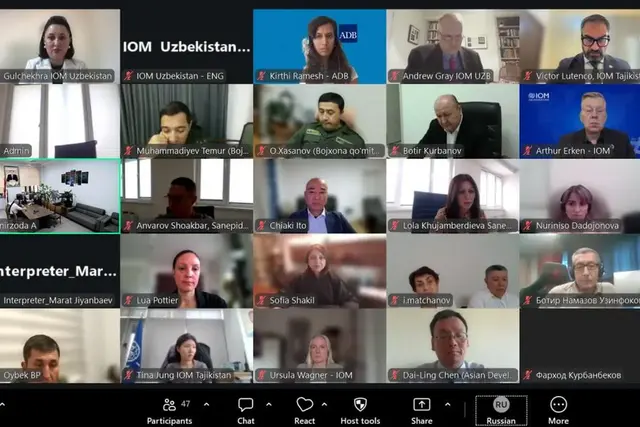
The addresses followed a video conference chaired by Uzbek President Shavkat Mirziyoyev on 11 September 2026 on the development of Tashkent’s districts, increasing investment and employment, and creating modern infrastructure in mahallas.
Almazar District
Almazar District Governor Kudratilla Tulyaganov said preschool education coverage in the district stands at 67%, while the volume of services has increased by 22% since the beginning of the year. According to him, enterprises and organizations in the district need more than 4,000 workers with secondary specialized education.
The governor pledged to provide jobs for more than 6,000 unemployed people and stable incomes for 3,000 families included in the Social Register. To this end, at least 50% of the 78,000 square metres of buildings belonging to government institutions in the district will be leased to entrepreneurs on a long-term basis, while 52 state-owned facilities with a total value of 100 billion soums will be put up for open auction.
The district plans to attract US$600 million in investment this year and create 2,000 jobs through the launch of 56 projects.
In the 305-hectare industrial zone in the Miskin and Ibrohim Ota mahallas, the number of jobs is expected to increase from 35,000 to 100,000, while exports are to reach US$600 million. By the end of the year, industrial output is planned to reach 18.5 trillion soums and services 37.5 trillion soums.
A special directorate will be established for the 41 dormitories in the Yoshlik student campus, where 75,000 students study. Tulyaganov plans to present the first report on implementation of the announced tasks at a district council meeting on 1 October.
Bektemir District
Bektemir District Governor Nurilla Abdurakhmanov, addressing residents and entrepreneurs, recalled that the president had identified improving people’s welfare locally, reducing poverty and unemployment, increasing incomes and creating a favourable environment for entrepreneurship as priority tasks for district governors.
According to the governor, work in Bektemir District is continuing to ensure employment, create new jobs, support entrepreneurial initiatives and ensure the timely and targeted consideration of citizens’ appeals.
The governor called on residents and entrepreneurs to make greater use of existing opportunities, put forward new ideas and initiatives and implement promising projects, stressing that every new project creates a new opportunity and every new job is an important factor in family welfare.
Bektemir District Governor Nurilla Abdurakhmanov acknowledged that coverage of school and preschool education in the district remains low, while growth in economic indicators in industry and services is insufficient.
According to him, centralized water supply is unavailable in the Zabardast mahalla and a quarter of the Ik-Ota mahalla, while street lighting has not been installed on a number of streets in the Musaffo, Sokhil, Zabardast and Ik-Ota mahallas. To eliminate power supply disruptions, the district needs to replace 15 transformers. At the same time, despite enterprises in the district requiring more than 4,100 specialists with secondary specialized education, Bektemir has no technical college or centre for training in modern professions.
According to the governor, in addition to Barkhayot Street, which has already been included in this year’s programme, landscaping work will begin on Bektemir Highway, Hussein Baykara Street and Ferghana Road. A total of 14 km of pedestrian paths will be built on these streets, 120 surveillance cameras and 500 streetlights will be installed, 23,000 square metres of green areas will be landscaped with 140 benches, and two green gardens and an artificial lake will be created.
Construction and landscaping work will also be carried out in the Zilola, Iqbol, Mirishkor and Abay mahallas. Sports and recreation areas and centres for elderly people will be established in the Musaffo and Nurli Yo‘l mahallas. The Nurafshon and Abay mahallas will be connected to the sewage network, while mahalla committee buildings will be built in the Nurli Yo‘l and Zabardast mahallas. A nursery for shrub seedlings will be created on an 8-hectare site in the Zabardast and Gulbog mahallas. Street lighting will be installed in the Musaffo, Sokhil, Zabardast and Ik-Ota mahallas. Fifteen transformers will be installed to eliminate power supply disruptions, while an underground pedestrian crossing will be built along the Akhangaran Highway within the Mirishkor mahalla.
In the economy, the governor pledged to bring industrial output to 25.6 trillion soums by the end of the year, representing growth of 107.1%, and services to 11.1 trillion soums, or 118.5% growth, while attracting a total of US$500 million in investment to the district. In the 353.9-hectare industrial zone in the Oltintopgan, Mirishkor and Gulbog mahallas, 1,600 jobs are planned through investment projects implemented jointly with 603 entrepreneurs.
By the end of the year, 140 new business entities are planned to be launched jointly with commercial banks, creating 1,200 jobs. As part of poverty reduction measures, incomes are to be increased for 176 families, 256 unemployed people will be employed, 35 people will be engaged in self-employment and 40 microprojects will be launched. Overall, employment will be provided for 1,530 unemployed residents of the district, while another 800 unemployed people, including those from neighbouring areas and Tashkent Region, are expected to be hired by 60 district enterprises by the end of the year.
In education and social infrastructure, extensions to two existing preschools will create 630 additional places, while two new kindergartens will be built in the densely populated Zilola and Ik-Ota mahallas. For 2027, the governor guaranteed the implementation of 53 new projects in the economy, education, healthcare and environmental sectors worth 6 trillion 769 billion soums.
Mirzo Ulugbek District
Mirzo Ulugbek District Governor Bakhodir Gaibnazarov said preschool education coverage in the district stands at 92.4%, while the volume of services has increased by 119.7% since the beginning of the year.
According to him, 7.7 km of pedestrian paths will be built on Yuzrabod, Shakhrisabz, Sodik Azimov, Shastri, Yahyo Gulyamov, Mingbulok and Khamroyev streets. A total of 191 lighting and security cameras will be installed, 900 trade and service facilities will be brought into a unified architectural style, 12,000 square metres of territory will be landscaped and greened, 136 recreation areas will be installed, four green gardens and one artificial lake will be created, and a 24/7 tourism and gastronomic street will be established.
The landscaping programme is already being implemented in five mahallas of the district — Alisherobod, Bahor, Yuzrabod, Turon and Shakhrisabz — and will additionally cover the Katta Karasuv, Gulsanam and Humoyun mahallas.
In 2027, work will begin in another five mahallas. By the end of this year, a new school, preschool facility and sports complex will be built in the district using local budget funds, while three schools, one preschool organization and one healthcare facility will be reconstructed under national investment programmes.
The governor noted that about 3,700 of the district’s 13,410 students live in dormitories and rented housing, and their living conditions are expected to improve within a month. The district plans to implement 900 new projects worth 450 billion soums in 2027.
Mirobod District
Mirobod District Governor Anvar Saifutdinov acknowledged that preschool education coverage in the district stands at 83.2%, while the volume of services has increased by only 24% since the beginning of the year.
According to him, 8.3 km of road surfaces and pedestrian paths will be built on eight streets in the district — Taras Shevchenko Street (Stage 4), Shakhrisabz, Afrosiyob, Oybek, Said Baraka, Fidokor, Turkiston, Istiqlol and Sodik Azimov streets. A total of 1,244 lighting and security cameras will be installed, 440 retail and service facilities on the ground floors will be brought into a unified appearance, 16,600 square metres of territory will be landscaped, 400 recreation areas will be installed, six green gardens and one artificial lake will be created, and 10 24/7 tourism and gastronomic streets will be established.
The governor said that 160 new entrepreneurs will be launched jointly with nine banks this year, creating 620 jobs, while 20 state-owned facilities worth 300 billion soums will be put up for sale as ready-made projects.
The total investment attracted to the district will amount to US$700 million, while the number of jobs at the district’s 8,200 entrepreneurs is planned to increase from 92,000 to 101,000.
By the end of the year, industrial output is expected to reach 13.6 trillion soums and services 49.3 trillion soums. Another 1,350 places will be created through extensions to two preschool and school facilities.
Sergeli District
Sergeli District Governor Davron Ismatov said preschool education coverage in the district stands at 75%, while the volume of services has increased by only 16.3% since the beginning of the year.
According to him, the district has only three technical colleges despite a need for more than 1,200 specialists with secondary specialized education. He also noted that despite the district’s favourable logistical location between the capital and regional centres, it lacks large logistics centres.
The governor said that current measures will raise the incomes of 5,562 residents, employ 3,971 unemployed people, train 273 people in professions, formalize 1,817 workers from the informal sector as self-employed and implement 1,123 family entrepreneurship projects.
Ismatov plans to make the district free of unemployment and poverty by 1 December this year, using, he said, the experience of Almazar District.
By the end of 2026, targeted development programmes are planned in all 46 mahallas of the district, providing employment for 36,200 residents and increasing the number of business entities to 7,774, including 815 new ones.
This year, 16 major projects are planned to be launched, creating more than 2,500 jobs. Three round-the-clock retail and service streets — Yangi Sergeli, Mehrigiyo and Shokirarik — will also be established, with 360 businesses and more than 1,000 new jobs. Seven more streets will be developed in the same way in 2027, while two modern shopping and entertainment centres will appear along the Tashkent Ring Road and Yangi Sergeli Street. Landscaping of 11 mahallas will be completed under the Obod Mahalla programme.
This year, a 1,650-seat school and extensions of 720 and 990 places at two existing schools, as well as two 270-place preschools, have already been built and commissioned in the district. The budget allocated 66 billion soums for these projects.
In 2027, schools with 1,835 and 1,650 places, a 540-place kindergarten and a children’s Olympic village are planned to be built jointly with BI Group and with the support of the Islamic Development Bank.
A modern logistics centre operated by Inter Logistic Terminal will begin operating this year on a 10-hectare site in the Daryo Bo‘yi mahalla. The project is being implemented with investors from the United States, the United Kingdom and Afghanistan.
For 2027, 45 projects worth 1.2 trillion soums are planned in education, healthcare, digitalization, industry and environmental protection.
Uchtepa District
Uchtepa District Governor Bunyod Mamajanov said that US$320 million in foreign direct investment entered the district’s economy during the first eight months of this year, while exports reached US$482.8 million.
According to the governor, Uchtepa has a population of more than 304,000 and 98,000 families, with each figure representing the lives, dreams and hopes of specific people.
He stressed that he views attracting investment not only as a tool for improving economic indicators but also as a key factor in improving people’s lives, since every new enterprise means new jobs, new sources of income and an opportunity for people to earn a decent living through their own work.
According to Mamajanov, work to attract new investment projects, expand the capacity of existing enterprises, support local entrepreneurs and increase the district’s export potential will continue on a systematic basis.
By the end of 2026, the governor pledged to attract US$553.1 million in foreign investment and increase exports to US$630 million.
According to him, particular attention will be paid to reducing poverty, increasing family incomes and strengthening economic activity, primarily not through one-time material assistance to low-income families but by creating opportunities for them to earn a stable income.
To this end, the district will strengthen systematic work to train unemployed citizens in professions in demand, prepare specialists in the most relevant fields, involve them in entrepreneurship and provide decent employment, with priority given to young people and women.
Chilanzar District
Chilanzar District Governor Saidqahhor Kholkhujaev said the district has 961 low-income families and acknowledged that despite having 13 universities, 221 medical facilities and a 300-hectare industrial zone, the district has not shown sufficient initiative in attracting foreign investment and modern technologies.
According to him, despite high demand for well-paid jobs in modern services, IT and manufacturing, the scale of training for young people and women in in-demand professions remains insufficient. The load on engineering, utility and energy networks also creates difficulties for business development and the launch of new capacity. The governor noted that only three schools in the district operate at a load exceeding two shifts, preschool education coverage stands at 85%, and the volume of services has increased by only 121% since the beginning of the year, which, in his assessment, does not correspond to the district’s potential.
As part of poverty reduction measures, the district plans this year to increase the incomes of 961 low-income families, employ 345 unemployed people from these families, involve 302 people in self-employment and implement 85 family entrepreneurship projects. The district plans to attract US$1 billion in foreign investment this year and US$1.2 billion next year, creating 18,000–20,000 high-paying permanent jobs. A five-storey modern industrial complex and a 90,000-square-metre trade monomarket will be built on a 2.5-hectare site in the Chilanzar Industrial Zone, creating 3,000 jobs. Entrepreneurs will be offered industrial mortgages, loans and leasing on preferential terms. Together with 10 district banks, 200 new entrepreneurs will be launched and 1,000 jobs created by converting the ground floors of apartment buildings to non-residential use. Entrepreneurs will receive preferential unsecured loans of up to 200 million soums for this purpose.
A new 16-storey administrative building will be constructed on the site of the district administration building. It will house 31 district organizations and around 300 employees serving the population in one location. Existing administrative buildings will be sold at auction for use as business facilities. By the end of the year, industrial output is planned to reach 19.8 trillion soums, up 110.2%, services 51.4 trillion soums, up 123%, and construction 5.9 trillion soums, up 112.6%. The governor also said that next year at least 10,000 new jobs will be created for residents of other regions of the republic by using the district’s internal potential, making the district an employment “donor”.
In 2026–2027, the district will create 13 gastronomic and tourism streets with a total length of 17 km, including KHAI, Zargarlik, Chupanata, Mukimi, 2nd Kattatol, Arnasay, Chilanzar, Afrosiyob, Islam Karimov, Beshyogoch, Furkat, Gafurov and Bunyodkor streets. Work on KHAI, Chupanata and Bunyodkor streets will begin this year, while work on Al-Khwarizmi and Kattatol streets will be completed.
Under the Obod Mahalla programme, 20 mahallas will be landscaped as part of a four-year programme worth 1 trillion soums. By the end of 2026, work will be carried out in the Diyor, Nafosat and Fidokor mahallas, with another six mahallas covered in 2027. A 1.8-km section of the Bozsu Canal has been landscaped with an eco-walking area and a 5-km pedestrian path. Work is under way on 3.5 km of the Borichar Canal, while work on a 1.8-km section of the Anhor Canal in the Nakkoshlik mahalla will begin this year. The governor noted that 10 of the district’s 55 mahallas are classified as “green”, with no registered crimes, compared with five a year earlier, while 45 are classified as “yellow” and there are no “red” mahallas left. In autumn, 50,000 ornamental and fruit seedlings and shrubs will be planted in the district under the Yashil Makon programme.
In education and social infrastructure, construction will begin this year using local budget funds on a 1,500-seat school on the grounds of School No. 126, a 360-place preschool on the grounds of School No. 232 and a modern sports complex at the Republican Olympic Reserve School. Each year, one similarly outdated preschool building will be replaced with a new one, while another eight will undergo current and capital repairs.
A modern creative cluster will be established at the College of Personnel Management and Occupational Safety, subordinate to the Ministry of Employment and Poverty Reduction, to train more than 10,000 young people annually in more than 50 modern professions. A new building will be constructed for Family Polyclinic No. 38, Polyclinic No. 33 will undergo major repairs and Polyclinic No. 37 will undergo routine repairs.
For 2027, the governor guaranteed the implementation of 85 new projects in the economy, education, healthcare and environmental sectors worth 3.5 trillion soums.
Shaykhantahur District
Shaykhantahur District Governor Bobir Abubakirov acknowledged that preschool education coverage in the district stands at 70%, the volume of services has increased by 120% since the beginning of the year and industrial output by 108.1%, which, he said, does not correspond to the district’s potential.
The governor also noted a shortage of technical colleges despite a need for more than 2,000 specialists with secondary specialized education.
According to him, Navoi Street within the boundaries of Chakar mahalla, Furkat, Beruni, KHAI and Samarkand Darvoza streets, as well as the second phase of the Anhor embankment project in the Urda mahalla, will be transformed into “attractive and lively streets”. Seven kilometres of road surfaces and 5,000 square metres of pedestrian paths will be built, 150 lighting and 100 surveillance cameras installed, 300 retail and service facilities brought into a unified appearance, 30,000 square metres of territory landscaped and green gardens created. In 2026–2027, eight projects worth 150 billion soums will be implemented, expected to create more than 200 new business entities and 1,500 jobs.
An eco-park with three artificial lakes will be created on an 18-hectare site in the Ipakchilik mahalla, increasing the number of trees from 19,000 to 40,000. The project is expected to attract US$30 million in investment and create around 1,000 jobs in the services sector.
A 230-hectare site in the Samarkand Darvoza area is planned to be developed as a tourism hub based on an old-city concept, attracting up to US$5 billion in investment. Construction of a hotel, business and Class A shopping centre complex with foreign investment will begin in the Olmazor mahalla.
The governor said that 106 of the 126 illegal structures identified in the district have already been demolished, and the district is expected to be completely cleared of them by the end of the year. More than 1,000 new entrepreneurs are planned to be launched jointly with 10 banks this year, creating at least 3,000 high-income jobs, while 25 state-owned facilities worth 135 billion soums will be put up for sale as ready-made projects.
The total investment attracted to the district will amount to US$1 billion. By the end of the year, industrial output is expected to reach 12 trillion soums and services 50.3 trillion soums.
Yunusabad District
Yunusabad District Governor Abrarhodja Saidaliev said preschool education coverage in the district stands at 70.5%, while the volume of services has increased by 20.3% since the beginning of the year.
According to him, the poverty rate in the district fell from 3.4% on 1 January, representing 3,651 families and 13,400 people, to 2.2% on 1 September, representing 2,405 families and 8,900 people. The unemployment rate fell from 4.0% to 3.8%, with the number of unemployed declining from 7,800 to 7,400.
As of 1 September 2026, the district had 12,278 business entities. Since the beginning of the year, 1,399 new businesses have been established, and another 700 are planned by the end of the year.
On five streets in the district, including Amir Temur and Yangi Yunusabad, 6.9 km of road surfaces and pedestrian paths will be built, 1,189 lighting and security cameras installed, the appearance of 102 retail facilities updated and more than 41,000 square metres of territory landscaped.
An eco-park called Yunusabad will be created on a 2.6-hectare site in the Adolat mahalla, with 2,500 trees planted and an artificial lake developed.
The total investment attracted to the district will amount to US$1 billion, with a separate US$100 million investment programme also planned by the end of the year.
Industrial output is expected to increase to 9.9 trillion soums and services to 75.1 trillion soums.
Yakkasaray District
Yakkasaray District Governor Nilufar Allabergenova said preschool education coverage in the district has temporarily fallen to 90% due to the complete reconstruction of two preschool facilities, but is expected to reach 103% by the end of the year.
According to her, the district lacks technical colleges despite a need for more than 4,000 specialists with secondary specialized education.
On five streets — Shota Rustaveli, Mirobod, Babur, Bogbuston and Mukimi — 12.7 km of road surfaces and pedestrian paths will be built, 185 lighting and security cameras installed, the appearance of 103 retail and service facilities updated and 8,350 square metres of territory landscaped.
A landscaping programme modelled on the Kichkirik mahalla in Almazar District will begin in 21 mahallas of the district.
The governor said the district plans to attract US$700 million in investment by the end of the year and achieve US$160 million in exports, while 150 new entrepreneurs will be launched jointly with seven banks, creating 600 jobs.
Additional buildings with capacities of 720 and 210 places will also be built at two existing kindergartens.
Yangihayot District
Yangihayot District Governor Hayot Inogamov acknowledged that despite the district’s favourable location near one of the entrances to Tashkent, it is not fully using its potential to create large logistics centres. Centralized water supply has also not been completed in the Jaloyir, Yangi Gulzor and Khoja Uchkun mahallas.
According to him, construction of a US$290 million dry-port logistics centre will begin in the 100-hectare Yangi Avlod special industrial zone jointly with an investor from the UAE. A US$1 billion Yangihayot City project with two shopping malls and business centres will also start in the Gulshanobod mahalla.
The district’s total investment plan amounts to US$500 million, while the number of jobs in its two industrial zones is planned to increase from 18,000 to 50,000.
Six state-owned facilities worth 75.3 billion soums and around 70 hectares of land worth 1.5 trillion soums will be put up for sale as ready-made projects.
By the end of the year, industrial output is planned to reach 16.8 trillion soums and services 7.7 trillion soums.
In autumn, 59,000 trees will be planted in the district, while themed alleys and public parks with a total area of 14 hectares will be created on several streets.
Yashnabad District
Yashnabad District Governor Bakhtiyor Rakhmonkulov outlined priority tasks arising from the head of state’s instructions in his address to residents: turning the district into a more landscaped and prosperous area, improving living conditions, increasing incomes, reducing poverty and unemployment, and developing entrepreneurship.
According to him, particular attention will be paid to improving mahalla infrastructure, repairing roads and pedestrian paths, landscaping and greening areas, modernizing drinking water and sewage networks, and constructing new social facilities.
The governor also highlighted priorities related to employment, the creation of new jobs, support for entrepreneurial initiatives, implementation of investment projects and development of education and the social sector.
“Today I am presenting to you not promises, but plans based on a specific list, specific deadlines and figures,” Rakhmonkulov said.
According to him, all planned work will be focused on practical results, residents’ problems and proposals will be studied continuously, and implementation of the assigned tasks will remain under the personal control of the governor.