Mirziyoyev: Uzbekistan's Economy Has Grown 2.5-Fold

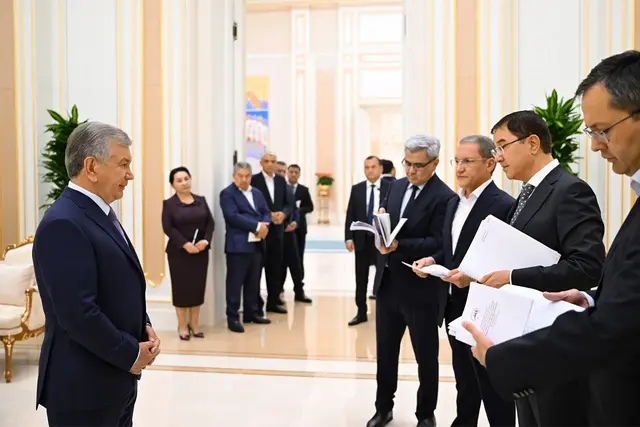
Tashkent, Uzbekistan (UzDaily.uz) — President of Uzbekistan Shavkat Mirziyoyev stated that over the past decade, the country's economy expanded more than 2.5 times, while attracted foreign investment exceeded US$160 billion. The head of state made the announcement during a state award ceremony marking the 35th anniversary of Uzbekistan's independence.
Congratulating participants on the milestone, Mirziyoyev noted that while 35 years represents a short period in historical terms, the past decade brought large-scale transformations and significant results for the nation.
The President emphasized that the citizens of Uzbekistan are the main architects of these changes. He noted contributions from farmers, teachers, healthcare workers, scientists, industrial leaders, entrepreneurs, builders, architects, cultural and sports figures, civil servants, and local mahalla activists.
The head of state also highlighted the role of military personnel and law enforcement officers in maintaining public safety and peace across the country.
"In short, the greatest outcome of New Uzbekistan is the transformed individual—a citizen confident in their own abilities and a society that feels a direct stake in tomorrow," Mirziyoyev said.
According to the President, economic growth has been accompanied by robust job creation and social infrastructure development. Over the past ten years, 5.7 million permanent jobs were established across the industrial, service, and agricultural sectors.
Through joint public and private initiatives, the country commissioned modern schools with a combined capacity of 1.2 million seats, kindergartens providing 342,000 places, and medical facilities offering 62,000 beds.
In 2026, Uzbekistan's gross domestic product (GDP) is projected to exceed US$180 billion.
Infrastructure developments over the decade included constructing and repairing 83,000 kilometers of public roads. Centralized drinking water access was introduced to households home to 8 million residents for the first time, while water supply quality and access improved for an additional 11.5 million people.
Additionally, 650,000 families received new modern housing over the past decade, providing improved living conditions for at least 2.5 million citizens.