Tashkent, Uzbekistan (UzDaily.uz) — The combined GDP of Central Asian countries increased by 6% in the first half of 2026, with Uzbekistan and the Kyrgyz Republic leading regional growth at 8.5% and 11.1%, respectively, the Eurasian Development Bank (EDB) said in its new Macroeconomic Review.
Both countries recorded double-digit growth in investment and strong consumer activity, according to the EDB.
Investment, infrastructure projects and sustained consumer demand were the main drivers of economic growth across the region. Kazakhstan’s economy grew by 4.1% in January-July 2026, with non-resource sectors expanding by 5.4% and partially offsetting a decline in oil production. Construction, manufacturing, transport and trade recorded the fastest growth.
Regional inflation stabilized at 6.4%, although trends differed among countries. Inflation slowed in Belarus, Kazakhstan and Uzbekistan, while it accelerated in Armenia, the Kyrgyz Republic and Tajikistan amid external price pressures.
The global economy has remained resilient despite the energy shock, EDB analysts said. Since March 2026, transit through the Strait of Hormuz has been disrupted, pushing the average price of Brent crude to US$91 per barrel in the first half of the year, 27% higher than a year earlier.
Exchange-traded gasoline prices in the United States and Europe rose by about 40% year on year, while commercial and strategic oil inventories in the United States were about 15% below their end-February level as of 17 July.
According to the bank, continued supply restrictions for one or two quarters could amplify the impact of the shock on the global economy. At the same time, high energy prices are supporting export revenues in Russia and Kazakhstan, while net energy importers are facing higher import and logistics costs.
Armenia’s GDP grew by 6.0% in the first half of the year, driven by services, including tourism, as well as construction and mining. Consumer spending increased by 5.7%, while investment rose by 7.9%. The EDB forecasts Armenia’s GDP to grow by 6.0% for the full year.
Belarusian GDP increased by 2.1% in January-July, compared with 1.5% in the first half of the year. In July, growth accelerated to an estimated 5.4% from 3.5% in June, mainly due to agriculture and improved industrial performance. In the absence of new shocks, Belarusian economic growth could exceed 2% in 2026.
Kazakhstan’s GDP grew by 4.1% in January-July, while fixed capital investment increased by 7.7% amid government support for capital spending.
GDP in the Kyrgyz Republic rose by 11.1% in January-July, supported by growth in real wages, lending and government programs. Investment increased by 58.8%. EDB analysts expect Kyrgyzstan to retain its position as the region’s fastest-growing economy in 2026.
Russia’s GDP increased by 0.6% in the first half of the year. Growth accelerated to 1.3% in the second quarter after contracting by 0.2% in the first quarter. Consumer demand and government spending provided the main support, while investment fell by 6.6% in the second quarter amid a prolonged period of high real interest rates.
Tajikistan’s economy grew by 8.2% in the first half of the year. Exports increased by a record 65.4%, while fixed capital investment rose by 18.4%. The EDB forecasts Tajikistan’s GDP to increase by 8.3% for the full year.
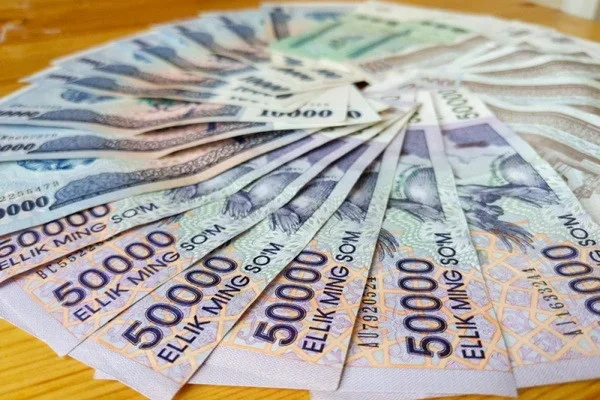
Uzbekistan’s GDP grew by 8.5% in the first half of 2026, the highest half-year growth rate in the past five years. Services, industry and construction made the largest contributions to growth. Fixed capital investment increased by 17.5%, while foreign direct investment rose by 32.5%.
EDB analysts expect Uzbekistan’s economy to grow by around 8% in 2026. According to the review, inflation in the country continues to slow toward the target level.
Regional inflation stood at 6.4% in mid-2026, compared with 6.5% at the end of 2025. In Russia, inflation accelerated from the end of last year under the influence of one-off factors. In Belarus, price growth slowed to 4.3%, remaining below the National Bank’s ceiling of 7%.
In Kazakhstan, a high policy rate and coordinated measures by the government and the National Bank helped slow inflation to 9.8% in August from 12.3% at the end of 2025. Rising global energy and food prices, by contrast, contributed to accelerating inflation in Armenia, Tajikistan and Kyrgyzstan.
Central banks across the region are maintaining restrictive monetary conditions. The refinancing rate stands at 6.5% in Armenia, 9.25% in Belarus and 7.0% in Tajikistan. Kyrgyzstan’s policy rate is 12%, while Uzbekistan’s key rate is 14%. The Bank of Russia cut its key rate to 14% in July, while Kazakhstan’s National Bank continued easing monetary policy by lowering its base rate to 16.25%.
A separate analytical section of the review examines the prospects for an upgrade of Kazakhstan’s sovereign credit rating. EDB analysts cited moderate public debt, significant external assets and sustained economic growth as factors supporting the potential for a further rating upgrade. The assessment is supported by S&P Global Ratings’ recent upgrade of Kazakhstan’s rating to “BBB” with a stable outlook.
According to EDB background information, the bank has spent 20 years supporting stronger economic ties among its member countries. By the end of June 2026, the bank’s accumulated portfolio comprised 348 projects worth a total of US$22.1 billion. Most of the projects have an integration effect and cover transport infrastructure, digital systems, green energy, agriculture, industry and mechanical engineering.
Under its 2022–2026 Strategy, the EDB is implementing three megaprojects: the “Central Asia Water and Energy Complex,” the “Eurasian Transport Framework” and the “Eurasian Commodity Distribution Network.”