Tashkent, Uzbekistan (UzDaily.uz) — Uzbekistan has fulfilled 101% of its cotton harvest target, President Shavkat Mirziyoyev said, while stressing that production figures should not become an end in themselves.
Although the state order for raw cotton production was abolished in 2020, production targets and contractual benchmarks continue to be used in the sector.
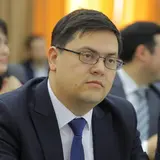
Mirziyoyev made the remarks on 21 October during a meeting with entrepreneurs and investors in Kashkadarya Region. His speech was broadcast by Uzbekistan 24 television.
“This morning, we fulfilled the cotton target by 101%. I never make figures an end in themselves. Behind the figures there must be…” Mirziyoyev said, discussing agricultural development in the region.
The president recalled that Uzbekistan’s cotton harvest campaign previously sometimes continued until the end of December. Picking began on 1 October, but work was not always completed by 20 December, he said. Evening meetings were held to set tasks for the following day.
Mirziyoyev noted that the cotton industry had changed in recent years. Enterprises processing raw materials more deeply are being established in the regions, and finished products are being supplied to foreign markets.
Uzbekistan’s 2026 cotton harvest
According to the Ministry of Agriculture, farmers had harvested 3.4 million tonnes of raw cotton by 12 October, equivalent to 76% of the seasonal contractual target of 4.5 million tonnes set for cotton-textile clusters and farms.
By 22 October, the harvest had reached 4.63 million tonnes, or 103% of the target, the ministry reported.
Nearly 3,000 cotton harvesters collected around 3.52 million tonnes, accounting for approximately 76% of the total crop. However, harvesting was still underway, with the first picking remaining incomplete across more than 49,000 hectares.
How production targets are set after the state order was abolished
In March 2020, Mirziyoyev signed a resolution abolishing the state order for raw cotton production starting with that year’s harvest. The reform was intended to establish market-based relations between farms and processing enterprises.
The previous system of state procurement was replaced by contracts between producers and cotton-textile clusters. Farmers were also given the opportunity to sell cotton through exchange mechanisms.
However, forecast production figures and contractual targets have remained in place. The benchmark for raw cotton production in 2026 was set at 4.5 million tonnes.
In February 2026, Human Rights Watch and the Uzbek Forum for Human Rights published a study stating that, despite the abolition of the state order, farmers continued to face restrictions on their choice of crops and production volumes.
According to the organisations, local authorities continue to set cotton and wheat production targets based on projected land yields. The rights groups also reported cases of pressure on farmers who failed to meet the targets, including threats to seize their land.
In a response to the organisations, Uzbekistan’s Foreign Ministry pointed to legal guarantees protecting farmers’ rights and provisions establishing liability for officials who engage in unlawful conduct.
In August 2026, Mirziyoyev said that in the past, “everyone was a slave to cotton” because of a lack of political will. He said a substantial part of the year had been spent ploughing, carrying out chakan, applying defoliants and harvesting cotton.
At the same time, the governor of Syrdarya Region said that schoolchildren “did not leave the fields.”