FAO and EU launch training program for chemical laboratories in Uzbekistan

Tashkent, Uzbekistan (UzDaily.uz) — A four-day training program for specialists from the National Center for Environmental Monitoring commenced in Tashkent on 22 June.
The initiative was organized by the Food and Agriculture Organization of the United Nations (FAO) with financial support from the European Union, within the framework of a technical assistance project dedicated to the sound management of hazardous chemicals.
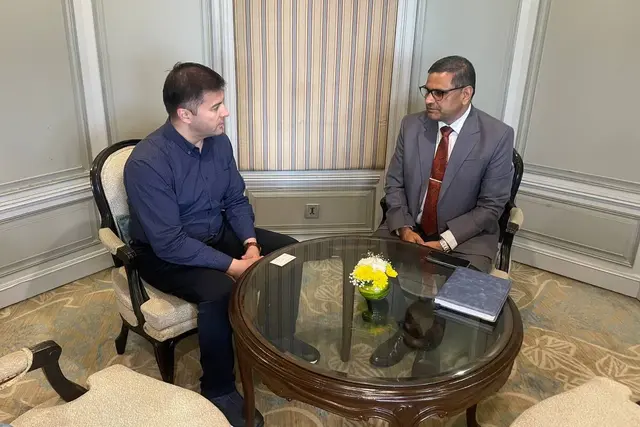
The training is conducted by Mohammad Nazem Shirazi, an international expert in laboratory systems. This program serves as the first of four planned capacity development modules aimed at strengthening national capabilities in chemical analysis and pesticide residue testing.
The course addresses two primary areas. The first is risk identification and assessment within chemical analysis laboratories. The second focuses on the implementation of quality management systems and preparation for accreditation in line with international standard ISO/IEC 17025:2017, which establishes the general requirements for the competence of testing and calibration laboratories. The program integrates theoretical presentations with practical exercises and the analysis of real-life cases.
Participants will gain insights into laboratory risk management, the application of quality control tools, and preparation for accreditation processes. Special attention is also dedicated to the safe handling of chemical substances, laboratory equipment, ventilation systems, and waste disposal, as well as operational procedures in emergency situations.
The project "Technical Assistance for the Sound Management of Hazardous Chemicals" (GCP/UZB/017) is implemented by FAO with EU funding totaling EUR 3.9 million. The objective of the initiative is to reduce environmental degradation in Uzbekistan by improving pesticide management and promoting sustainable agricultural practices.
In a broader context, the project aligns with the comprehensive support provided by the European Union to the government of the country in the fields of food safety, the rational use of land and water resources, and the development of inclusive agricultural value chains.