Central Bank Aims to Lower Uzbekistan Inflation to 5 Percent

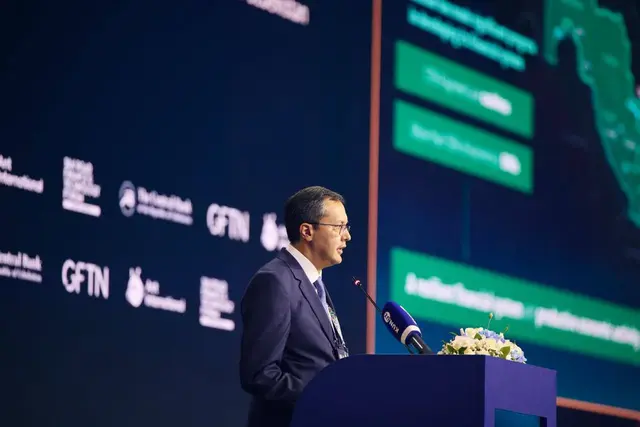
Tashkent, Uzbekistan (UzDaily.uz) — The Central Bank of Uzbekistan expects to reduce inflation from its current level of 6.5 percent to its target level of 5 percent next year, according to Central Bank Chairman Timur Ishmetov in an interview with the Financial Times on the sidelines of the Silk Road Finance & Technology Forum in Tashkent.
Reflecting on a decade of economic liberalisation, Ishmetov noted that Uzbekistan removed current account restrictions and established full currency convertibility while maintaining a conservative approach toward the capital account. Early price deregulation—including energy tariff reforms—temporarily pushed inflation above 20 percent in 2017 before monetary tightening gradually lowered the rate to 6.5 percent. He also highlighted that the International Monetary Fund officially reclassified Uzbekistan’s exchange rate regime as floating, calling it a milestone of ten years of currency reforms.
Reaffirming commitment to a floating exchange rate, Ishmetov stated that the Central Bank will not return to managing the exchange rate to buffer foreign investment inflows or market volatility. He emphasized that risks should be managed through long-term foreign direct investment, expanding local currency financing, and driving domestic economic growth rather than relying solely on external borrowing.
As part of the next phase of structural reforms, the Central Bank and the IMF have developed a sequencing roadmap for capital account liberalisation, which will be published after interministerial coordination to provide clarity for international investors. The primary focus remains on strengthening risk management and regulatory safeguards to handle potential exchange rate volatility.
Addressing inflation risks, Ishmetov observed that domestic drivers have largely been addressed through price deregulation, while main risks now stem from external supply shocks, such as global food and energy price swings. To mitigate supply-side pressures, the Central Bank is collaborating with the government to secure alternative trade corridors and boost domestic import-substitution production.
To reduce reliance on foreign-currency debt, Uzbekistan has increasingly shifted toward national currency financing. Following the International Finance Corporation's issuance of sum-denominated "Samarkand bonds" in 2019, the Ministry of Finance transitioned to issuing national currency Eurobonds, with all Ministry of Finance borrowings denominated in sum this year. Commercial banks are similarly increasing local currency bond issuances, supported by exchange rate stability and investor confidence in long-term low inflation.
On financial sector regulation, the Central Bank has aligned capital and liquidity standards with international frameworks and plans to transition all commercial bank financial reporting to IFRS standards by next year. Concurrently, new foreign exchange risk requirements are being introduced for banks with unhedged positions.
Regarding foreign investment diversification, Ishmetov confirmed that while China remains a major economic partner due to geographic proximity, Uzbekistan is actively expanding economic engagement with Europe and the United States. Furthermore, he emphasized Central Asia's potential as a unified investment destination, noting that regional economic integration could build a combined economy approaching one trillion dollars.
Ishmetov reaffirmed the Central Bank’s operational independence regarding interest rate decisions and exchange rate policy, stating that the regulator will maintain a moderately tight monetary policy focused on long-term economic resilience amid global market uncertainty.