Uzbekistan evaluates Chinese smart farming technologies to modernize agricultural sector

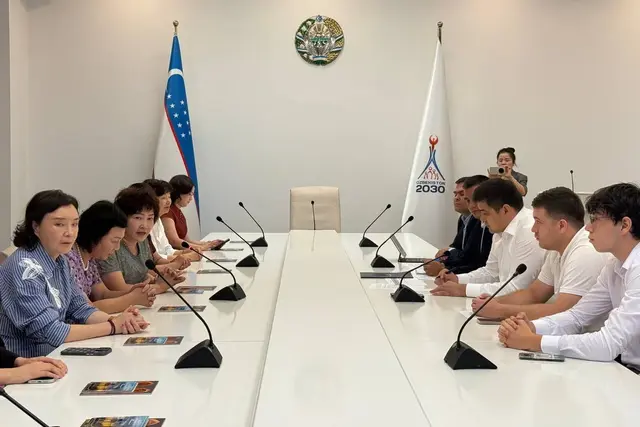
Tashkent, Uzbekistan (UzDaily.uz) — An executive delegation from Uzbekistan comprising administrators from top agricultural universities, agritech enterprise leaders, and representatives from the United Nations Food and Agriculture Organization (FAO) Representative Office in Uzbekistan concluded a strategic field study in the Xinjiang Uyghur Autonomous Region of China to evaluate advanced digital and smart farming systems.
The study tour was organized within the structural framework of the "China–Central Asia" cooperation mechanism, which focuses on modernizing agricultural education, accelerating technological transfers, and solidifying scientific-technical alliances among regional neighbors. The delegation participated specifically in the "Training Program for Central Asian Countries on the Integration of Education and Production in Modern Agriculture," a human capital capacity-building pipeline managed by the China–Central Asia Cooperation Center for Poverty Reduction.
Amid accelerating global climate change, acute regional water scarcity, and the pressing demand to increase crop yields, the adoption of resource-saving technologies has taken on critical geopolitical importance for Uzbekistan.
The primary core of the study program was hosted at the Xinjiang Agricultural Vocational and Technical University in Urumqi, in coordination with the Western Research Center of the Chinese Academy of Agricultural Sciences (CAAS). Uzbek agronomists examined cutting-edge agricultural innovations alongside their direct operational deployment across large-scale industrial farming sites.
The delegation dedicated significant technical attention to the facilities of Huier Agriculture, a leading regional agricultural technology corporation. The company demonstrated its automated "water-fertilizer integration" systems (fertigation). This precision farming setup precisely synchronizes drip irrigation with liquid nutrient feeding, significantly increasing water-use efficiency while maximizing crop output. Such resource-saving models are highly compatible with the arid and semi-arid climatic profiles characteristic of most agricultural lands in Uzbekistan.
The educational itinerary also covered the integration of Industry 4.0 solutions into modern agronomy. The delegates reviewed live demonstrations of the Internet of Things (IoT), Big Data analytics, and artificial intelligence (AI) models deployed to monitor crop bio-metrics in real-time, generate predictive yield analytics, and automate complex field processes.
Furthermore, the team examined Chinese methods for breeding high-yield cotton variants, automated post-harvest processing systems, and strict food quality control frameworks. They closely evaluated the Chinese "triple-helix" model of agricultural integration, which binds universities, research institutes, and agro-industrial conglomerates into a single commercial pipeline.
According to Uzbek delegates, these localized technologies possess high adaptability potential for immediate rollout back home. Representatives noted that combining smart water-delivery networks with digital soil-monitoring systems could optimize farming inside Uzbekistan's highly vulnerable, drought-prone agricultural sub-districts, while the educational integration model will assist domestic universities in training a new generation of high-tech agricultural engineers.
Moving forward, the participating institutions have mapped out a list of priority cooperation vectors. The agreed roadmap includes piloting digital precision farming systems in selected Uzbek provinces, upgrading domestic water management frameworks, joint research into high-productivity crop genetics, and expanding long-term international scientific partnerships under the China–Central Asia agricultural network.