Tashkent, Uzbekistan (UzDaily.uz) — The operation of 11 traffic light facilities on Makhtumkuli Street in Tashkent has been synchronized under a “green wave” system.
As a result, the road’s capacity has increased by 12%, while the average travel time along the route has decreased by 10%. This was reported by the Tashkent City Traffic Management Center.
Specialists analyzed traffic intensity, the distribution of traffic flows at different times of the day, the duration of traffic light cycles and travel times between intersections. Based on the data obtained, the operation of the traffic lights was coordinated.
The average daily traffic volume on Makhtumkuli Street reaches around 90,000 vehicles. The system operates in two modes, taking into account the prevailing direction of traffic flow.
From 00:00 to 13:00, coordination is configured toward central Tashkent, from the three-level interchange at the intersection of Makhtumkuli and Yangi Uzbekistan streets to Amir Temur Square. From 13:00 to 00:00, traffic is coordinated in the opposite direction, from Amir Temur Square to the three-level interchange at the intersection of Makhtumkuli and Yangi Uzbekistan streets.
The calculated travel speed along the coordinated corridor is 55 km/h. When the recommended speed is maintained, a vehicle successively reaches the calculated green-light intervals at the following intersections.
At the same time, the “green wave” does not mean a continuous green signal along the entire route. It refers to mathematically calculated coordination of traffic light cycles designed to reduce the number of stops and delays at intersections.
Actual travel time depends on road conditions, including traffic intensity, compliance with the speed limit, lane changes, public transport operations and pedestrian phases.
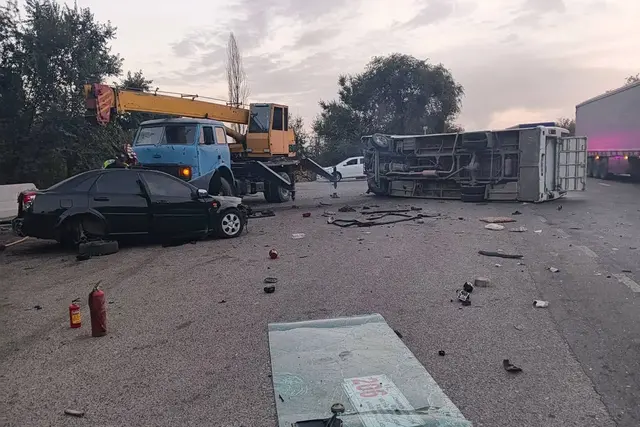
In the event of an accident, temporary lane closures, road works or a sharp increase in traffic volume, traffic parameters may temporarily differ from the calculated values.
The Traffic Management Center continues to analyze traffic flows and adjust coordinated traffic light control at other sections of Tashkent.