Tashkent, Uzbekistan (UzDaily.uz) — Uzbekistan will transfer responsibility for approving drinking water and sewerage tariffs to the Interdepartmental Tariff Commission under the Cabinet of Ministers from 1 January 2027, replacing separate regional pricing decisions with a unified system based on economically justified criteria.
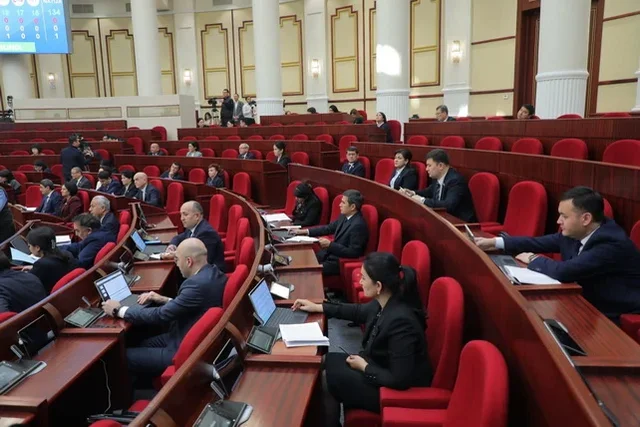
The changes were announced at a press conference attended by representatives of Uzsuvtaminot JSC, where officials also discussed the financial condition of water supply companies, outstanding consumer debts and planned reforms in the sector.
Another change is scheduled for 1 April 2027, when authorities plan to introduce a unified water tariff for state-funded organizations.
According to Uzsuvtaminot, the cost of providing water supply and sewerage services is influenced by electricity prices, infrastructure maintenance expenses, employee salaries and debt servicing costs.
Rising electricity tariffs have become a major factor affecting operating expenses.
The electricity tariff increased from 450 to 900 soums on 1 October 2023, rose to 1,000 soums on 1 May 2025 and reached 1,100 soums on 1 June 2026.
As a result, electricity costs increased 2.4 times over three years.
The average drinking water tariff for households nationwide currently stands at 3,765 soums per cubic meter, or 4,217 soums including value-added tax.
The average sewerage tariff is 2,008 soums.
As of 27 October, revised tariffs had been approved for six water supply enterprises.
In Andijan region, the drinking water tariff increased from 1,650 to 2,500 soums per cubic meter, while Navoi region raised its rate from 3,500 to 4,200 soums.
Samarkand region increased its tariff from 2,800 to 3,600 soums per cubic meter.
In Surkhandarya region, the price rose from 5,300 to 6,800 soums, while Tashkent region increased its tariff from 2,600 to 3,100 soums.
The tariff for the Chimgan-Charvak main water supply enterprise was revised from 1,500 to 1,700 soums.
Uzbekistan's water supply sector is also facing substantial outstanding consumer debt.
According to Uzsuvtaminot, total arrears owed to enterprises within its system reached 542.6 billion soums as of 1 October 2026.
Household consumers accounted for 430.7 billion soums of the outstanding amount, while legal entities owed another 111.8 billion soums.
Tashkent recorded the highest level of arrears at 92.9 billion soums.
Andijan region followed with 74.1 billion soums, while outstanding debts reached 61.6 billion soums in Tashkent region and 57 billion soums in Ferghana region.
To recover unpaid bills, water supply companies submitted 167,783 applications to notarial authorities and courts during 2026.
Following their review, 114,305 notarial enforcement endorsements and court orders were issued.
Of these, 110,563 enforcement documents were forwarded to the Bureau of Compulsory Enforcement.
From 2027, Uzbekistan also plans to introduce a revised mechanism for collecting outstanding payments for water supply and sewerage services.
The procedure will depend on the amount owed by the consumer.
Debts not exceeding 1,000 base calculation units (BCUs) will be recovered through notarial procedures.
Cases involving debts above that threshold will be referred to the courts.
If a consumer fails to fulfill payment obligations after an enforcement document has been issued, legislation provides for the possibility of restricting electricity payments under the established procedure.
However, the measure will not apply to families included in the Unified Social Protection Register.
Authorities also clarified that restrictions will not be imposed immediately after a debt arises. Consumers will be given time to settle their outstanding obligations in accordance with the prescribed procedure.
The planned reforms are linked to Presidential Decree No. UP-140 of 24 July 2026, which outlines measures to improve tariff regulation, strengthen the financial sustainability of water supply enterprises and enhance service quality.
The decree provides for shorter tariff review periods when energy costs change, alongside greater transparency in pricing decisions and advance notification of tariff changes to the public.
It also envisages directing funds toward the repair and modernization of water supply networks.
The transition to centralized tariff regulation is expected to establish consistent criteria for approving water and sewerage prices across Uzbekistan while improving the financial stability of companies operating in the sector.