Global Airline Profits to Halve in 2026 as Middle East War Sends Fuel Costs Soaring

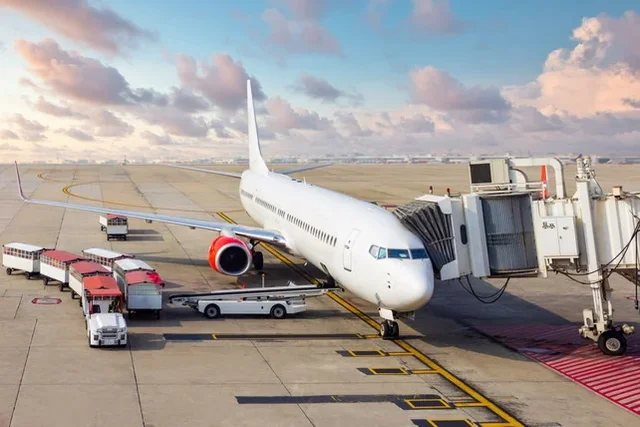
Global Airline Profits to Halve in 2026 as Middle East War Sends Fuel Costs Soaring / Photo: IATA
Tashkent, Uzbekistan (UzDaily.uz) — Global airlines are on course to see their collective profits cut in half this year, as the war in the Middle East drives jet fuel prices to historic highs and upends a fragile recovery that had been gathering momentum since the end of the COVID pandemic. The International Air Transport Association sounded the alarm on Sunday at its 82nd Annual General Meeting in Rio de Janeiro.
Addressing members in what was his final appearance as IATA Director General before taking the helm at India's IndiGo airline, Willie Walsh projected industry-wide net profits of $23 billion for 2026 — down sharply from $45 billion in 2025 and roughly half of what had been forecast just months ago. Net profit margins are expected to shrink from 4.2% to a thin 2.0%, and net profit per passenger will fall from $9.10 to $4.50.
"It won't even buy you a hot dog at most of the FIFA World Cup venues," Walsh quipped, referring to the meager per-passenger return. "And it does not leave much of a buffer should other costs or taxes start rising."
A Fuel Shock of Historic Proportions
The proximate cause of the industry's distress is crude oil. Since war broke out in the Middle East in March, oil prices have jumped sharply. Jet fuel — commanding a crack spread premium over crude at a historic high of $57 per barrel — is expected to average $152 per barrel for the full year, up nearly 70% from $90 in 2025. That will add roughly $100 billion to airlines' collective fuel bill, pushing total fuel expenditure to $350 billion and lifting fuel's share of total operating costs from 25.4% to 31.4%.
Total industry revenues are expected to climb 9.4% to $1.165 trillion as airlines raise fares and ancillary charges to offset costs. But operating expenses are projected to surge 13% to $1.117 trillion, swallowing most of those gains. The result is an operating profit of just $48 billion, down from $76.4 billion a year earlier.
"Airlines are bearing the brunt of the fuel price shock. While air fares are rising, airlines are still absorbing part of the hike in their bottom lines." — Willie Walsh, IATA Director General
Middle East Carriers Plunge Into the Red
The regional picture is starkly uneven. Gulf carriers — Emirates, Qatar Airways, Etihad and their peers — face the most severe disruption. Sitting at the geographic epicenter of the conflict, Middle Eastern airlines are expected to post a combined net loss of $4.3 billion in 2026, a brutal reversal from the $7.2 billion profit recorded just a year ago. Demand in the region is forecast to fall 11.4%, and the net margin has swung to negative 6.1%.
Walsh was candid in his admiration for these carriers' operational resilience — "doing an amazing job maintaining connectivity" — but equally candid about the arithmetic: major financial impacts are unavoidable.
North America ($9.4 billion in forecast net profit) and Europe ($9.6 billion) remain in positive territory, though both regions are absorbing significant cost pressure. Asia-Pacific ($6.6 billion) is benefiting from some traffic rerouting away from Gulf hubs on Europe–Asia corridors but faces acute risks from fuel supply disruption and currency depreciation. Latin America ($1.2 billion) and Africa ($0.1 billion) round out a global picture in which every region outside the Middle East remains technically profitable — but none is unscathed.
Regional Outlook: 2026 Net Profit Forecasts
| Region | Net Profit | Net Margin | Profit/Pax | Demand (RPK) |
|---|---|---|---|---|
| North America | $9.4B | 2.5% | $8.10 | +0.8% |
| Europe | $9.6B | 3.1% | $7.50 | +2.8% |
| Asia-Pacific | $6.6B | 2.1% | $3.40 | +5.1% |
| Latin America | $1.2B | 2.1% | $3.50 | +5.0% |
| Africa | $0.1B | 0.2% | $0.40 | +10.0% |
| Middle East | –$4.3B | –6.1% | –$21.40 | –11.4% |
Supply Chain: An Industry Held Back
Compounding the fuel crisis is a now-chronic aerospace supply chain failure. The global aircraft order backlog has swelled to over 18,100 — more than half the entire active fleet — as manufacturers continue to miss delivery schedules. The average commercial fleet age has reached a record 15.2 years. Walsh calculated that airlines are operating more than 5,000 fewer fuel-efficient replacement aircraft than planned, costing the industry at least $11 billion in 2025 alone. For the first time in history, the airline industry's annual gains in fuel efficiency and CO₂ reduction have been eliminated entirely.
Walsh made no effort to conceal his frustration with engine manufacturers. "My message to the engine OEMs is simple — stop gouging us and get back to making great engines that work and that last," he said. He noted, with evident irritation, that most engine-maker profits rose by double digits even as their customers suffered — a paradox he described as impossible to address "in polite company."
Sustainability Goals Under Threat
Walsh used his platform to sound an unusually candid alarm about the industry's net-zero-by-2050 commitments. Two pillars of that roadmap are visibly weakening.
On sustainable aviation fuel, production this year will reach just 2.4 million tonnes — 0.8% of total fuel consumption — against a 2050 target of 500 million tonnes. Walsh catalogued a string of cancelled or scaled-back SAF projects across Europe, citing perverse regulatory structures in the EU and UK where airlines are effectively paying compliance surcharges to compensate fuel suppliers for penalties incurred for failing to produce enough SAF. "You could not make this stuff up," he said.
On CORSIA — the global carbon offsetting scheme — Walsh warned that only 10 countries have made eligible emissions units available against an expected need of 170 to 236 million units. He issued a pointed rebuke of the EU for what he called efforts to undermine CORSIA in favor of its own Emissions Trading System, calling such behavior "disingenuous and unacceptable."
"There is still hope for 2050 — but that's fading fast. We need an urgent dialogue to determine a realistic timeline given the current state of affairs." — Willie Walsh, IATA Director General
Travelers Remain Resilient — For Now
Despite the financial turbulence, IATA polling of 6,500 travelers across 15 countries in April found 97% expressing satisfaction with their last flight experience and 49% expecting to spend more on air travel in the next 12 months. A further 43% plan to spend the same amount.
Passenger numbers are still expected to reach 5.1 billion in 2026 — up 2.4% on 2025 — and the average load factor is set to hit a record 84%. But Walsh cautioned that the "big unknown" is how long travelers and freight shippers can absorb the mounting costs of connectivity before demand cracks under the pressure.
Walsh's Farewell: A Warning and a Challenge
In what amounted to a valedictory speech, Walsh reserved his harshest words for policy failures: aviation taxes that defy ICAO standards; passenger-rights regimes like the EU's EU261, which he called an €8 billion annual burden on Europe's competitiveness; and the "nostalgic" state of US air traffic management infrastructure. He called for urgent ATM reform, noting that even a 5% efficiency improvement could save airlines $12.5 billion annually and cut millions of tonnes of carbon emissions.
Walsh leaves IATA after several years at the helm. His successor has not yet been named. He will take over as CEO of IndiGo, India's largest airline, in the coming weeks. The challenges he outlined — fuel volatility, supply chain dysfunction, regulatory incoherence, and a sustainability roadmap under stress — will land squarely on whoever follows him at the Geneva-based body.
"Aviation makes the world a better place by bringing people together," Walsh concluded. "We offer hope and enable freedom. That's what motivates our collective efforts to make flying ever safer, more efficient, and sustainable."
A fitting, if challenging, inheritance for his successor.