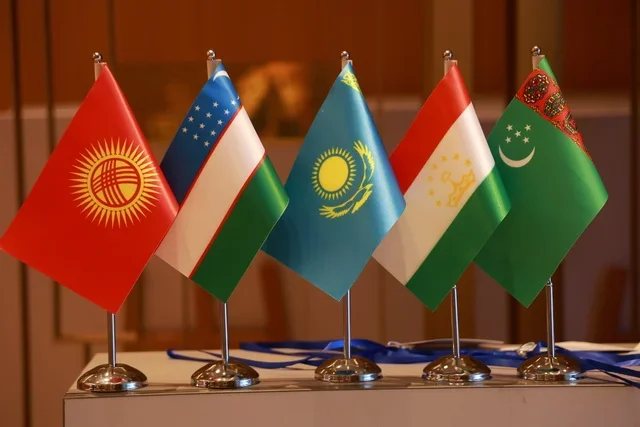
Tashkent, Uzbekistan (UzDaily.uz) — The first-ever summit between the Republic of Korea and the five Central Asian states will be not so much the beginning of a new format as the culmination of nearly two decades of evolving relations. Over that time, the region itself has changed no less than Seoul's policy toward it. Central Asia is increasingly presenting itself to external powers as a single diplomatic space, while South Korea is gradually moving beyond trade and humanitarian projects toward a more complex model centered on industry, critical minerals, technology, and new supply chains. Against this backdrop, the most interesting question is not who will receive more attention during the summit itself, but where the infrastructure already exists to turn political agreements into real projects.
The official event website lists September 16, 2026 as the date of the first Korea–Central Asia Summit at the leaders' level. Its motto is Walking Together Toward the Future: Partnership for Trust and Prosperity. Seoul itself describes the meeting as historic. In this case, that description can hardly be dismissed as diplomatic hyperbole: never before has the Republic of Korea brought together the leaders of Kazakhstan, Kyrgyzstan, Tajikistan, Turkmenistan, and Uzbekistan in a dedicated summit-level format.
Yet Korea's relations with Central Asia did not begin in 2026.
Back in 2007, Seoul established the Korea–Central Asia Cooperation Forum - one of the earliest specialized multilateral mechanisms through which an outside power engaged all five Central Asian states at once. Ten years later, in July 2017, its permanent secretariat was established. Over the years, the Forum's agenda expanded from political dialogue to transport and logistics, energy and water resources, industrial modernization, healthcare, education, technology, and tourism.
The September summit is therefore better understood as moving an already established system of relations to a higher political level.
For nearly twenty years, the sides built ties among diplomats, ministries, businesses, universities, and specialized agencies. Now, for the first time, this infrastructure is being complemented by a full-fledged meeting of leaders.
And that is precisely what makes the summit important far beyond Korea–Central Asia relations.
Central Asia Is Ceasing to Be Merely a Geographic Concept
Over the past decade, a new diplomatic architecture has effectively emerged around Central Asia.
The United States created the C5+1 format in 2015, and in September 2023 it was elevated to the presidential level for the first time. Following the leaders' meeting, a separate C5+1 Critical Minerals Dialogue was launched - an illustrative example of how a regional political mechanism is gradually becoming a platform for concrete economic projects.
In May 2023, China held the first China–Central Asia Summit in Xi'an. In July of the same year, the leaders of the Central Asian states and the member states of the Gulf Cooperation Council met for the first time in Jeddah.
In April 2025, Samarkand hosted the first European Union–Central Asia Summit, after which relations between the two regions were officially upgraded to a strategic partnership.
Japan took an even longer path. Tokyo launched the Central Asia plus Japan dialogue back in 2004, but only in December 2025 - 21 years later - did it hold its first leaders' meeting with all five presidents.
South Korea is now joining this sequence.
This does not mean that a unified Central Asian bloc is emerging in the classical sense. The five states retain different economies, foreign-policy interests, and development models. But C5 is gradually becoming an independent diplomatic format that external partners increasingly find advantageous to engage as a region as a whole.
For the Central Asian states themselves, this framework offers several practical advantages.
First, it allows issues that cannot be fully resolved within a single national border to be brought to the international level: transport corridors, power grids, water resources, digital connectivity, the environment, and international supply chains.
Second, taken together, five relatively small and medium-sized states represent a significantly more substantial market for a major economy than they do separately.
Finally, the growing number of C5+ formats allows Central Asia to avoid choosing a single external partner. China, the European Union, the United States, the Gulf states, Japan, and the Republic of Korea offer the region different forms of capital, technology, and economic ties.
As a result, Central Asia's geography is gradually turning from a constraint - being located between major powers and having no access to the sea - into a bargaining asset.
And here, the Korean proposition has its own distinctive features.
What Exactly South Korea Is Looking for in Central Asia
South Korea cannot compete with China in terms of geographic proximity, or with the Gulf states in terms of the volume of readily available investment capital.
But Seoul has what Central Asia particularly needs at the next stage of its economic development: industrial technologies, engineering expertise, experience in building export-oriented manufacturing, and integration into global value chains.
In 2024, the Republic of Korea for the first time formalized a dedicated strategy for relations with the region - the K-Silk Road Cooperation Initiative.
In the document itself, Central Asia is no longer viewed as a peripheral post-Soviet space, but as a region with a population of more than 80 million, a young demographic profile, substantial energy resources, and reserves of critical minerals needed for batteries, electronics, and emerging industries.
The logic becomes even clearer when viewed against the changing priorities of South Korea itself.
In remarks on September 3, 2026, Foreign Minister Cho Hyun specifically emphasized the need to strengthen Korea's capacity to process and recycle key minerals and to diversify their supply chains. He linked Korea's economic resilience to energy, new technologies, and reduced dependence on a limited number of suppliers.
This is a fundamental point.
Seoul no longer needs merely new markets for cars, electronics, and equipment.
It needs reliable sources of strategic raw materials, production sites, infrastructure, alternative logistics routes, and long-term institutional partners.
In this sense, the first summit is taking place in a completely different geoeconomic reality from that of the first Korea–Central Asia Cooperation Forum in 2007.
Korea Is Already Present in the Region
At the same time, it would be wrong to portray Central Asia as a territory that Korean business is only now preparing to enter.
It is already here.
In Uzbekistan, Korean companies, KOTRA, Korea Eximbank, KOICA, and other organizations are active simultaneously, while university and educational cooperation is well developed. In July 2026, the Korean Embassy in Tashkent brought together representatives of the Association of Korean Companies, KOTRA, Eximbank, KOICA, and educational institutions at a single venue - a good indication of how extensive the local institutional network has become.
In Kyrgyzstan, cooperation is at a different stage. The first official trade and investment committee began operating only in June 2026, and the issues already under discussion included opening a KOTRA office in Bishkek, critical minerals, industry, and ODA programs.
In Tajikistan, the Korean presence is developing primarily through projects in energy, water resources, digitalization, and human-capital development. Ahead of the September summit, the sides separately discussed the possibility of expanding cooperation in energy and water resources.
In Turkmenistan, the model is different: petrochemicals, energy, construction, and major engineering contracts. In 2026, Daewoo E&C was already constructing a phosphate fertilizer production complex in Turkmenabat; at the same time, projects in electric power, new urban development, and petrochemicals were under discussion.
In other words, the Republic of Korea is approaching the first summit with a Central Asian map that is far from blank.
But the depth and structure of its presence differ across the five states.
And this is precisely where Kazakhstan presents a particularly interesting case.
Kazakhstan: Where the Future Model of Cooperation Is Already Partly in Place
Kazakhstan's distinctiveness does not lie in any single indicator.
Rather, it lies in the fact that virtually all the areas South Korea is now trying to bring together into a unified Central Asian strategy already coexist here.
The political foundation was laid long ago. In 2021, the countries consolidated their relations at the level of an enhanced strategic partnership, while the treaty and legal framework now includes more than 30 interstate, intergovernmental, and interagency documents.
In 2024, during the Korean president's state visit to Kazakhstan, Astana endorsed the new K-Silk Road strategy, and the two countries agreed to work jointly to further develop the Central Asia–Republic of Korea format. At that time, the Korean side also invited Kassym-Jomart Tokayev to make a return visit to Seoul.
This bilateral track now directly overlaps with the first regional summit.
A separate visit by the President of Kazakhstan to the Republic of Korea is expected in September 2026. Preparations are proceeding in parallel across several areas: industry, investment, energy, artificial intelligence, critical minerals, transport, and logistics.
This is an important distinction.
For Kazakhstan, the new C5+Korea format does not replace the bilateral partnership with Seoul; it adds a new regional layer on top of the relationship that already exists.
The economic dynamics are even more revealing.
According to KAZAKH INVEST, Kazakhstan attracted $5.7 billion in direct Korean investment over the past five years alone. This accounts for about 48% of all investment from the Republic of Korea received since 2005. In 2025 alone, the inflow amounted to approximately $1 billion.
In assessing these figures, the trend matters more than the absolute amount.
Nearly half of the capital accumulated over two decades arrived in just the past five years.
In other words, Korea's presence in Kazakhstan is not merely a legacy of older economic relations. It is accelerating right now.
The institutional infrastructure, however, has been built over a much longer period. KOTRA's office in Almaty has operated since 2002 and, according to KAZAKH INVEST, has assisted more than 7,000 Kazakhstani enterprises over that period. Since 2018, KOTRA and KAZAKH INVEST have had their own formalized cooperation mechanism.
This is an important, though rarely noticed, detail.
When a foreign company explores a new market, one of the main risks is the absence of institutional memory: there are no specialists who know the legislation, partners, logistics, and local business environment.
In Kazakhstan, much of this barrier has already been removed for Korean business.
This is even more evident in industry.
In 2025, Hyundai Trans Kazakhstan produced 52,040 vehicles. The plant does more than simply assemble cars: production is being steadily modernized and robotized, while localization is deepening.
At the same time, KIA Qazaqstan is being developed in Kostanay. The project provides for full-cycle CKD production and capacity of more than 70,000 vehicles per year; of the project's total cost of 131.5 billion tenge, 116.5 billion tenge is direct investment by KIA.
This already represents a fundamentally different level of relations from exporting finished vehicles from Korea.
Local production means engineers, workforce training, component logistics, local suppliers, service networks, financing, and the gradual formation of an industrial cluster.
That is why the automotive sector can be viewed as a model of sorts for how Seoul would like broader cooperation with Central Asia to develop: Korean technology and capital are combined with local production and the regional market.
In Kazakhstan, this model is already working.
Strategic raw materials may become the next area.
As early as 2024, Kazakhstan and the Republic of Korea signed memoranda on cooperation in critical minerals and the security of their supply chains, covering geological exploration, extraction, processing, and lithium materials.
By 2026, the dialogue had become significantly more concrete.
The Korea Institute of Geoscience and Mineral Resources (KIGAM) is discussing with Kazakhstan joint geological exploration, rare and rare-earth metals, the introduction of modern technologies, and work on specific sites, including the Bakennoye deposit in East Kazakhstan.
At the same time, Korea Eximbank is considering the next level: not only extraction, but also deep processing of rare-earth metals, the creation of higher-value-added chains, localization of production, and development of the battery industry.
And this is where perhaps the most promising formula for Kazakhstan–Korea relations emerges: not exporting raw materials from Central Asia to Korea, but creating part of the production chain directly in Kazakhstan.
For Kazakhstan, this is consistent with the goal of moving away from a raw-materials-based economic model.
For Korea, it aligns with the goal of diversifying supplies and gaining more resilient access to strategic materials.
But even this does not fully explain Kazakhstan's special position.
There is also geography.
The World Bank identifies Kazakhstan, together with Azerbaijan and Georgia, as the three key countries of the Middle Corridor. According to its estimates, with the necessary investment and organizational changes, trade volumes along the route could triple and cargo transit times could be cut in half by 2030.
For the Republic of Korea, this has direct economic significance.
Korea is a maritime export economy. Kazakhstan is Central Asia's largest land-based economy, situated between China, the Caspian Sea, Russia, and the rest of the region.
Connecting these two systems is already becoming the subject of concrete negotiations. In 2026, Kazakhstan and the Busan authorities discussed the possibility of linking Kazakhstan's logistics infrastructure in the Chinese cities of Lianyungang and Xi'an with Busan's port capacity and, from there, with the Middle Corridor.
This is not yet a fully established new trade artery.
But the direction clearly illustrates a shift in scale of thinking: from bilateral trade to a Korea–Eurasia supply chain in which Kazakhstan is not the endpoint, but a hub.
The scale of the economy reinforces this potential.
According to the World Bank, Kazakhstan's GDP in 2025 was about $306.2 billion, while GDP per capita was approximately $14,700.
For a major industrial investor, this has practical significance: localized production provides access not only to raw materials or transit routes, but also to a sufficiently large national economy, a financial system, infrastructure, and a domestic market with meaningful purchasing power.
Finally, there is a factor that cannot be measured by investment statistics alone.
Kazakhstan is home to one of the largest Korean communities outside the Korean Peninsula. In May 2026, a representative of South Korea's Overseas Koreans Agency spoke of more than 122,000 ethnic Koreans living in the country. The same year marked the 90th anniversary of the Korean diaspora's history in Kazakhstan.
This creates an asset that is rare in economic diplomacy: a human infrastructure of trust.
Korean companies are entering a country where the word 'Korea' is not an abstract foreign-policy concept. A Korean community, cultural institutions, family ties, and mutual familiarity between the two societies have existed here for decades.
In a sense, the human bridge between Kazakhstan and Korea emerged long before KOTRA, Hyundai, the K-Silk Road, and the first summit.
Economic relations therefore rest on more than intergovernmental agreements alone.
The Summit as a Test of the New Model
The first Korea–Central Asia Summit should hardly be turned into a competition among the five states for the symbolic status of Seoul's principal partner.
The Republic of Korea objectively needs the entire region.
Turkmenistan can offer major energy and engineering projects. Tajikistan and Kyrgyzstan offer new opportunities in resources, energy, and infrastructure. Uzbekistan has a deep-rooted Korean corporate and humanitarian presence.
The point of the regional format is precisely that these opportunities begin to complement one another.
However, the next stage of Korean policy will require more than a diplomatic declaration.
It will be necessary to answer far more practical questions.
Where should critical-mineral processing be located?
Where should production be localized?
Which economy is capable of absorbing a large volume of long-term capital?
Through which territory can products reach other markets?
Where are Korean institutions and companies already present that can support new projects?
And where can political agreements be turned most quickly into a factory, an infrastructure facility, a research center, or a supply chain?
By this combination of criteria, Kazakhstan's position looks particularly interesting.
Korean capital and Korean production are already present here; KOTRA and financial institutions; automobile plants and industrial-localization projects; cooperation on critical minerals and their processing; the Middle Corridor and dialogue with Busan; a strategic partnership at the state level; and a large Korean community within the country.
Many of these elements can also be found separately in other parts of Central Asia.
But in Kazakhstan, they are beginning to come together into a single system.
This, perhaps, is one of the main points of intrigue surrounding the September meeting.
The first Republic of Korea–Central Asia summit is historically important because, for the first time, it elevates a nearly twenty-year cooperation mechanism to the level of heads of state.
But its real significance will be determined later - not by the number of documents signed or by protocol statements.
It will be determined by whether Seoul can turn the K-Silk Road from a diplomatic strategy into an economic architecture.
If that happens, Korea will need more than just partners and markets.
It will need locations where resources, technology, production, capital, and international logistics can all be connected at once.
Kazakhstan approaches the first summit with a substantial part of that infrastructure already in place.
For Astana, therefore, September 2026 is not so much an opportunity to begin a new chapter in relations with South Korea.
It is more accurate to put it differently: the question is whether the Kazakhstan–Korea partnership that has already taken shape can become one of the pillars of Seoul's new policy across Central Asia.
Markus Friedrich Schneider — independent expert, analyst specializing in the economies of Central Asian countries, contributor to EUobserver.