Tashkent, Uzbekistan (UzDaily.uz) — “Potential Risks of the Iran–US and Russia–Ukraine Conflicts from the Perspective of the Shanghai Cooperation Organisation: The Importance of the Multidimensional Foreign Policy of Uzbekistan, Kazakhstan and Kyrgyzstan”
Although the Shanghai Cooperation Organisation (SCO) was established on 15 June 2001 as a security-oriented regional structure, it is observed that it has evolved into one of Eurasia’s geopolitical and geoeconomic platforms today. The organisation was initially referred to as the “Shanghai Five” and the Shanghai Pact. In this context, the organisation was initially built upon the founding partnership of China and Russia, but with the full membership of Iran and the participation of Belarus, it has transformed into a broader strategic network. However, the fundamental character of the SCO manifests itself not as a collective defence organisation similar to NATO, but rather as a flexible cooperation mechanism that prioritises security, economic cooperation, transportation and regional stability.
Today, two of the most important challenges facing the SCO are undoubtedly the Russia–Ukraine war and the war between Iran and the United States. Both wars also bring significant risks for the future of the organisation.
China is the Centre of Gravity of the Shanghai Cooperation Organisation
Although Russia continues to be an important actor within the SCO from a military perspective today, China is undoubtedly the decisive power in terms of economic capacity, investment volume, trade, technology and financing. In particular, its infrastructure investments in the Turkestan (Central Asian) countries within the framework of the Belt and Road Initiative have made China the economic locomotive of the organisation. From Beijing’s perspective, it is clear that the fundamental function of the SCO is perceived as ensuring the security of trade corridors by maintaining stability in the region, rather than engaging in direct military competition with the West.
Therefore, for China, the SCO is;
- safe transportation corridors
- secure exports
- energy supply security (which is necessary for China’s production capacity)
- border security
- economic integration,
- the development of non-dollar trade mechanisms by reducing dependence on the dollar.
For all these reasons, the transformation of the organisation into a military bloc and the emergence of a culture of conflict will not have a positive effect for China. Of course, it seems that interventions against Iran, which is one of China’s energy sources, will significantly determine the fate of this situation.
China’s Approach to Russia and Iran
It is clear that China is pursuing a strategic partnership with Russia and Iran. However, it is also observed that this partnership does not mean an “unlimited military alliance.”
For China, Russia is;
- energy security,
- balancing the US,
- an important partnership in terms of Eurasian security.
Iran, on the other hand, is understood to be perceived as;
- the Persian Gulf,
- balancing the US,
- Middle Eastern energy resources.
When these are taken into consideration, it is observed that China’s foreign policy understanding is highly pragmatic and built around marketing its production capacity. While developing its relations with Russia and Iran, China is also trying to maintain and expand its trade with the European Union and the US. From this perspective, it is observed that a significant portion of China’s exports is still dependent on Western markets and that Beijing’s directly entering a global war would be contrary to its own economic interests.
Would China Enter a Direct War with the US for Russia or Iran?
Considering China’s economy-oriented foreign policy, it is clear that such a possibility is quite low. In addition, given that a large proportion of China’s foreign trade is conducted with countries such as the US, which have a high level of prosperity;
- China prefers to avoid economic sanctions,
- minimise secondary-oriented sanctions,
- protect its international trade,
- support diplomatic solutions in crises, and it is understood that it will try to maintain this policy.
Although China provides support to Iran in the defence field during the Iran–US war, it is observed that it carries this out without entering into direct conflict with the US, by preserving the existing regime and stability in the region, through proxy elements and through a model of support in return for its strategic interests, particularly energy.
In the Russia–Ukraine war, on the other hand, it is observed that China does not completely leave Russia alone, but at the same time avoids direct military intervention.
Potential Risks of the Iran–US and Russia–Ukraine Conflicts from the Perspective of the SCO
Undoubtedly, the ongoing Russia–Ukraine war and the Iran–US war may also create multidimensional risks for the SCO.
- One of the most important risks may be the SCO being perceived as an “anti-Western military bloc.” This situation may negatively affect the economic relations between SCO members and Europe and the US.
- Another risk, and in fact one of the most important risks for China, is the damage to the transportation corridors between China and Europe. Moreover, it is clear that a war between Iran and the US that becomes more intense may also negatively affect the Middle Corridor and the Southern Corridor, and furthermore, may constitute a problem for China in terms of energy diversification.
- Another risk is fluctuations in energy markets. Excessive fluctuations in oil and natural gas prices may create pressure particularly on SCO countries that are importers in this field.
- Another and important risk is the expansion of sanctions. New financial sanctions against Russia and Iran may make it more difficult for banking and payment systems within the SCO to access international financial markets.
Along with all these, SCO countries control an important part of the world’s trade routes. Therefore, prolonged wars may;
- increase logistics costs
- increase insurance expenses
- reduce investor confidence in investments to be made in the region
- create uncertainty in energy prices
- create negative effects in terms of regional tourism.
Another negative effect is that a significant portion of China’s railway corridors extending to Europe passes through Russia. Although China has increased the importance it attaches to the Middle Corridor and accelerated infrastructure investments in the region in order to bypass this situation and diversify transportation routes, the US–Iran war may create a security risk along the Middle Corridor and negatively affect the security of the corridor.
Uzbekistan’s, Kazakhstan’s and Kyrgyzstan’s Multidimensional Foreign Policy and the Future of the SCO
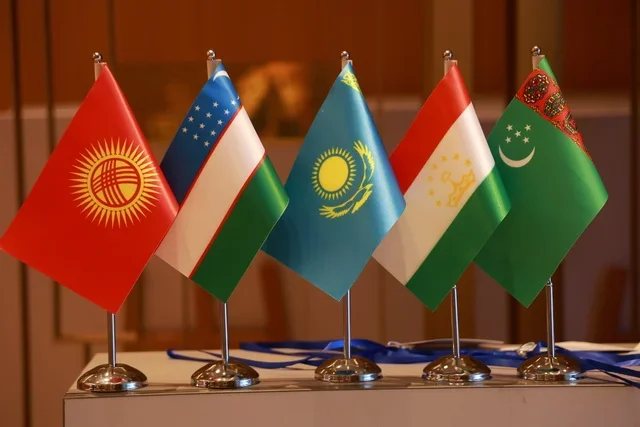
Among the most notable actors within the SCO are undoubtedly Uzbekistan, Kazakhstan, and Kyrgyzstan. In recent years, it has been observed that Uzbekistan, Kazakhstan, and Kyrgyzstan have adopted a ‘multidimensional foreign policy’ approach rather than a unidimensional foreign policy by advancing their relations with the Turkic World in particular, as well as with countries and actors such as the United States, the European Union, China, Russia, and the Gulf countries. Thanks to this approach, these countries are simultaneously observed to be active:
- with China in the Belt and Road projects,
- with Russia, particularly in the field of security, as well as in various economic areas,
- with the European Union in the fields of energy and investment,
- with the United States in the fields of economic and strategic cooperation.
As these countries are also members of the Organization of Turkic States, they stand out as important actors in the integration of the Turkic World in a manner that would represent the entire region. The balancing policy pursued by Uzbekistan, Kazakhstan, and Kyrgyzstan can also be regarded as a ‘multi-layered balancing’ model that enables them to establish simultaneous relations with different centers of power.
For this reason, Uzbekistan, Kazakhstan, and Kyrgyzstan are important actors that can prevent the SCO from being perceived merely as a China- and Russia-oriented security organization.
Likewise, the constructive relations maintained by Uzbekistan, Kazakhstan, and Kyrgyzstan with the West, their energy partnership with the European Union, their economic cooperation with the United States, and their influential positions within the Organization of Turkic States may contribute to the SCO being perceived not as a militarily focused organization, but rather as a more inclusive platform that prioritizes the economy within the international system.
Furthermore, considering the importance that Uzbekistan, Kazakhstan, and Kyrgyzstan attach to dialogue among the parties and confidence-building diplomacy, this may strengthen the SCO’s crisis-management capacity, and in this way, the multidimensional foreign policy of Uzbekistan, Kazakhstan, and Kyrgyzstan may become an important advantage for the SCO.
Alongside all of these factors, the multidimensional diplomatic approach of Uzbekistan, Kazakhstan, and Kyrgyzstan may also contribute to keeping communication channels open between China and the West, Russia and the European Union, and Iran and the United States.
In conclusion;
The Iran-US tensions and the Russia-Ukraine war demonstrate that they can directly affect the SCO’s security and economic agenda. However, it is observed that the key factor that will determine the future of the organization depends on whether China, as the center of gravity of the organization, is willing to manage these conflicts along the lines of economic integration and regional stability without turning the organization into a military alliance.
Although it is observed that, in line with its national interests, Beijing’s current strategy is based on avoiding direct confrontation with the United States and Europe while not completely abandoning Russia and Iran, it is also evident that Russia’s perspective will determine the future of the organization.
Within this framework, it can be argued that one of the main factors that will determine the future of the organization is the multidimensional foreign policy of Uzbekistan, Kazakhstan, and Kyrgyzstan, which can be regarded as one of the most important balancing elements strengthening the SCO’s international legitimacy. It can also be concluded that the relations simultaneously developed by Uzbekistan, Kazakhstan, and Kyrgyzstan with the European Union, China, Russia, and the United States contribute to the perception that the SCO can function as a platform for dialogue and economic cooperation rather than one driven by geopolitical competition.
In this context, it can be predicted that the future success of the organization will also be directly related to whether and to what extent its members will adopt the balanced and multidimensional diplomatic approach represented by Uzbekistan, Kazakhstan, and Kyrgyzstan instead of confrontational rhetoric.
Ahmet Sağlam