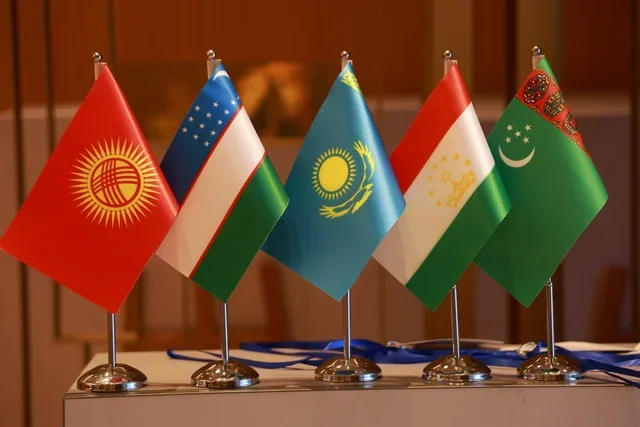
Tashkent, Uzbekistan (UzDaily.uz) — The 13th Summit of Heads of State and Government of the Organization of Turkic States (OTS) is being held in Ankara, the capital of Türkiye, on 29–30 October 2026. In addition to the decisions to be taken within the framework of the summit, developments that have taken place prior to the meeting present a noteworthy picture in terms of the future of the Turkic world, the geopolitical balances of Eurasia, and intercontinental transport connections.
In this context, I believe that three developments that have taken place ahead of the summit deserve particular consideration. The first is the high-level contacts between Türkiye and Kazakhstan and the economic-strategic dimension of these contacts. The second is the agreements concluded between Türkiye and Uzbekistan. The third is the approval by the Armenian Parliament, one day before the summit, of the Trump Route for International Peace and Prosperity (TRIPP) agreement. All three developments demonstrate that the summit held in Ankara is not limited solely to political solidarity among the Turkic states; rather, it is directly related to the economic and geopolitical future of Eurasia.
Türkiye–Kazakhstan relations: From economic cooperation to Eurasian strategy
President of Kazakhstan Kassym-Jomart Tokayev paid an official visit to Türkiye on 28 October 2026, ahead of the 13th Summit of the Organization of Turkic States. Tokayev was welcomed with an official ceremony by President Recep Tayyip Erdoğan at Ankara Airport; the two leaders held a meeting first in private and then between delegations at the Presidential Complex in Ankara. In the talks, regional and global issues were discussed alongside Türkiye–Kazakhstan relations. President Erdoğan stated that relations between the two countries, which have reached the level of an Enhanced Strategic Partnership, would be advanced further in various fields, particularly trade, energy, transport, and the defence industry.
In my view, this visit is a concrete indication, beyond diplomatic protocol, of the determination to strengthen the economic and strategic position of the Turkic world in Eurasia. Relations between Türkiye and Kazakhstan are based not only on shared historical and cultural ties but also on mutual interests developing in the fields of trade, investment, energy, and transport.
Kazakhstan is one of Türkiye’s most important partners in Turkistan (Central Asia). Türkiye is also among Kazakhstan’s major trading partners and investor countries. President Tokayev’s statements aimed at supporting Turkish companies and improving the investment environment are important in terms of advancing economic relations to a further stage. The target of increasing the bilateral trade volume between the two countries to 15 billion dollars should also be evaluated within this framework. Achieving this target requires not only expanding existing trade but also extending economic relations into new sectors.
In particular, the development of cooperation in the fields of transport and logistics, energy, agriculture, artificial intelligence, and the defence industry constitutes one of the principal factors that could increase the strategic depth of Türkiye–Kazakhstan relations. The steps to be taken in these areas will not only strengthen the economic capacity of the two countries but also contribute to the development of connections between the production centres, markets, and international transport networks of the Turkic states.
At this point, the importance of the Middle Corridor should be emphasised separately. Extending from China through Turkistan (Central Asia) and the Caspian Sea to Türkiye and Europe, this route constitutes an alternative and strategic connecting line in Eurasian trade. The development of cooperation between Türkiye and Kazakhstan in the fields of transport and logistics is important for increasing the capacity of the Middle Corridor and making the route more economically competitive.
Therefore, the Erdoğan–Tokayev meeting held in Ankara on 28 October should be regarded as an important step taken immediately before the summit of the Organization of Turkic States towards integrating economic cooperation with a geopolitical vision. The transformation of the geographical advantage possessed by the Turkic world into a lasting strategic power depends on supporting political solidarity with concrete commercial, technological, and logistical gains.
Türkiye–Uzbekistan relations: Strengthening strategic integration in the Turkic world
Relations between Türkiye and Uzbekistan are developing at the level of an Enhanced Comprehensive Strategic Partnership, going beyond shared historical and cultural ties. The meeting held in Ankara on 29 October 2026 between Recep Tayyip Erdoğan and Uzbekistan’s President Shavkat Mirziyoyev, together with the agreements signed, is important in terms of institutionalising cooperation in the fields of trade, social security, customs procedures, and support for the business community. As in the strategic partnership developed with Kazakhstan, strengthening relations with Uzbekistan through transport, trade, investment, and production capacity could increase the economic weight of the Turkic world in Eurasia. In particular, improving the operational effectiveness of the Middle Corridor constitutes a common strategic area that could facilitate access for production centres in Turkistan (Central Asia) to the markets of Türkiye and Europe.
The establishment of the High-Level Council on Supporting the Business Community, signed with Uzbekistan, represents steps towards conducting economic relations in a more systematic and results-oriented manner. In my opinion, the simultaneous deepening of Türkiye–Kazakhstan and Türkiye–Uzbekistan relations is important for the integration of the Turkic world not only on the basis of cultural unity but also through trade and transport networks; the strategic success of the Ankara Summit will be measured by the transformation of this partnership into concrete projects and lasting economic gains.
Furthermore, before the Summit of Heads of State, President Recep Tayyip Erdoğan’s conferment of the Supreme Order of the Turkic World upon Kyrgyz President Sadyr Japarov stands out as a symbolic step demonstrating Kyrgyzstan’s position in the Turkic world and the importance of the Türkiye–Kyrgyzstan strategic partnership.
Armenia’s TRIPP decision ahead of the 13th Summit of the Organization of Turkic States: The Middle Corridor and shifting balances
One of the prominent agenda items of the 13th Summit of the Organization of Turkic States will undoubtedly be the Middle Corridor in the field of transport. This demonstrates the importance that the Turkic states attach to their transport route strategy. In the context of the Middle Corridor, the Zangezur Corridor, also known by its new name, the Trump Route for International Peace and Prosperity (TRIPP), stands out. As is well known, in August 2025, the Trump Route for International Peace and Prosperity (TRIPP) established the political basis for the project through a joint declaration signed in Washington with the participation of Azerbaijani President Ilham Aliyev, Armenian Prime Minister Nikol Pashinyan, and U.S. President Donald Trump. Subsequently, a framework agreement on TRIPP was prepared between the United States and Armenia, and the agreement was signed in June 2026. The Armenian Parliament, one day before the 13th Summit of the Organization of Turkic States, approved the aforementioned agreement on 28 October 2026, with 63 votes in favour and 32 against.
Within the scope of the agreement, the development of transport and infrastructure connections passing through Armenian territory, the establishment of a connection between mainland Azerbaijan and Nakhchivan, and the facilitation of regional trade are envisaged. The project has a multidimensional framework that may also encompass energy and digital infrastructure components, particularly railways and roads. In the joint structure planned to be established under the name TRIPP Development Company, the U.S. side is expected to hold a 74 per cent stake, while Armenia is expected to hold a 26 per cent stake.
The fact that the Armenian Parliament approved the agreement just one day before the summit of the Organization of Turkic States is also noteworthy. Although it is not possible to assert as an established fact that the choice of date carried a deliberate political message, it may be considered that a meaningful political and geopolitical connection can be established between the timing of the decision and the Middle Corridor-centred agenda of the summit in Ankara.
Nevertheless, the approval of the agreement by the Armenian Parliament does not mean that all components of the project have been completed or that the route has become operational in practice. The implementation phase of the project appears likely to depend not only on technical and commercial arrangements between the parties but also on developments in regional security and political relations.
Armenia’s pursuit of normalisation and Ankara’s regional influence
The land border between Türkiye and Armenia was closed by Türkiye following Armenia’s occupation of Azerbaijani territories. Armenia has been requesting the reopening of the border for years and has intensified its initiatives aimed at improving relations with Türkiye, particularly in recent times. Türkiye, for its part, regards addressing the security concerns of its brotherly country and strategic partner Azerbaijan, as well as Armenia’s taking concrete steps towards resolving the issues between Azerbaijan and Armenia, as priorities for the normalisation process.
Within this framework, Türkiye appears to regard the opening of the Zangezur Corridor and addressing the reference to the Declaration of Independence in the preamble to the Armenian Constitution in a manner that resolves concerns regarding statements targeting Azerbaijan’s territorial integrity as important issues in terms of developing relations with Armenia. Ankara’s approach has demonstrated for years that Türkiye–Armenia normalisation is not limited solely to bilateral relations but is also closely linked to the peace process between Azerbaijan and Armenia.
Another important development in Armenia in this context has been the statements made by Armenian Foreign Minister Ararat Mirzoyan regarding constitutional amendments and a referendum that would address Azerbaijan’s concerns and open the door to lasting peace between Azerbaijan and Armenia. During the discussions held in the National Assembly of Armenia on 28 October 2026, Mirzoyan proposed that the draft of the new constitution be submitted to a referendum and that the opposition also support this process. He also stated that he could resign and leave office if the draft were rejected by the public. Mirzoyan’s statements demonstrate that the constitutional debate is not merely a matter of legal reform but also carries an important political dimension in terms of the pursuit of normalisation with Türkiye and the peace process being conducted with Azerbaijan.