Tashkent, Uzbekistan (UzDaily.uz) — Uzbekistan made a direct pitch to Gulf investors for its tourism sector on the opening day of the Tashkent International Investment Forum, staging a business dinner that brought together Uzbek and Arabian Peninsula business and investment figures under the banner "From Uzbekistan to the Gulf and Beyond."
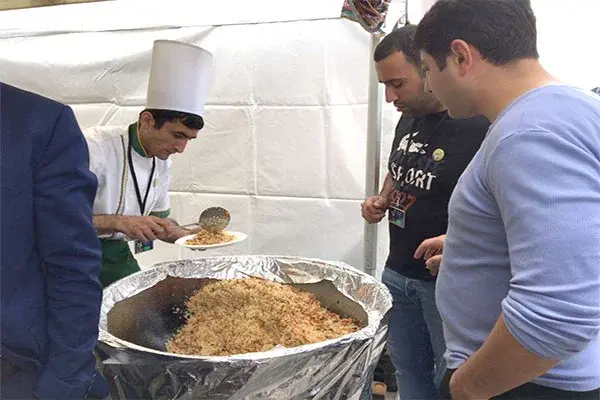
Abdulaziz Akkulov, Chairman of the Tourism Committee of the Republic of Uzbekistan, anchored the evening's presentations, laying out the sector's investment potential, the results of ongoing reforms, and the suite of state support mechanisms available to incoming investors. More than ten tour operators participated in the dinner, showcasing tourism products and destinations across the country.
Tourism is increasingly framed by Tashkent as a priority channel for foreign capital, and the forum event reflected that strategic positioning. Three investment pillars dominated the discussion: hotel infrastructure development, the buildout of integrated tourism clusters, and pilgrimage tourism — a segment that organisers argued holds particular resonance for Gulf audiences.
That last point was made explicitly. Uzbekistan's deep Islamic heritage — anchored by the historic cities of Samarkand, Bukhara, and Khiva, home to some of the Muslim world's most significant architectural and scholarly sites — was presented as a structural advantage in attracting visitors and investment from Gulf Cooperation Council states. The alignment between Uzbekistan's cultural assets and the religious tourism priorities of GCC travellers was positioned as a basis for expanded bilateral cooperation in hospitality and travel services.
The business dinner format gave Gulf-side investors direct access to Uzbek tourism project pipelines and opened dialogue on partnership structures, fitting neatly into the broader investment momentum on display at the forum. Uzbekistan's accumulated FDI from Gulf states has already surged nearly 19-fold over five years to $8.3 billion — though the bulk of that capital has flowed into energy. Tuesday's event signalled Tashkent's intent to redirect some of that Gulf appetite toward tourism and hospitality.