Tashkent, Uzbekistan (UzDaily.uz) — Uzbekistan is moving decisively to implement a strategy of shifting from the export of critical materials in raw form to the production of high-value goods, but doing so requires aligning ambitious state plans with international standards and attracting long-term foreign capital. That was the conclusion of participants at a panel session on critical raw materials held during the Tashkent International Investment Forum.
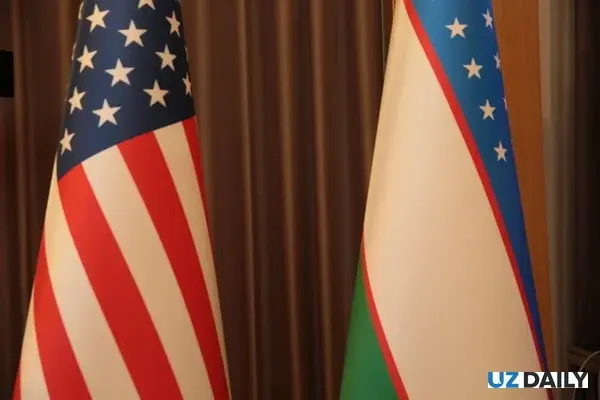
President and Chairman of the Export-Import Bank of the United States John Ivanovich opened the session by noting that the American delegation — the largest ever to arrive in Uzbekistan for a single event — has made supply chain security the central theme of its participation in the forum. He said the bank signed a Buy American, Build the Future framework agreement with Tashkent in November last year, under which the United States is designated as Uzbekistan's preferred partner in key sectors, including critical industries and supply chains.
On the same day at the forum, a joint investment framework was signed with the US International Development Finance Corporation (DFC). "Regardless of your political views, one thing is absolutely true: critical raw materials are the foundation of everything," Ivanovich said.
First Deputy Minister of Mining Industry and Geology of Uzbekistan Feruza Khamidova presented the state programme for industry development. She said geological surveys cover only around 40% of the country's territory, while the estimated value of mineral resources exceeds US$3 trillion. In 2024, the Complex of Technology Metals (CTM) was established on the initiative of the head of state — a specialised state enterprise already exporting metals in compliance with international standards to the United States, Japan, South Korea, and other countries.
Tungsten concentrate processing capacity has grown approximately tenfold over two years of operation, reaching 500 tonnes per year. By 2030, a processing cluster with capacity of up to 4,000 tonnes is planned in Navoiy region, and a filament denim production cluster with capacity of up to 2.5 tonnes per year is planned in Tashkent region. The portfolio of active investment projects covers 25 types of critical materials with total financing of approximately US$2 billion. The state has already allocated US$220 million through the Reconstruction and Development Fund, demonstrating its readiness to share risk at the project development stage.
USEXIM Chief Commercial Officer Sara Whitten explained the distinction between the two principal American financial instruments. The Export-Import Bank, as an export credit agency, focuses on supporting American exports and creating jobs in the United States; its Supply Chain Resiliency Initiative allows the bank to finance overseas extraction projects on condition that the extracted materials reach the American market. The DFC, by contrast, operates as a development institution historically focused on lower-income markets.
Whitten noted that major commercial banks are now entering critical materials transactions alongside official creditors — a trend that did not exist a few years ago. She put Uzbekistan's total mining output at approximately US$17 billion for the previous year.
BCG Managing Director in Tashkent Andrei Navitsky identified the principal obstacle to foreign investment: a shortage of documentation meeting international standards. Investors require mineral resource assessments verified by international audit and at least conceptual feasibility studies.
He noted that local project companies sometimes set timelines and targets so ambitious — such as reaching full capacity from zero within three years — that external partners begin to question their reliability. "The language of international business is international standards," he said.
Mark Robinson, Executive Director of the Extractive Industries Transparency Initiative (EITI), said he is in discussions with the Uzbek government about the country joining the organisation. Three other Central Asian states — Tajikistan, Kyrgyzstan, and Kazakhstan — have been members for more than ten years.
He said adherence to EITI standards correlates directly with growth in foreign direct investment. Joining EITI is seen as a tool for protection against the risk of unfair deals, not merely as a signal to investors. "Transparency is a guarantee for governments as well as for their citizens," he said.
OECD Head of the Central Asia Division Gregory Lecomte identified three systemic barriers slowing investment: incomplete geological information and data that does not conform to international reserve reporting standards; inconsistent application of regulatory rules, with state enterprises in some cases combining regulatory and commercial operator functions; and insufficient use of risk-sharing instruments such as export financing, concession financing, and guarantees. He stressed that high ESG standards should be seen as a competitive advantage rather than a burden, as they attract more responsible and long-term investors.
McKinsey Senior Partner Yermolai Solzhenitsyn described the global context: annual global exploration spending stands at approximately US$15 billion against a real need of around US$30 billion, ore quality is declining, and promising deposits are concentrated in technically and politically complex jurisdictions. Governments everywhere are demanding maximum localisation of value added, and Uzbekistan is no exception. The country has the opportunity to learn from others' experience, though the pace of change in the industry is such that no ready-made scenarios exist.
Adam Podgorski, Director and Co-founder of TASCA, said the company has signed a binding agreement with CTM to develop a high-strength alloys project. He noted that beyond product specifications, international buyers are increasingly demanding verification of labour conditions, energy balance, and full traceability of materials through the production chain.
He summarised the session's central message as follows: "Transparency is not just an accompanying requirement. Transparency itself is the product."