Special Economic Zones Fail Without Ecosystems, Forum Told

Tashkent, Uzbekistan (UzDaily.uz) — Nearly half of the world's roughly 5,400 special economic zones are underperforming, one quarter are nearly empty and only 13% are operating at full capacity, a senior Boston Consulting Group executive told the Tashkent International Investment Forum, as representatives of major international institutions concluded that tax incentives have largely failed as the primary tool for attracting industrial investment.
Rami Rafih, a managing director and senior partner at BCG, presented the figures during a panel session titled "Special Economic Zones: Governance, Productivity and What Actually Works." He noted that in India, one third of approved zones never became operational, while in Africa more than 40% of zones show utilisation rates below 25%.
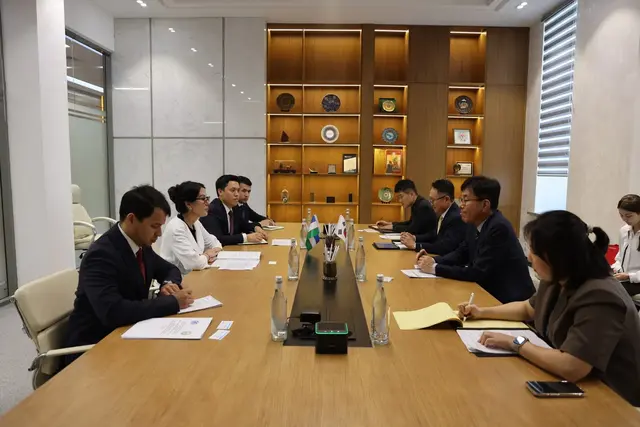
Representatives of the International Finance Corporation, the Asian Development Bank, McKinsey, KPMG and private industrial park operators gathered to examine why some zones succeed while most do not. Their conclusion: the answer has less to do with tax codes than with a fundamental rethinking of what a zone is actually for.
The tax incentive trap
For decades, the standard formula for launching a special economic zone has been consistent: offer tax holidays, provide cheap land, build basic infrastructure and wait for investors to arrive. Vitaliy Yakovlev, Head of Infrastructure at KPMG Caucasus and Central Asia, presented Kazakhstan as a case study in how that formula breaks down.
“The recipe for special economic zones in the region has not changed in more than a decade,” Yakovlev said. “Tax incentives, land allocation, infrastructure development. But the expected results like shares of export, or FDI are not materializing.”
Lisa Kestner, the IFC's director for Uzbekistan, Kazakhstan and Turkey, cited a recent World Bank study on industrial policy in Europe and Central Asia that reached similar conclusions. Subsidies can produce a short-term surge in investment and growth but do not translate into long-term productivity or competitiveness. "What genuinely benefits an economy," she said, "is long-term access to infrastructure and a strong investment climate."
Rafih identified five recurring failure patterns: zones built around incentive packages rather than genuine competitive advantage; weak execution, with planning representing only 10–20% of the work while 80–90% requires consistent implementation; passive management that waits for investors rather than pursuing them; an absence of linkages with the national economy; and unclear divisions of responsibility among government bodies.
The shift to an ecosystem model
What distinguishes zones that succeed? Every panellist pointed to the same shift in approach: from an enclave model — isolated, export-oriented, incentive-driven — to a more integrated one.
Rafih described Morocco's Tangier automotive cluster as an instructive example. Its success was built not through tax rates but through deliberate ecosystem construction: an anchor manufacturer secured at the highest level of government; a supplier base built around that anchor; co-financing from a sovereign wealth fund; connection to the national rail network; access to a major port and international shipping routes; and trade agreements with the United States, Europe and the Arab world. The zone also included technical academies created specifically to train engineers and technicians. Each element reinforced the others.
Singapore's success, Rafih noted, rests on something harder to replicate but no less important: rule of law that gives investors confidence in the predictability and stability of the regulatory environment. South Korea demonstrated how to build linkages between a zone and the broader national economy, allowing multiplier effects to spread outward.
Enrico Pinali, ADB's regional head, framed the challenge in terms of connectivity — not merely the physical infrastructure linking a zone to a port or highway, but the integration of a zone into regional and global value chains. "You need to start thinking about how your economic zone will be integrated into that network," he said. "A manufacturer in a zone today is unlikely to source everything domestically; they will rely on inputs from neighbouring countries and work with logistics operators running on international corridors."
Pinali also stressed the need for greening. Investors arrive with their own ESG commitments and climate targets. A zone that cannot offer green infrastructure, renewable energy and a credible sustainability narrative faces a growing disadvantage — not as an added benefit but as a market requirement.
The governance question
If the ecosystem model provides the direction, governance is the means of delivery. Panellists were blunt about how often governance becomes the obstacle.
The most fundamental problem, according to Yakovlev, is the gap between what a one-stop window promises and what it actually delivers. "When people talk about a one-stop window, it must not be a window where applications are received — it must be a window where decisions are made." That requires genuine delegation of authority to zone operators, something rare in Central Asia, where zone management companies typically report to local bodies and the rules of the game can shift unpredictably.
Rafih outlined three governance models: fully public, where a government body develops and manages the zone under agency oversight; fully private, where a chosen developer operates under government regulation; and numerous hybrid arrangements in between. Private management typically outperforms public management because it limits budget expenditure and brings operational expertise.
More important than the model, however, is whether the governing body plays the role of orchestrator — actively attracting not only investors but the entire ecosystem of suppliers, training institutions, utilities and quality-of-life amenities that make a zone genuinely competitive.
Kestner identified five factors the IFC examines when evaluating a zone: predictability of policy and regulation; simplicity and transparency of procedures; clear institutional rules with effective dispute resolution mechanisms; quality physical infrastructure in transport, water, energy and telecommunications; and, critically, a skilled workforce that zone residents can actually hire.
On transparency and accountability, Yakovlev proposed data-driven monitoring. Integrating warehouse management systems with customs in real time creates what he called a "transparent aquarium" — authorities can see what is happening without the bottlenecks created by itemised goods declaration requirements that currently deter e-commerce operators seeking to enter the regional market.
The private operator perspective
Osman Evren Arikan, managing director of Polaris Industrial Parks, brought a different vantage point: two decades of experience supporting industrial development in Egypt and direct involvement in developing and managing six industrial parks.His central argument was that the question of whether a special economic zone is a physical product or a service has a clear answer — and most public operators get it wrong.
"Simply having the pyramids does not make Egypt a tourist destination," he said, "just as Paris is not a tourist destination because of its name. You need hotels, restaurants, people who work there, ports and airports for people to arrive. The same applies to industry. You have to be an industrial destination."
Physical infrastructure — land, buildings, utilities — is a baseline that almost every zone in the world now provides to roughly equivalent standards. The differentiator is the service: what happens after an investor arrives, who speaks their language, who sits between them and the government when problems arise.
"Our goal should not simply be to attract a manufacturer to invest," Arikan said, "but to ensure that manufacturer promotes the country and the special economic zone to their suppliers and business partners."
The aftercare function — supporting expansion, resolving problems, facilitating networking — is where private operators can outperform public ones, because their commercial interests align with tenant satisfaction rather than simply with filling space.
Murat Gursoy, a managing partner at McKinsey, raised a pointed question that framed the broader challenge: if a zone is by definition meant to be "special" — solving a problem the base economy cannot solve on its own — then the proliferation of zones risks diluting that quality. With 47 special economic zones spread across the provinces of one country, the question arises whether each is truly special or whether policy has outgrown the instrument.
Uzbekistan's position
Ilzat Kasimov, Deputy Minister of Investment, Industry and Trade of Uzbekistan, opened the forum session with an overview of the country's current SEZ landscape: 47 zones across the country's provinces, offering tax and customs incentives on a sliding scale tied to investment size, an electronic one-stop window platform and a target of reducing the application process to two days.
The zones collectively host more than 1,300 projects. Chinese investors lead with approximately US$400 million across 200 projects, followed by investors from Russia, Turkey, the United Arab Emirates, Iran, the United Kingdom and South Korea.
The logic of modern economic zones
Soya Kobayashi, chairman of the Japan Development Institute, brought nearly five decades of direct experience to the discussion. Having worked on SEZ development in 31 countries and pioneered special economic zones across Asia, India and Bangladesh, he offered a practitioner's perspective grounded in measurable outcomes over decades.
He opened with a pointed observation: current employment in Uzbekistan's zones of 60,000 to 70,000 workers is "very, very small" by the standards of what SEZs can realistically deliver. Comparable Asian SEZ programmes regularly generate millions of jobs. With Uzbekistan's labour market expanding by approximately 700,000 people annually — a demographic imperative — and the constraints of a landlocked geography, the strategic challenge is not simply to multiply zones but to identify and build the right industries.
Kobayashi offered a simple but powerful metaphor for SEZ strategy: zones should be "clean, attractive ponds for migratory birds." Investors, he explained, resemble migratory birds — they can relocate anywhere in the world and will gravitate toward locations offering genuine competitive advantage. The governance challenge is twofold: attract the birds by creating an appealing ecosystem, and prevent the appearance of "hunters" — unfavourable regulations, unpredictable policy and bureaucratic friction — that would drive them away.
His central strategic argument concerned which industry Uzbekistan should target. Drawing on historical logic, he noted that the original Silk Road succeeded because it moved goods that were simultaneously high in value and low in weight — which is precisely why silk was so profitable to carry over long distances. In the 21st century, he argued, the equivalent is high-technology electronic components — precision micro-manufacturing that feeds global supply chains for consumer electronics, smartphones, computers and artificial intelligence hardware.
He illustrated this with a concrete example from Cambodia. A decade ago, the Cambodian government initially objected to his proposal to establish a mini-process manufacturing plant, viewing it as too advanced for the country's industrial capacity. Kobayashi secured a commitment from the prime minister to provide whatever support was necessary. The result: the facility now employs 8,000 workers, has expanded to a second site employing more than 10,000 and serves as an anchor for regional industrial development. The products — tiny precision components for Apple computers — demonstrate that even landlocked countries can compete in high-value global manufacturing niches if zones are properly designed and managed.
The conclusion is directly relevant to Uzbekistan. While the country cannot realistically produce complex semiconductors or integrated circuits, Kobayashi argued it can compete in precision micro-components — products in global demand, requiring hundreds of thousands of workers for assembly and processing and exported by air rather than container ship, making geography less of a constraint.
For such zones to succeed, Kobayashi emphasised scale: successful SEZs globally require a minimum of 300 to 500 hectares of integrated quality infrastructure. Below that threshold, zones simply cannot achieve commercial viability or attract anchor investors with supply chains large enough to justify the investment.
His firm is currently conducting feasibility and market research for two new SEZ sites in Uzbekistan — one in Tashkent and one in another regional location — specifically designed to meet global standards and targeting high-value, low-weight industries capable of absorbing Uzbekistan's growing labour force while competing in global markets.
Kobayashi also noted that policy shifts will be required. The current regulatory framework, he suggested, does not adequately meet investor needs. His recommendations, developed in partnership with the IFC, focus on creating conditions in which private developers and operators — rather than purely state-managed institutions — lead zone development, as has proven successful in Asian precedents over the past 35 years.
What the evidence shows
The consensus among panellists was striking. Each speaker, regardless of institutional affiliation or regional focus, converged on the same set of conclusions.
Tax incentives are a floor, not a ceiling. They are increasingly becoming a prerequisite that every country offers rather than a differentiator. With the introduction of a global minimum corporate tax, their marginal effect on investment decisions is declining.
Infrastructure matters, but quality matters more than presence. Reliable, well-maintained, environmentally compatible infrastructure — with genuine private-sector involvement in operations and maintenance — is what allows zones to remain attractive over time.
Governance must be autonomous and decisive. A zone management body that can make decisions, not merely receive applications, is the single most important institutional characteristic for investor confidence.
Linkages with the national economy are both an obligation and an opportunity. Zones that generate lasting economic impact are those whose supply chains, labour markets and technology transfer are connected to the broader national economy rather than operating as sealed enclaves.
The private sector outperforms the state as operator. Not because public officials are less capable, but because private operators' incentives are structurally aligned with investor satisfaction, expansion and the kind of aftercare that turns a one-time project into a network effect.
The shift, as Rafih summarised, is from zones defined by what they exclude to zones defined by what they enable. That is a harder thing to build — and far more durable.