Tashkent, Uzbekistan (UzDaily.uz) — The Organisation for Economic Co-operation and Development (OECD) has published a report finding that Uzbekistan's sustainable infrastructure investment needs amount to as much as 17% of gross domestic product (GDP) annually through 2060 when accounting for a carbon neutrality target. Without that target, the figure is estimated at nearly 14% of GDP.
The document, titled Accelerating Sustainable Infrastructure Investments, was prepared under the OECD's Sustainable Infrastructure Programme for Asia (SIPA), implemented between 2021 and 2026 with the participation of six countries: Uzbekistan, Kazakhstan, Mongolia, Indonesia, Thailand, and the Philippines.
According to World Bank estimates cited in the report, the bulk of the required investment must come from the private sector — between 60% and 100%, depending on the sector. The UN Development Programme (UNDP), applying a broader methodology to assess sustainable development goals financing, puts Uzbekistan's annual investment gap at $6–7 billion, or 7–8% of GDP, through 2030.
The report notes that between 2014 and 2024 the Uzbek government directed a cumulative $53.6 billion toward fixed assets — an average of $4.9 billion, or 6% of GDP, per year.
Public-private partnerships (PPPs) have emerged as a fast-growing instrument: by 2024, more than 400 such projects were under development in energy, transport, and healthcare, compared to none before 2018.
World Bank data on private infrastructure investment show that between 2019 and 2024, private companies and international financial institutions jointly invested $3.7 billion in wind and solar energy projects.
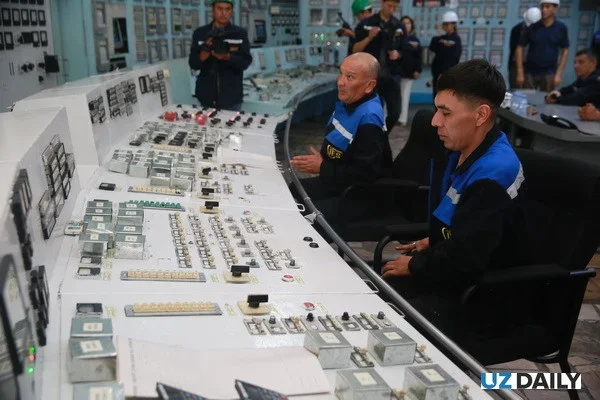
The report identifies the energy sector as the most carbon-intensive segment of the Uzbek economy, accounting for more than 60% of the country's total greenhouse gas emissions. In 2022, natural gas supplied roughly 76% of electricity generation, while renewables contributed less than 2% — largely from long-established hydropower plants.
According to the International Energy Agency, of the 73.8 terawatt-hours of electricity generated in 2022, nearly four-fifths came from gas-fired power plants, with natural gas and coal together accounting for more than 85% of total generation.
Uzbekistan nonetheless holds substantial renewable energy potential. The report puts the technical solar potential at more than 2,000 TWh per year, with average annual irradiation of 1,600–2,000 kWh per square meter — well above the country's current electricity consumption of approximately 74 TWh recorded in 2021.
Installed solar generation capacity grew from under 0.5 GW in 2023 to 2.3 GW in 2024, according to the International Renewable Energy Agency (IRENA). The country's theoretical wind potential is estimated at more than 520 GW, concentrated primarily in Karakalpakstan and the Navoiy and Bukhara regions; the flagship project cited is the 500 MW Zarafshan wind farm in Navoiy — the country's first utility-scale wind installation. Operational hydropower capacity stands at approximately 2.4 GW against an estimated potential of 7.5 GW.
The report identifies grid deterioration as a key barrier to renewable integration: more than 60% of transmission and distribution assets are over 30 years old, and distribution losses exceed 12%.
Fossil fuel subsidies receive separate attention: in 2022, total subsidies for fossil fuel consumption and production were estimated at more than 250 trillion Uzbek soums — six times the 2020 level — driven primarily by price support for natural gas and electricity for end consumers.
The report notes that in 2023–2025 the government launched a long-overdue tariff reform, raising gas and electricity prices for businesses and households, and approved a plan to achieve full cost recovery in electricity and gas supply by 2028, supported by social protection measures and preferential tariffs.
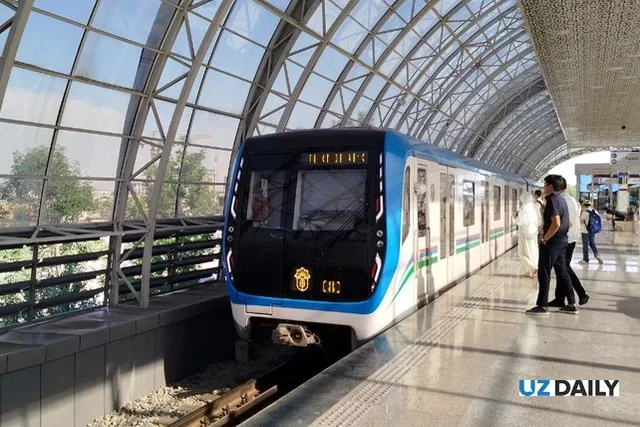
In the transport sector, which accounts for roughly 8.6% of national greenhouse gas emissions and is trending upward, the report notes that more than 90% of freight still moves by road, while the railway system faces aging rolling stock and incompatible standards at border crossings.
Uzbekistan ranks 89th in the World Bank's 2023 Logistics Performance Index, and approximately 5.8 million people lack year-round road access, according to the Asian Development Bank.
Deferred road maintenance already costs an estimated $1 billion per year, while the costs of adapting transport infrastructure to climate change could reach $60 billion by mid-century.
Under the Uzbekistan-2030 Strategy and the Transport System Development Strategy to 2035, the country aims to cut rail transit times by 40%, electrify 65% of the rail network, build 56,000 kilometers of new roads, and quadruple the number of air routes.
The report also highlights major regionally significant transport projects: the 523-kilometer China–Kyrgyzstan–Uzbekistan railway, which is expected to reduce transit times to Europe by 7–10 days, and the Uzbekistan–Afghanistan–Pakistan rail corridor (the Trans-Afghan Railway), projected to cut cargo delivery times by around five days and reduce transport costs by nearly 40%.
The report underscores Uzbekistan's climate vulnerability: natural disasters affect approximately 1.4 million people annually and cause economic damage equivalent to roughly 5% of GDP. Average annual maximum temperatures in Uzbekistan have risen by approximately 1.6°C since 1950 — faster than the global average — and projections point to a further increase of up to 2.5°C by mid-century.
Per-capita water availability has more than halved since 1960, around one-third of agricultural land has lost productivity, and the Aral Sea has shrunk to approximately 10% of its historical extent.
Annual economic damage from fine particulate matter (PM2.5) air pollution is estimated at 6.5% of GDP; PM2.5 concentrations in Tashkent exceed WHO guidelines by six times, a factor linked to approximately 3,000 premature deaths per year.
Among major infrastructure projects, the report singles out plans to construct six small modular nuclear reactors of 55 MW each in Jizzakh region, with the first unit scheduled for commissioning in 2029, as well as waste-to-energy plants capable of processing 4.7 million tonnes of solid waste into 2.1 billion kilowatt-hours of electricity by 2027, with partners from China, the UAE, and South Korea.
The report also notes that the 2023–2025 Investment Programme, alongside the expansion of renewables (23 facilities, 5 GW of new capacity), includes the construction of three thermal power stations with a combined capacity of 4.6 GW and the expansion of gas production — developments that could partially offset the decarbonization gains in the energy system.
On green finance, the report highlights the adoption of a national green taxonomy in December 2023 and the rapid growth of green bond issuance: the first thematic issues came in 2019, a sovereign green Eurobond was placed in 2023 with the participation of more than 30 international investors, and in July 2024 Sanoat Qurilish Bank (SQB) issued a verified sustainability bond on the London Stock Exchange worth $400 million and 2.25 trillion soums; according to the mid-2025 allocation report, the proceeds delivered energy savings of more than 121 GWh and CO₂ emission reductions of 16,000 tonnes.
Application of the Sustainable Asset Valuation (SAVi) methodology to the Uchkuduk–Kazakhstan border highway project passing through Karakalpakstan and Navoiy region — with projected investment of 6.278 trillion soums ($599 million) — found that a conventional cost-benefit analysis yields a ratio of 0.18, indicating the project is financially unviable on standard metrics.
However, once avoided costs are factored in — including reductions in road traffic accidents — the sustainability-adjusted ratio rises to between 1.38 and 1.95, with net benefits over 30 years estimated at $230–567 million.
The OECD report also describes institutional reforms, including the formation of a unified national strategic planning system under Presidential Decree No. PF-201 dated October 30, 2025, and the establishment of the Agency for Strategic Development and Reforms.
The authors recommend that Uzbekistan finalize its Long-Term Low Emissions Development Strategy (LT-LEDS) in 2026, align it with an updated Nationally Determined Contribution (NDC 3.0) targeting a 50% reduction in greenhouse gas emissions intensity per unit of GDP by 2035 relative to 2010 levels, and extend the application of Strategic Environmental Assessment and environmental impact assessment tools to major infrastructure projects.