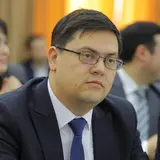
Tashkent, Uzbekistan (UzDaily.uz) — President of Uzbekistan Shavkat Mirziyoyev proposed establishing a separate state award named after Jadid educator Abdulla Avloni to recognize outstanding teachers at all levels of the education system.
Mirziyoyev made the proposal during a meeting with teachers and mentors at New Uzbekistan University ahead of Teachers’ and Mentors’ Day.
Emphasizing that the university would bring new spirit and content to the education system, the president congratulated all teachers on their professional holiday.
“A teacher is a river of kindness, a teacher is a source of good deeds, a teacher is the sun of enlightenment! Tomorrow, all society will benefit from the seeds of enlightenment and kindness that mentors sow in the hearts of young people today,” the president said.
Mirziyoyev noted that teachers who educated and passed on knowledge to great historical figures also stood behind the development of Uzbekistan’s prominent ancestors. He called the mentors who educated such figures as Imam Bukhari, Beruni, Amir Temur and Alisher Navoi “gardeners of the garden of humanity”.
The president expressed deep respect and gratitude to all teachers and mentors who have dedicated their lives to educating and developing young people.
The meeting noted that the ways knowledge is created and information is disseminated, as well as the organization of work, are changing rapidly around the world. Artificial intelligence can create texts, write programmes and analyze data. However, no technology can, like a teacher, find a path to a child’s heart and instill in them a sense of love for the Motherland and responsibility.
The president said he had signed a decree awarding a group of dedicated representatives of the education and science sectors with state awards. The recipients include teachers, entrepreneurs and foreign partners contributing to the development of education. The awards were presented during the meeting.
Congratulating the recipients, the president said: “Believe me, when I put them on your chests, I am even happier for you than you are yourselves.”
He also proposed establishing a separate state award named after Jadid educator Abdulla Avloni to recognize leading teachers at all levels of the education system. The first recipients are expected to be announced and presented with the award ahead of the holiday next year.
“Developing education is the most important link in building New Uzbekistan,” the president said.
Over the past 10 years, kindergartens with 1.8 million places and schools with 1.5 million places have been built, while more than 10,000 kindergartens and schools have been modernized.
The president stressed that in education, alongside buildings and conditions, content is of decisive importance above all.
“We brought our children back from the cotton fields to school desks, and teachers back into the educational process,” he said, describing this as the main result of the reforms.
Every child should study, seek knowledge, develop and live with big dreams. To make these dreams a reality, they need the best textbooks and strong, qualified teachers.
“What we give a child today, we will see tomorrow in the development results of our country’s future,” the president said.
Mirziyoyev recalled that work on creating a new generation of textbooks began in 2018. Experienced specialists, authors, scientists, teachers and private companies were involved. The experience of countries including Finland and Singapore was studied in developing the textbooks. This year alone, 324 textbooks were updated, with more than 400 specialists involved in their preparation.
The president expressed gratitude to everyone who had devoted their knowledge and efforts to this work.
Alongside national values, the new-generation textbooks promote a sense of love for the Motherland, careful treatment of nature and rational use of water. They also develop interest in digital technologies, financial literacy and professions of the future, as well as independent and critical thinking skills.
The president stressed that these books encourage teachers to work on themselves and pedagogical universities to adapt their curricula to international requirements. Work to update textbooks for grades 8-11 will also be completed by 2030.
“Our goal is clear — every academic year should serve as a solid foundation for a child’s transition to the next stage! A graduate should leave school prepared for life, confident in their knowledge and abilities!” the president said.
“Above all, I believe in our children, in their talent, abilities and future!”
The president stressed that children deserve the best education, the best conditions and the best future.
It was noted that the results of education reforms are reflected both in international assessments and in students’ achievements. In the MELQO study, the preschool education system received a high assessment. In the PISA ranking, 15-year-old students rose 32 positions in scientific literacy to rank 48th globally.
This year alone, talented young people won 228 medals at prestigious olympiads — 38 gold, 82 silver and 108 bronze. At international chemistry and informatics olympiads, which Uzbekistan hosted for the first time, students won another eight medals.
The number of students who obtained certificates in foreign languages and academic subjects while still at school reached 100,000. This figure increased 2.5 times. This year, about 5,000 school graduates achieved the maximum possible score when applying to universities.
The president linked these results to the work of teachers, the renewal of educational content and the opportunities being created for young people.
As the status and prestige of teachers have increased, many qualified educators have entered the profession. Over five years, the number of teachers holding international and national certificates increased from 29,000 to 143,000, while the shortage of teachers in schools fell threefold. According to a PISA analysis, the shortage rate in Uzbekistan is 8%, compared with an average of 40% across the 91 countries studied.
Currently, 40,000 teachers receive salaries of US$1,000, while another 1,500 teachers earn more than US$2,000. Teachers who introduce modern teaching methods and train olympiad winners are also being rewarded for their work.
For the first time, 208 winners of the district and city stages of the Teacher of the Year competition, held in a new format, received prizes totaling 616 million soums. The president stressed that such recognition would encourage more teachers to strive for high achievements.
It was proposed that from next year the competition also be held among kindergarten educators and technical college instructors in all 14 regions, with awards presented to them as well.
The president recalled the words of educator Mahmudhoja Behbudi: “School is the beginning of development, the gateway to culture and happiness.” Expanding these gates for boys and girls and unlocking their talents is the essence of the idea of the Third Renaissance.
As artificial intelligence and digital technologies develop, new professions are emerging, while existing professions also require new skills. Therefore, a school graduate should not enter adult life without mastering a language and a profession.
“Doesn’t sending a child out of school without teaching them a profession and a language mean being indifferent to their future?” the president said.
It was noted that school principals need to seriously consider which language and profession students are learning and what skills they will possess after graduation.
School leaders will be given the necessary powers, while appropriate conditions will be created for entrepreneurs ready to cooperate. A commission will be established to prepare young people for professions while still at school and ensure continuity between education levels. New solutions will be presented within three months.
To shift the economy towards a model of technological and innovative growth, children need to study mathematics, physics, chemistry and biology in depth from school age. To this end, if a class has more than 25 students, these subjects will be taught in two groups.
A new incentive system will be introduced for teachers of fundamental sciences. Teachers holding a national certificate will receive a 50% salary supplement, while 208 leading district and city teachers will receive annual prizes of 30 million soums each. Another 1,000 teachers will undergo internships abroad.
Children of teachers with at least 15 years of work experience will be provided with interest-free loans to pay university tuition. Examination costs for teachers who obtain foreign and national certificates will be fully reimbursed.
Teachers who train winners of international and regional olympiads named after Khorezmi, Fergoni, Beruni, Ibn Sina and Mendeleev will directly receive the highest qualification category. The president expressed confidence that these initiatives would provide a worthy incentive for nearly 100,000 teachers.
Subject olympiads will also be organized for primary school students. From next year, fourth-grade students who win prizes at the district stage of the olympiad will receive computers. Their teachers will receive prizes of 10 million soums for the district stage, 50 million soums for the regional stage and 100 million soums for the national stage.
From the new academic year, mathematics, computer science and natural sciences will be taught entirely in English in one class at each of 100 schools. Teachers involved in the project, as well as educators in school preparation groups, will receive a 100% salary supplement.
“From now on, a ‘quality index’ will be introduced in the secondary education system,” the president said.
Schools will be categorized based on the potential of their teaching staff and students’ academic and educational results.
If a leading school shares its experience with other schools and helps them move to a higher category, its teaching staff will receive a 30% salary supplement.
“Times are changing. Children’s interests, their worldview and the ways they receive information are changing. A teaching method that produced results yesterday may prove insufficient today. Therefore, teachers need to constantly learn and work on themselves,” the president said, speaking about teachers’ professional development.
Teachers will no longer be required to travel to the capital or a regional center and attend month-long courses. Instead, professional development vouchers will be introduced.
Depending on the results shown by a teacher in an assessment for determining their qualification category, they will be able to take training courses lasting from 18 to 72 hours. They will be able to choose the course and location of professional development themselves.
The president stressed that this change should turn professional development from a formality into a practical necessity.
This year, 800,000 children entered first grade, 10% more than last year. Their number is expected to reach 1 million by 2030. Each year, 180,000-200,000 new student places are being created through investment programmes.
The president announced new financial mechanisms to support the opening of private schools in 52 districts with high demand for school places. Schools opening in these areas will receive preferential seven-year loans at an interest rate of 10%, as well as a subsidy covering up to 15% of opening and equipment costs, capped at 1.5 billion soums. Owners leasing buildings for use as schools will receive land and property tax benefits.
Across all districts, vacant state-owned buildings will be provided free of charge for 10-year leases to open private schools. Half of the costs of obtaining international accreditation will be reimbursed.
For parents whose children attend private schools, the tax-free income threshold will be raised from 3 million to 6 million soums. This will allow families to save 6-7 million soums a year, while tax authorities will introduce a system for automatically refunding payments at the end of each month.
Over two years, the number of schools with an inclusive environment increased from 729 to 3,591, nearly fivefold.
“Can the joy of 10,000 children with special educational needs, who are now receiving education in a full-fledged environment alongside their peers, really be described in words?” the president said.
The president stressed that children requiring special care would always remain a focus of attention.
A multifunctional inclusive resource school recently began operating in Tashkent. Children with visual, hearing or musculoskeletal impairments, as well as those requiring additional support due to developmental characteristics, will study and be brought up in the same environment as their peers without such needs.
By the end of the year, such schools will open in the Khorezm, Jizzakh and Samarkand regions, and within the next two years they will be established in all regions.
“A kindergarten should become a place where a child’s abilities are unlocked and their thinking develops,” the president said.
A programme based on the experience of Italy, the United Kingdom, Germany, Singapore and China has been developed in line with national values. Some 180,000 educators and teachers are undergoing training in the new methodology.
The programme, which focuses on learning through play, is currently used in 30% of kindergartens. By the end of the year, it will be introduced in all more than 38,000 kindergartens.
A Regional Center for Early Childhood Education Engagement and the Italian Reggio Emilia Center have begun operating in Tashkent under the auspices of UNESCO. They will promote the introduction of international standards and innovative solutions and prepare practical materials on learning through play.
Each year, 50 leading educators will undergo internships abroad, while 100 video materials will be prepared for all kindergartens. Under a three-year programme, state kindergartens will be equipped with interactive boards, computers and color printers.
“When women work, the family receives additional income, while children have more opportunities to receive education,” the president said.
In this regard, from 1 January next year, the state budget will cover kindergarten attendance fees for children aged 2-3 if their mothers are employed.
Kindergarten educators have been given the opportunity to obtain higher education without leaving their jobs. This year, 7,000 of them enrolled in universities: they work five days a week and study one day a week.
From the new academic year, the period of study for kindergarten educators at pedagogical universities will be reduced from four to three years.
Assistant educators who have worked in kindergartens for at least five years will also be able to use this opportunity.
Speaking about vocational education, the president cited the proverb: “Craft feeds you, and craft brings prosperity.” Over the past two years, international programmes from Germany, the United Kingdom, Switzerland and China have been introduced in 104 technical colleges. Through cooperation with 25,000 enterprises, more than 100,000 young people have been given the opportunity to earn income while studying.
From this year, young people acquiring professions through dual education receive scholarships of up to 1.3 million soums. This year, 220,000 ninth-grade graduates enrolled in technical colleges.
International programmes will gradually be introduced in all technical colleges. Preparation and incentives for instructors will also be strengthened. From next year, instructors holding an international professional certificate will receive a 50% salary supplement, while the costs of obtaining the certificate will be fully reimbursed.
Each year, 500 technical college instructors will undergo internships in countries including Germany, Switzerland, Türkiye and China.
The first professional competition, “Creators of New Uzbekistan”, attracted 170,000 students. Some 120 instructors who trained winners received prizes of up to 40 million soums. The president instructed that the competition be held annually and that the most deserving students and instructors be prepared for the WorldSkills competition to be held in Tokyo in 2028.
From now on, an instructor who trains a winner of a regional or international professional skills competition will receive a prize of 100 million soums, while a mentor who trains a winner of a prestigious global-level competition will receive 200 million soums.
Entrepreneurs establishing private technical colleges will receive tax benefits and discounts on the cost of land plots. From the new academic year, state grants will be allocated for 50% of students at private technical colleges training personnel for important sectors such as industry, services and infrastructure.
Seventy-five percent of the costs of introducing international programmes and franchises will be reimbursed. Training laboratories and equipment will be exempt from customs duties upon import.
As opportunities for higher education have expanded, the number of university students has reached 1.6 million. Seven Uzbek universities have entered prestigious international rankings in 17 subject areas. Universities have been granted academic, organizational and financial autonomy.
At the same time, the president posed a fundamental question to university rectors:
“To what extent does the content of university textbooks meet today’s requirements?”
The president stressed that there was still no positive answer to this question.
The 22 engineering universities can form author teams, work with foreign partners and produce 25-30 new textbooks or translate and adapt advanced foreign publications each year.
Transplantology, robotic surgery, minimally invasive surgery and bioengineering are developing rapidly. The 11 medical universities should also not delay preparing modern educational literature in these areas. Universities still need to make substantial changes in the quality of education and the qualifications of specialists.
Universities will move towards developing national educational programmes that meet international requirements and are based on advanced standards. INHA University and the University of Architecture have introduced such programmes based on the British standard, giving students the opportunity to continue their studies at several foreign universities.
It was noted that this approach enables young people to obtain knowledge, skills and degrees that meet international requirements. From next year, the approach will be introduced at another 20 universities.
The president instructed the rectors of these universities to change their approaches and outlook, adapt their management systems now and establish dedicated structures to work with international educational programmes.
The goal is to harmonize foreign standards with the national content of education and provide students with training recognized at the international level.
The president signed a resolution on introducing dual education in higher education institutions based on a new approach. From next year, the “enterprise-university-targeted specialist” system will operate in 75 higher education institutions, and from 2028 in all universities.
An employer will submit a request to a university to train a specialist it needs, while the candidate will be admitted based on an interview without taking a test. The state will cover half of the salary paid to the employed student.
The enterprise will pay the mentor assigned to the student additional compensation equal to the salary of university teaching staff. If the enterprise is located far from the university or the student’s place of residence, housing rental costs will be compensated.
Students who demonstrate good results in their studies and work will be able to switch to state-funded study from their second year.
Rectors will establish dual education departments, while vice rectors for academic affairs will devote the main part of their working time to this area. Three higher education institutions, as well as partner enterprises that organize the system most effectively, will receive prizes ranging from 1 billion to 3 billion soums each. Half of the prize allocated to a university will be directed towards rewarding teachers who contributed to the work.
There are currently 32 branches of foreign higher education institutions operating in Uzbekistan. The president noted that one of the main tasks now would be to establish branches of 300 leading universities worldwide.
Private universities attracting franchises of prestigious universities will have up to 50% of the costs of laboratories and equipment, as well as brand-use payments, reimbursed. Up to 30% of campus construction costs will also be reimbursed, while places under state grants will be allocated to help ensure the return on investment.
Priority attention will be given to areas important for the economy, including engineering, agriculture and water management, energy, artificial intelligence and medicine.
The president spoke with teachers and listened to their proposals and initiatives.
Concluding the meeting, the president said: “Respecting a teacher means respecting not only a representative of one profession, but also the future of an entire nation.”
The president wished teachers that the achievements of their students, parents’ blessings and the respect of the people would always accompany them, and once again congratulated them on Teachers’ and Mentors’ Day.