Central Asian Law Enforcement Network Meets on Human Trafficking

Central Asian Law Enforcement Network Meets on Human Trafficking
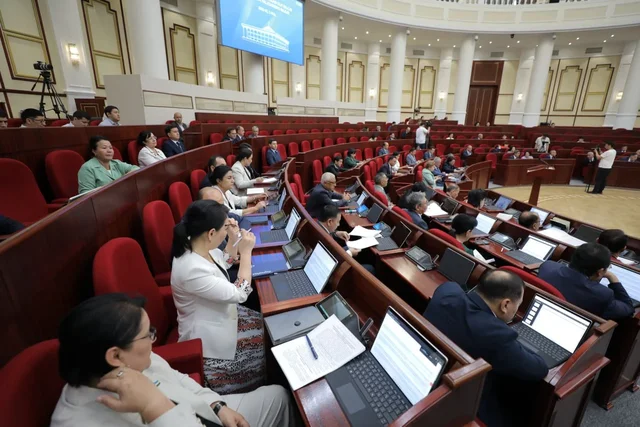
Tashkent, Uzbekistan (UzDaily.uz) — A regular meeting of the Central Asian Law Enforcement Network Against Trafficking in Persons (CALENTIP) was held in Dushanbe, bringing together law enforcement officials from Kazakhstan, Kyrgyzstan, Tajikistan, and Uzbekistan to strengthen regional cooperation in combating human trafficking.
The event took place on 22–23 June 2026 at the Academy of the Ministry of Internal Affairs of Tajikistan. It was organized by the United Nations Office on Drugs and Crime (UNODC) in conjunction with the Inter-Ministerial Commission on Combatting Trafficking in Persons and the Ministry of Internal Affairs of Tajikistan.
Opening the meeting, Abdurahmon Alamshozoda, First Deputy Minister of Internal Affairs of Tajikistan and Head of the Inter-Ministerial Commission on Combatting Trafficking in Persons, emphasized the need for deeper regional interaction. He noted that transnational criminal groups operate beyond national borders, meaning the effectiveness of the fight against them directly depends on the rapid exchange of information between law enforcement agencies.
He outlined six key priorities for further cooperation, including the development of sustainable operational communication channels, strengthening analytical capacity, expanding joint investigations and coordinated operations, enhancing professional skills, implementing modern technologies such as digital forensics and financial investigations, and forming a shared regional approach to countering new forms of crime.
Maksudjon Duliyev, Head of the UNODC Programme Office in Tajikistan, noted that the UN Convention against Transnational Organized Crime and the Palermo Protocol remain the international legal foundation for the fight against human trafficking. He stated that CALENTIP's activities assist Central Asian states in fulfilling their international obligations by ensuring practical cooperation among law enforcement agencies during cross-border investigations.
During the two-day program, participants exchanged experiences on investigating criminal cases, discussed new trends and routes of human trafficking, and addressed operational interaction between the countries of the region. UNODC experts conducted thematic sessions on developing formal and informal mechanisms for police cooperation, utilizing analytical tools, and sharing evidentiary information.
Following the meeting, recommendations were adopted aimed at the further development of CALENTIP as an effective platform for regional cooperation. The parties agreed to improve operational communication mechanisms and define priority areas for joint work.
Meeting participants also visited shelters for victims of human trafficking operating with the support of the Ministry of Internal Affairs of Tajikistan, emphasizing the importance of an approach focused on protecting the rights and interests of victims of this crime.
The event was held as part of the European Union-funded initiative PROTECT: Improving Migration Management & Migrant Protection in Selected Silk Route Countries (2023–2026), implemented by UNODC under the GLO.ACT program. The project is aimed at increasing the effectiveness of the fight against human trafficking and the smuggling of migrants in Afghanistan, Iraq, Pakistan, Tajikistan, and Central Asian countries, including Kazakhstan, Kyrgyzstan, and Uzbekistan.