Tashkent, Uzbekistan (UzDaily.uz) — The National Agency for Perspective Projects of Uzbekistan (NAPP) is preparing regulation for the tokenization of bonds and stocks and implementing pilot projects to use stablecoins as a means of payment, while the Central Bank of Uzbekistan has outlined its priorities regarding private issuers of digital financial instruments. Representatives of both institutions disclosed the developments during "The Frontier, Continued: Tokenization & Stablecoins" session at the Silk Road Finance and Technology Forum held in Tashkent on 25 August 2026.
PwC Strategy& Senior Partner Peter Gassmann moderated the session, defining the distinctions between stablecoins issued by private companies, tokenized assets representing rights to physical or financial property, and central bank digital currencies representing sovereign money.
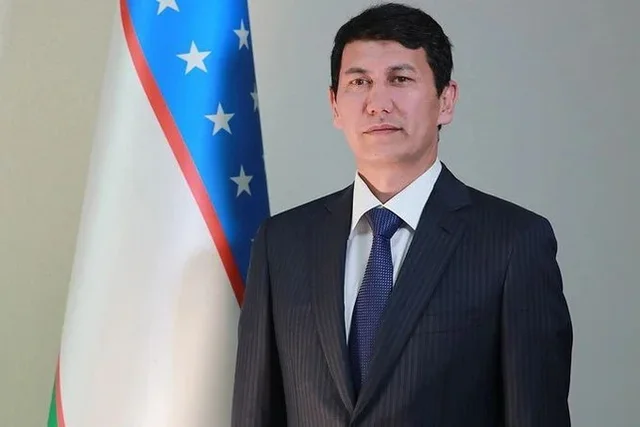
Vyacheslav Pak, First Deputy Director of NAPP, stated that the agency serves alongside the Central Bank of Uzbekistan as one of the country's two primary financial service regulators and holds responsibility for regulating crypto-asset turnover. Under its current priorities, NAPP intends to establish a new blockchain-based payment system. Pak emphasized that effective regulation requires understanding blockchain technology itself, as the same framework can be applied to stablecoins, asset tokenization, or data integrity. He noted that no country has yet established a fully developed regulatory framework for security tokenization, citing unresolved issues regarding voting rights and corporate governance participation for holders of tokenized equity.
Samidjon Inogamov, Director of the Monetary Policy Department at the Central Bank of Uzbekistan, reported that remittances to the country reached US$9.3 billion in the first half of 2026, with more than half arriving directly onto bank cards. He stated that Uzbekistan operates under an inflation-targeting regime with a target of 5 percent. From a monetary policy standpoint, he noted that the central bank's primary focus is whether payment technologies alter public behavior regarding savings, borrowing, and currency choice rather than the specific technology adopted.
Inogamov added that Uzbekistan's stablecoin market is in its early stages, while demand for rapid cross-border payments is largely met by existing infrastructure within the regulatory perimeter. Regarding requirements for private stablecoin issuers, he highlighted two priorities: aggregate flow data at the wallet level and reserve reporting for tokens circulating both domestically and abroad.
Mu Changchun, Director-General of the Digital Currency Institute of the People's Bank of China, presented data from the regulator's internal monitoring platform, which tracks 16 public blockchains and 36 stablecoins. Out of approximately US$60 trillion in analyzed on-chain transfers over the past year, US$8.5 trillion involved internal fund redistributions within entities, US$11.1 trillion involved protocol-level transaction splitting, and US$16.3 trillion represented arbitrage trades. Genuine economic activity accounted for approximately US$25 trillion, though transactions with true payment intent comprised less than one percent of total volume.
Mu noted that jurisdictions with capital controls more frequently adopt digital fiat currencies, while those with deeper capital markets, such as the United States, lean toward stablecoins. He called for a unified global regulatory framework based on the principle of "same business, same risk, same rules," supported by cross-border regulatory coordination, while reminding participants that virtual currencies remain non-legal tender in China with exchange and insurance transactions prohibited.
Pavel Khristolyubov, Chief Operating Officer of Wallet in Telegram, noted that the cryptocurrency industry has transitioned from isolated enthusiasts to institutional recognition. He suggested that regulators should test regulatory approaches through sandboxes and data collection before imposing strict rules, expressing hope that stablecoins become a functional element of last-mile payment infrastructure.
Rajesh Sabari, Commercial Director at Liminal Custody, stated that last-mile foreign exchange liquidity in developing countries remains the primary unresolved challenge for cross-border transactions. Saeeda Jaffar, Managing Director for International at Circle, stated that the company focuses on bridging traditional and digital finance to resolve practical operational challenges.