Shavkat Mirziyoyev Criticizes Imbalance in Regional Investments

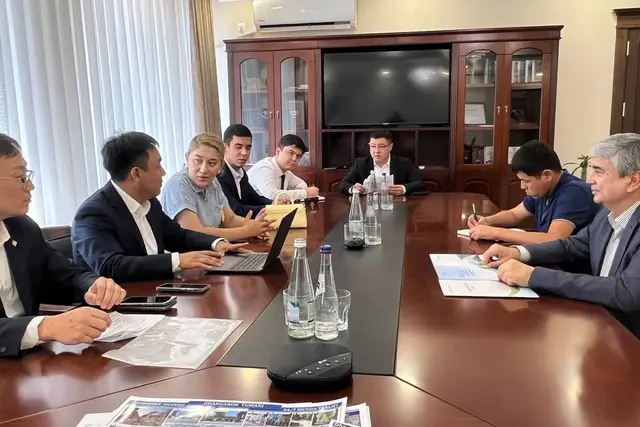
Tashkent, Uzbekistan (UzDaily.uz) — A video conference chaired by President of Uzbekistan Shavkat Mirziyoyev was held to review ongoing work and upcoming priorities in the construction materials industry.
Before turning to the main agenda, the head of state addressed the results of the Fifth Tashkent International Investment Forum, which took place last week at a high organizational level.
The President noted that 177 agreements worth a combined total of US$43 billion were reached with foreign partners during the forum.
"Every agreement must be turned into a concrete project, new jobs, and high value-added products," the President stressed.
Responsible officials were instructed to deliver decisions on 120 proposals put forward by foreign investors.
It was noted that industry heads and hokims must fundamentally change their approach to assessing the quality and effectiveness of investments.
Over the past five years, half of all investments attracted into the country's economy were concentrated in just four regions. At the same time, a significant gap persists between regions in terms of return on investment.
Specifically, every 1 million soums invested generates an increase in gross regional product of 273,000 soums in Fergana region and 262,000 soums in Samarkand region. In Bukhara region, the same figure stands at just 117,000 soums — meaning investment efficiency in that region is more than twice lower than in other territories.
It was emphasized that hokims must have clear, data-backed calculations for the development of each sector in each district, understand which projects can deliver maximum efficiency, and know what investment is needed to achieve the best outcome.
To this end, 14 "competency centers" have been assigned across 12 economic sectors, along with 37 sectoral research institutes and higher education institutions.
In particular, the Institute of Macroeconomic Research, the Center for Competition Policy and Consumer Protection, the Institute of Materials Science, and the Tashkent Architecture and Construction University have been designated as competency centers for the construction materials sector.
These organizations will analyze demand for new types of construction materials, identify which districts should host relevant projects to meet that demand, determine which technologies need to be introduced, and define what specialist training is required.
All industry heads were instructed to work jointly with the competency centers, relevant research institutes, and universities to analyze the potential of each district using this approach and to prepare a package of projects capable of delivering significant growth in gross regional product.
The President also underscored the need to transform the construction materials sector into one that builders trust — offering integrated solutions in terms of quality, standards, product range, and pricing.
Just ten years ago, domestically produced construction materials were largely limited to sand-gravel mixtures, brick, cement, glass, and slate, accounting for no more than 35–40% of all materials used in construction.
Over the past decade, US$12 billion has been invested in the sector and more than 4,000 modern enterprises have been commissioned.
Production capacity now fully meets domestic demand for more than 20 major product categories, including cement, glass, basalt materials, ceramic products, aerated concrete blocks, and dry construction mixes.
New high value-added segments are developing actively — among them thermal insulation materials, composite materials, eco-friendly finishing materials, and flooring.
Overall, the country now produces 98% of the construction materials needed to build residential and industrial facilities.
As a result, sector output has grown from 7 trillion to 53 trillion soums over this period. Last year, exports of construction materials reached US$1.2 billion.
Most importantly, as the President noted, the industry has successfully completed the critical stage of import substitution and has built a solid foundation for further growth and expanded export potential.
At the start of the year, a comprehensive housing program was adopted, envisioning a doubling of housing construction volumes by 2040 — to 280,000 apartments and homes per year. The number of "New Uzbekistan" residential developments is also set to increase from 61 to 120.
Each year, commercial facilities with a combined floor area of 20–25 million square meters are commissioned across the country. In other words, residential and commercial construction alone generates annual demand for construction materials worth at least US$10 billion.
Furthermore, infrastructure projects worth US$27 billion were presented to foreign partners at the Tashkent International Investment Forum.
These include major undertakings such as: a nuclear power plant in Jizzakh region; a fourth copper processing plant in Tashkent region; the new "New Tashkent" airport in Urtachirchik district with a capacity of 20 million passengers per year; a 55,000-seat football stadium in New Tashkent; and a 282-kilometer Tashkent–Samarkand highway.
All of these large-scale projects will require construction materials above all else.
It was noted that materials used in the construction of major facilities are subject to elevated standards of quality and certification. In this regard, the need was emphasized to create a new system that will effectively integrate domestic construction materials manufacturers into the execution of large investment and infrastructure projects.
It was also noted that investors funding large and mega-projects have requested VAT exemptions on imported construction materials. At the same time, many domestic enterprises are eager to supply their products for such projects.
According to local business representatives, if VAT benefits were extended equally to domestically produced goods, they would be prepared to compete with foreign suppliers on both quality and compliance with international standards.
Accordingly, responsible agencies were instructed to draft a decision establishing equal conditions for domestic and imported suppliers when participating in large and mega-projects.
It was also reported that overdue loan debt at 457 sector enterprises has reached 3.5 trillion soums. The primary reason is that these enterprises' products carry high production costs and do not fully meet current market demands, making sales difficult.
Responsible officials were instructed to visit each of the 457 enterprises, conduct a thorough review of their operations, and develop a short-term financial recovery program. US$50 million has been allocated for this purpose, to be directed toward modernizing existing production capacity, reducing costs, and launching products with strong market demand.
A large-scale two-year program to develop tourist infrastructure across the country's regions was recently adopted. The program provides for the construction of 34 major tourist facilities and more than 1,000 accommodation units, including 200 hotels.
As an example, the "Kumushkon Resort" tourist complex in Parkent district — set to open shortly — was cited. During its construction, 98% of domestically produced construction materials were used.
Hokims were instructed to ensure that the share of local construction materials used in hotels built within their regions reaches at least 95%.
To achieve this, production volumes of several categories of materials used in hotel construction and finishing must be increased by the end of next year:
Paints and coatings: from 119,000 to 150,000 tonnes
Sanitary ware: from 1.5 million to 2 million units
PVC pipes and fittings: from 255,000 to 300,000 tonnes
Wallpaper: from 6 million to 7.5 million square meters
Decorative panels: from 15 million to 18 million square meters
On average, 65,000 individual residential homes are built across the country each year, with renovation work carried out in a further 200,000–250,000 households.
"We must openly acknowledge that many citizens are still insufficiently aware of the advantages of energy-efficient construction materials," the President noted.
Residential heating accounts for approximately 20% of the country's total natural gas consumption and 11% of electricity consumption. However, insulating a home's façade and roof with thermal insulation materials and installing energy-efficient windows can reduce energy consumption by up to 30%.
As an example, the "New Uzbekistan" residential development under construction in Kamashi district — comprising 4,000 apartments and designed using modern approaches developed by French and British firms — was cited. Of particular significance is that exclusively domestic energy-saving materials are used in its construction, reducing building costs by at least 20% and heating and cooling expenses by 30%.
Hokims at oblast, district, and city level were instructed to study the Kamashi district experience and replicate this design approach in other regions. Construction of multi-apartment buildings in 33 districts and cities participating in the "New Uzbekistan" architectural renewal program this year will be carried out exclusively using this approach.
A further instruction was issued to develop guidelines for transitioning to energy-efficient materials in residential construction and renovation, distribute them to 19,000 construction organizations, and ensure that residents in every mahalla and every household are informed about the benefits of such solutions and the incentives available under the "Green Renovation" project.
Neighboring countries import approximately US$13 billion worth of construction materials annually.
"Remember: in the face of fierce competition on foreign markets, where every dollar is hard-fought, unconventional solutions are needed to grow exports," the head of state stressed.
It was noted that the Central Asian markets alone offer potential for an additional US$440 million in export growth.
In particular, large-scale residential and commercial construction programs are underway in Azerbaijan, Georgia, Russia, Kazakhstan, and Kyrgyzstan.
Industry leaders and hokims were directed to forge close collaboration between construction materials manufacturers and development companies. Building demonstration residential and commercial projects in nearby regional markets using Uzbek products, it was noted, could multiply value creation many times over.
It was especially emphasized that if Uzbekistan can become a reliable housing construction partner for these countries, it will open up additional opportunities for other domestic industries — producers of electrical goods, home textiles, and furniture — further boosting export growth.
To this end, responsible agencies were instructed to construct 3–4 demonstration energy-efficient residential buildings in Baku, Tbilisi, Moscow, Astana, and Bishkek, and to hold promotional roadshows in those cities to showcase Uzbek construction solutions and materials.
Over the past ten years, the amount of fuel equivalent consumed by construction materials enterprises has been cut in half. Energy audits conducted at 34 major enterprises — which account for 65% of the sector's total electricity consumption — yielded savings of 240 million kilowatt-hours in electricity last year alone.
It was noted, however, that this figure remains insufficient. Oblast hokims were instructed to launch a large-scale program to reduce energy consumption at construction industry enterprises through technological modernization.
Under the program, enterprises that replace kilns, mills, and other energy-intensive equipment with energy-efficient alternatives will receive interest cost compensation — 7% on loans in national currency and 4% on loans in foreign currency.
It was also stressed that energy-saving technologies must be introduced at a further 38 major enterprises this year, which would yield additional savings of 400 million kilowatt-hours.
It was noted that existing production capacity in cement, basalt, glass, ceramic tile, and several other construction materials is sufficient to meet domestic needs through to 2035. Accordingly, efforts to attract investors should be redirected away from further expanding output in these categories and toward modernizing existing capacity and developing high value-added projects.
For example, a facility for producing basalt fabric is being established adjacent to the basalt fiber plant in Forish district. While one tonne of basalt fiber costs around US$340, a tonne of basalt fabric is valued at US$900.
The cement sector offers another example. Currently, the country primarily produces Grade 400 and Grade 500 cement. However, attracting investors to 17 non-operating cement plants and repurposing them to produce specialized cement grades could create products in demand both domestically and abroad.
Responsible agencies were instructed to approve a separate program and attract investors to at least 50 underutilized construction materials enterprises by year's end.
The construction materials sector currently benefits from a system that fully reimburses all costs associated with obtaining compliance certificates — a support mechanism that exists in no other sector at present. However, it was noted that due to the absence of a unified database of such certificates, buyers often favor foreign products that carry well-known international quality marks.
Responsible agencies were therefore instructed to launch an electronic platform for construction materials holding domestic and international certificates, and — together with oblast hokims — to assist at least 50 more sector enterprises in obtaining international quality certifications by the end of the year.
In summary, it was emphasized that implementing the opportunities and objectives outlined at the meeting will enable the construction materials sector to launch more than 900 new projects worth US$11 billion in the current year alone, commission 622 projects worth US$3.2 billion, and create 21,000 new jobs.
Additional targets set include: increasing sector output to more than 65 trillion soums, developing new localized products worth 7.5 trillion soums, and growing exports to US$1.5 billion.
During the meeting, reports were heard from responsible officials, along with proposals and initiatives from representatives of construction materials enterprises.