Lanzhou Blends Natural Heritage and Silk Road History to Boost Tourism
GalleryLanzhou Blends Natural Heritage and Silk Road History to Boost Tourism
Tashkent, Uzbekistan (UzDaily.uz) — An international media tour in Lanzhou highlighted how the Chinese city is transforming its unique geological landscape into an integrated tourism destination that combines natural heritage, Silk Road history and modern cultural experiences.
Lanzhou is developing a tourism model that brings together geological heritage, historical legacy and contemporary cultural attractions. One of its flagship projects is the Lanzhou Ink Danxia Landscape Park, located about 13 kilometers from the city center.
The park was visited by journalists, bloggers and photographers from 23 countries across six continents during the "Second Lanzhou International Communication Week – World Media Tour of Lanzhou."
The media tour offered participants an opportunity to explore both the region's natural attractions and the city's approach to developing them as tourism assets.
Danxia as a foundation for tourism
Danxia is a distinctive geological landscape shaped over millions of years by natural processes. Its colorful rock formations, isolated peaks, deep valleys and narrow gorges create dramatic scenery that changes with light and weather conditions.
After rainfall, the landscape takes on a different appearance as the colors of the rocks become softer while clouds and mist partially cover the mountains. This constantly changing scenery is one of Danxia's defining characteristics and contributes to its appeal for visitors and creators of visual content.
Jiang Chenxing, a photojournalist with the Beijing bureau of Brazil's Brasil de Fato news agency, said the weather allowed him to appreciate the landscape from a new perspective.
"Today I truly understood why these mountains are called 'watercolor Danxia,'" he said.
Kristina Borodavko, editor-in-chief of Dialogue News, also highlighted the scenery.
"After the rain, the colors of Danxia became even more vivid, while the mountains wrapped in clouds and mist looked like scenes from a movie. It is one of the most unusual geological landscapes I have ever seen," she said.
From natural attraction to tourism cluster
The Lanzhou Ink Danxia Landscape Park is one of Gansu Province's flagship cultural and tourism projects and a priority development initiative for Lanzhou.
The park is being developed as a multifunctional destination combining geological and nature tourism with educational programs, rural tourism, recreation and entertainment.
The planned area covers 400 square kilometers, while the first-phase core tourism zone spans 20 square kilometers.
The park began trial operations in May 2021 and received China's national AAAA tourist attraction designation in December 2023.
Its facilities include seven viewing platforms, a 3.5-kilometer elevated walkway, the Ancient Silk Road Geological Museum, an educational center, cultural venues, a campsite, a modular hotel, restaurants and recreational areas.
The infrastructure reflects a modern approach to nature-based tourism by complementing sightseeing with educational, cultural and leisure experiences.
Bringing history to life
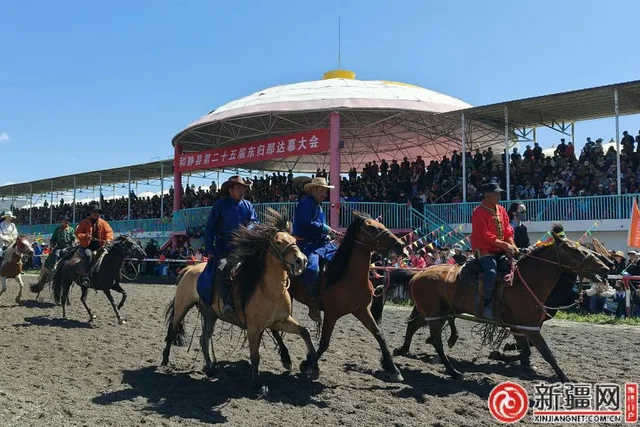
A key component of the park's tourism offering is the live performance "Dancing Horses of Danxia," which demonstrates how historical heritage can be adapted into a contemporary cultural attraction.
The production focuses on the history of the region during the Western Han Dynasty, when the Hexi Corridor played an important role along the Silk Road. It is based on the story of the renowned military commander Huo Qubing.
The large-scale show combines equestrian performances, choreography, theatrical elements, music and modern lighting technology, with dozens of horses performing under the guidance of professional riders.
For participants in the international media tour, the performance extended their exploration of the region's history.
"Just moments ago we were admiring a magnificent natural landscape, and now it has turned into an epic historical story. The sound of galloping horses, the rhythm of the drums and the riders' skill create an unforgettable experience," Borodavko said.
Another international journalist said the performance transformed the way the landscape was perceived.
"Just a moment ago Danxia was a still picture. Now it has come alive," the journalist said.
Combining nature, culture and technology
The combination of geological landscapes and historical performances has become one of the defining features of Lanzhou's tourism model.
Danxia represents millions of years of geological history, while the equestrian performance transports visitors to the era of the Silk Road. Together, they offer a single visitor experience that combines geology, history and culture.
This approach reflects broader trends in global tourism, where immersive experiences are increasingly valued for providing visitors with both emotional engagement and educational content.
For Lanzhou, the strategy is particularly significant because the city possesses extensive natural and historical resources. The goal is not only to preserve that heritage but also to make it accessible to domestic and international visitors through modern infrastructure.
Promoting Lanzhou internationally
The participation of journalists, bloggers and photographers from 23 countries is expected to support the international promotion of Lanzhou as a tourism destination.
As digital media become increasingly influential, visual storytelling and first-hand travel experiences are playing a growing role in shaping international perceptions of destinations.
Danxia offers strong potential for this type of promotion because its appearance changes throughout the day, across seasons and under different weather conditions, creating diverse opportunities for photography and video production.
International media initiatives also introduce Lanzhou to overseas audiences through the experiences of journalists and content creators, in addition to official promotional materials.
A new chapter for the Silk Road
Historically, Lanzhou was an important hub along the ancient Silk Road. Today, the city is giving that heritage new significance through the development of its modern tourism economy.
Around its natural and historical attractions, Lanzhou is building integrated tourism infrastructure that includes educational routes, museums, cultural performances, dining facilities, recreation areas and outdoor activities.
As a result, individual attractions become part of a broader tourism experience rather than standalone destinations.
According to the organizers, this integrated approach supports both the preservation of cultural and natural heritage and the economic development of the region by attracting more international visitors.
Lanzhou's model demonstrates how ancient landscapes and Silk Road history can serve as the foundation for modern tourism. The Danxia landscape showcases the region's geological heritage, the equestrian performance brings the history of the Hexi Corridor to life, and modern infrastructure connects these elements into a unified visitor experience. Together, they present a new image of Lanzhou as a city that preserves its heritage while integrating it into contemporary international tourism.