Tashkent, Uzbekistan (UzDaily.uz) — French companies are ready to expand their presence in Uzbekistan and offer solutions for developing urban infrastructure, including technologies to reuse heat generated by data centres and digital twins.
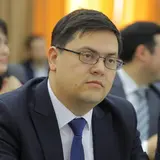
Gérard Wolf, the French Minister for Europe and Foreign Affairs’ Special Envoy for Transport and Sustainable Cities, made the remarks in an interview with Gazeta.
During his visit to Uzbekistan, Wolf held talks with representatives of the Presidential Administration, the ministries responsible for transport, energy, economy and finance, and investment, industry and trade, as well as the Tourism Committee and the New Tashkent Directorate.
Wolf said the French delegation aimed to present Uzbek partners with integrated solutions for sustainable urban development. The discussions were not focused on a single project but on opportunities for cooperation across the capital and other regions. The final choice of technologies and their applications rests with the Uzbek side.
The French envoy identified four key areas of urban infrastructure: water supply, energy, transport and waste management. French companies are ready to offer technologies tailored to local conditions in each area. A common priority, he said, should be reducing emissions and using resources more efficiently.
One example is the use of so-called waste energy — heat generated by equipment that is usually not recovered. Heat from data centre servers, for instance, can be collected and used to heat buildings or water.
Wolf cited the Aquatics Centre built for the Paris Olympic Games as an example. The facility uses heat from a nearby data centre and its own server room, along with solar panels and other energy-efficient solutions. According to Wolf, around 90% of its energy needs are met through renewable sources and heat recovery.
Another area of French proposals involves digital twins — virtual models of buildings and infrastructure that make it possible to assess their characteristics at the design stage. These models can be used, for example, to calculate how a building’s location affects energy consumption based on sunlight and wind conditions, and to identify optimal routes for trams, metro systems and cable cars.
Wolf stressed that French companies are prepared not only to supply technologies but also to train local specialists to operate them. Workforce training, he said, should be an integral part of infrastructure projects, as even advanced equipment cannot deliver the expected results without qualified personnel.
In transport, the French side advocates an integrated approach combining different forms of public transport and creating convenient interchange hubs. Solutions should reflect the characteristics of each city. Wolf noted that approaches suitable for a new urban development such as New Tashkent may not be applicable in a historic urban environment such as Samarkand.
The French representative also highlighted technologies for monitoring utility networks. Sensors installed in water supply systems, for example, can detect leaks and enable a prompt response to resource losses. Similar solutions could improve the efficiency of electricity networks.
On investment prospects, Wolf said French companies, including EDF, Veolia and Suez, were interested in expanding their operations in Uzbekistan if their proposals were selected for implementation. He added that Uzbekistan was free to work with partners from different countries.
Cooperation with universities and the training of young engineers also feature prominently in the proposed approach. France is ready to host Uzbek students specialising in technical fields and develop links between universities in the two countries. Wolf said the involvement of local specialists was important for the long-term operation and development of urban infrastructure.
Commenting on competition with Chinese and other foreign companies, Wolf said the cost of a proposal should not be the sole selection criterion. Project assessments should take into account not only equipment prices but also staff training, technical support and long-term operational efficiency.
Wolf added that the scale of challenges associated with Uzbekistan’s population growth and infrastructure development required the involvement of international partners from different countries.
In his view, the country would need to combine different technologies and approaches rather than rely exclusively on solutions from a single country.