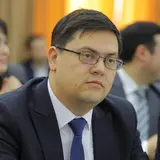
Tashkent, Uzbekistan (UzDaily.uz) — Enterprise Uzbekistan will establish a regulatory sandbox for testing technology products as part of a special technology jurisdiction operating under the principles of English and Welsh common law. Enterprise Uzbekistan Executive Director Farhod Ibragimov announced this at the opening of the Enterprise Uzbekistan Summit 2026 in Tashkent.
According to him, Uzbekistan’s president signed a constitutional law on 16 August establishing a special legal regime for the center until 2100, with a guarantee that the benefits provided under the regime will not be worsened or cancelled ahead of schedule.
Disputes involving center participants will fall under the jurisdiction of the Tashkent International Commercial Court, while decisions by the center’s administration can be appealed to an independent court.
Ibragimov said he was appointed head of Enterprise Uzbekistan three weeks ago. Before that, he spent 10 years contributing to the development of Uzbekistan’s technology sector, including through his work at IT Park Uzbekistan.
He emphasized that detailed regulations and legal acts governing the center’s operations are still being developed and called on summit participants to submit their comments and proposals through the official Enterprise Uzbekistan website before leaving Tashkent.
Sultanmurod Rasulov, Head of the Strategic Development and Partnerships Department at Enterprise Uzbekistan, who moderated the summit, provided further details about the jurisdiction.
According to him, English is the official language for documentation within the center. A regulatory sandbox will allow technology products to be tested, while cloud storage and data processing will be permitted subject to security requirements. The jurisdiction will also provide more flexible employment conditions for foreign specialists.
Residents of the center will be guaranteed 100% foreign ownership of their businesses, as well as the ability to use investment instruments familiar to foreign investors and hire employees under international employment standards.
Only three taxes will apply within the center: VAT, corporate income tax and personal income tax. Profits from the center’s priority activities and sales both abroad and within the center will be exempt from corporate income tax and subject to a zero VAT rate. Highly qualified foreign specialists may receive a zero personal income tax rate on salaries and dividends.
Foreign specialists will be issued visas for up to three years without having to leave the country to renew them and without requiring a separate work permit.
Rasulov also presented statistics on Uzbekistan’s technology sector. Around 150,000 people are employed in ICT, while the number of countries purchasing Uzbek technology services has increased from eight to 94 in less than 10 years. IT services exports exceeded US$1 billion over the past year.
According to him, the digital sector has grown by nearly 25% annually over the past five years, about three and a half times faster than the overall economy. More than 120,000 students are studying IT-related fields at the country’s universities, while nearly nine in 10 residents use the internet.
He also said that more than 30 startups have attracted over US$600 million in investment, the country’s startup ecosystem has been valued at around US$4.3 billion, and analytics platform Dealroom ranked Uzbekistan first among the countries it tracks for the growth rate of venture investment in its 2026 report.