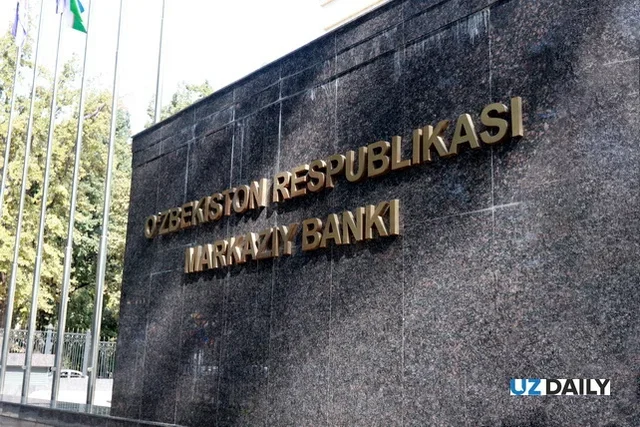
Central Bank of Uzbekistan Assesses Climate Risks for Banks

Central Bank of Uzbekistan Assesses Climate Risks for Banks
Tashkent, Uzbekistan (UzDaily.uz) — The Central Bank of Uzbekistan has dedicated a separate section of its financial stability review to the physical risks of climate change and is preparing a climate stress-testing tool for banks. According to the logic of the regulator, credit losses could arise from loans issued in regions with high climate risks.
The first of these risks is seismic. The eastern and southern territories of the country are located in a seismically active zone near the junction of the Indian and Eurasian tectonic plates. The Central Bank classifies the Andijan, Jizzakh, Namangan, Samarkand, Surxondaryo, Tashkent, Ferghana, and Qashqadaryo regions, as well as the city of Tashkent, as areas with an increased danger of earthquakes.
The second risk is water scarcity in the west of the country. In Karakalpakstan, Khorezm, Navoiy, and Bukhara regions, precipitation is nearly 10 times lower than in the southeast, while the share of moderately and highly salinized lands in Khorezm and Karakalpakstan reaches 41% and 40% respectively.
Citing estimates from the World Bank, the Central Bank provided a forecast indicating that by 2050, the flow of the Amu Darya River could decrease by 5% and the Syr Darya River by 15%. Consequently, the annual water deficit in the country is projected to grow from 7 billion cubic meters in 2030 to 15 billion cubic meters by 2050.
The vulnerability of the economy to water risk is high. Irrigated agriculture consumes approximately 90% of the country's water resources, while the agricultural sector accounts for 18% of GDP and provides 23% of employment. A reduction in crop yields would imply an increase in unemployment and a drop in household incomes, carrying full consequences for the quality of bank portfolios.
The list of risks also includes urban and river floods and landslides. Most of the country's cities are classified in the high-risk group for flooding due to the condition of drainage systems and the spread of waterproof surfaces, while Tashkent and Syrdaryo region fall into the low-risk category.
Landslide danger affects 17% of the mountainous territory of the country, covering an area of 90,000 square kilometers, with 65% to 70% of landslides caused by snowmelt, precipitation, and groundwater.
The regulator's response will be a climate stress test that will evaluate the impact of physical and transition climate risks on the financial position of banks. This is a new tool for Uzbek banking supervision. Until now, stress testing covered only macroeconomic and credit shocks.