Tashkent, Uzbekistan (UzDaily.uz) — Officials, businesses and international organisations have examined transport, trade and investment barriers affecting Central Asia's critical minerals exports, as well as opportunities to expand processing in the region.
A seminar presenting preliminary findings from a project was held on 5 November with support from the European Union, the OECD and the government of Uzbekistan, the EU Delegation to Uzbekistan said.
Participants discussed ways to develop critical minerals value chains, strengthen regional transport links and attract investment.
Three priorities emerged: improving the competitiveness of transport routes, simplifying cross-border trade and creating conditions for economically viable mineral processing within the region.
Trans-Caspian route still trails the Northern Corridor
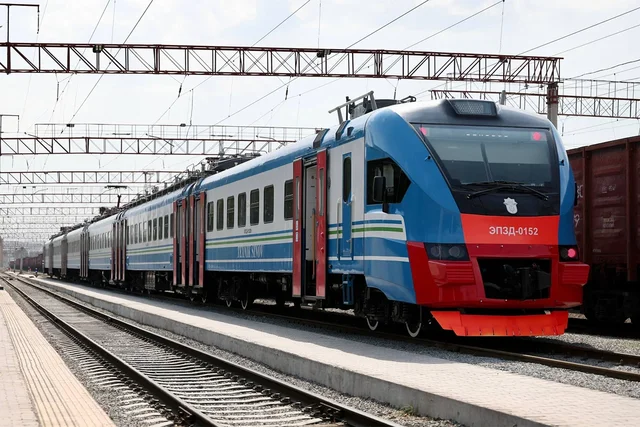
OECD representatives presented preliminary findings from research into transport logistics along the Trans-Caspian Transport Corridor (TCTC).
Although more Uzbek companies are using the route, most respondents still transport minerals to the EU through the Northern Corridor.
Businesses cited higher costs, longer delivery times and less predictable shipments along the TCTC as the main reasons for choosing alternative routes.
The OECD said addressing infrastructure constraints required coordination across the entire transport route, including shipments across the Caspian Sea, rather than within individual countries alone.
Dildora Ibragimova, representing the Centre for Transport and Logistics Development Studies under Uzbekistan's Transport Ministry, pointed to the corridor's limited capacity, challenges related to the Caspian Sea's water level and high transport costs.
She said Uzbekistan was expanding warehouse infrastructure and developing multimodal transport. The planned China–Kyrgyzstan–Uzbekistan railway is also being considered for integration with TCTC routes.
Transit restrictions in neighbouring countries affect exports
OECD analyst Yegor Polishchuk presented findings on trade and transit policies affecting critical minerals exports.
Despite reforms to Uzbekistan's trading system, exporters continue to face transit restrictions involving Russia, China and Kazakhstan.
Abror Kushmatov, deputy head of a department at Uzbekistan's Ministry of Investment, Industry and Trade, reaffirmed the country's intention to complete its accession to the World Trade Organisation by the end of 2026.
He also outlined measures to speed up transit, including digitalising procedures and exchanging transit documents with neighbouring countries.
Yerzhan Shakargaliyev of QazTrade presented Kazakhstan's experience. The country is introducing electronic export licensing for minerals, digital customs procedures through the Keden platform, electronic transit declarations for rail freight and electronic queuing systems at road border checkpoints.
Business representatives also highlighted the commercial impact of transport restrictions.
Dima Orazimbetov of non-ferrous metals trader Trafigura said transport times and costs had increased after some exports were redirected from the Northern Corridor to the TCTC. In some cases, he said, copper shipments to China had become more competitive than exports to Western markets.
Sergey Redkin of freight forwarder Cargo Star highlighted difficulties caused by international sanctions for companies transporting minerals from Uzbekistan, particularly when shipments transit Kazakhstan and Russia.
Processing requires new investment
The final part of the seminar focused on developing processing facilities and attracting investment into critical minerals value chains.
Industry representatives expressed interest in expanding raw material processing but pointed to questions over project profitability and access to international financing.
OECD local consultant Almaz Ashirov presented research on Kazakhstan's tungsten industry. He discussed prospects for cooperation between Uzbekistan and Kazakhstan, including raw material supplies, assessments of mining technologies, technical knowledge exchange and potential investment in concentrate production.
Akbarkhan Bobokhanov, representing the Almalyk Mining and Metallurgical Complex, outlined the company's plans to expand processing capacity and attract international partners.
He said some projects required additional technical studies and feasibility assessments prepared in line with the requirements of international financial institutions to secure financing.
Timur Khikmatullayev, special representative of the chairman of the board and director of the diplomatic cooperation department at UzTMK, presented plans to expand metallurgical production based on tungsten and molybdenum processing facilities.
He said implementation depended on stable raw material supplies, predictable water and energy prices, access to low-carbon electricity, workforce training and more efficient customs and transit procedures.
Andrey Lukyanov, a partner at Boston Consulting Group, also stressed the need for commercially viable projects, reliable raw material supplies, workforce development, greater use of renewable energy and long-term sales agreements.
Participants concluded that developing the critical minerals sector in Central Asia depended on better transport infrastructure, predictable transit arrangements, simpler trade procedures and conditions conducive to investment in processing.