Aripov: CANWFZ Has Proven Effective as Regional Security Mechanism

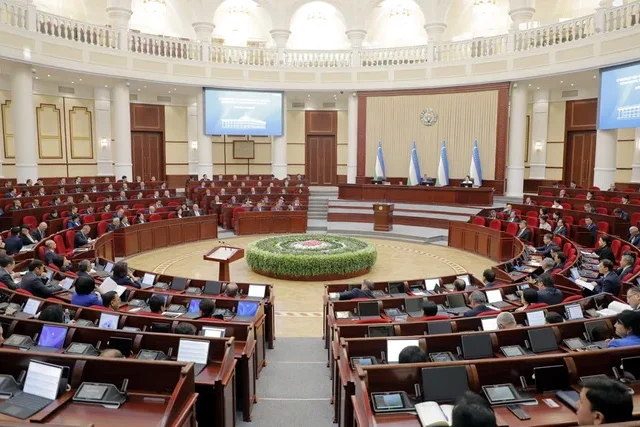
Tashkent, Uzbekistan (UzDaily.uz) — On Friday, an expert discussion dedicated to the future of nuclear security in the region took place in the capital of Uzbekistan within the framework of the Tashkent Dialogue on the Central Asian Nuclear-Weapon-Free Zone (CANWFZ). More than 50 specialists from Uzbekistan and the United States summarized the results of two decades of the zone's operation and identified priorities for the next strategic stage.
The forum was organized by the Institute for Strategic and Regional Studies under the President of the Republic of Uzbekistan (ISRS), the Institute of Advanced International Studies at the University of World Economy and Diplomacy, and the James Martin Center for Nonproliferation Studies at the Middlebury Institute of International Studies at Monterey (USA).
From Testing Ground to Nuclear-Weapon-Free Zone Opening the forum, ISRS Director Eldor Aripov presented a detailed assessment of the 20-year journey of CANWFZ, describing it as an active model of regional cooperation based on shared legal obligations.
"Over two decades, CANWFZ has proven its effectiveness as a mechanism for ensuring regional security, strategic predictability, and trust among Central Asian states," Aripov stated.
He recalled that the initiative was proposed by Uzbekistan at the UN General Assembly in 1993 and found practical implementation in the 2006 Semipalatinsk Treaty, which consolidated the commitment of five Central Asian states to the principles of peace, stability, and good-neighborly relations.
The zone holds a unique place in the history of arms control, Aripov emphasized, noting that it is the world's first nuclear-weapon-free zone located entirely in the Northern Hemisphere and bordering two nuclear-weapon states simultaneously. The legally binding assurances against the use or threat of use of nuclear weapons obtained by the regional states have significantly strengthened the strategic stability of Central Asia.
Global Arms Control Crisis Aripov did not limit his remarks to listing achievements. He used the CANWFZ anniversary as an occasion to discuss the degrading international security architecture.
The global arms control system is experiencing a profound crisis, he stated, noting that the Intermediate-Range Nuclear Forces Treaty has terminated, the fate of New START remains uncertain, and NPT Review Conferences increasingly conclude without final documents.
"The world around us has not become more predictable. On the contrary, geopolitical tensions have intensified, nuclear rhetoric has become more pronounced, and the level of trust among leading powers has declined significantly," the ISRS director stated.
Under these conditions, he said, regional security mechanisms acquire special significance precisely because they provide legal certainty and a foundation for trust where global tools have failed.
Shifting Agenda: From Non-Proliferation to Risk Management A significant part of Aripov's speech focused on the peaceful use of nuclear energy, a sphere rapidly gaining strategic weight in the region. Uzbekistan is implementing a nuclear industry development program, Kazakhstan maintains its position as one of the world's largest uranium producers, and Central Asia is turning into a key transport and logistics hub across Eurasia. Each of these directions, the speaker warned, carries radiological, infrastructural, and environmental risks that require active state regulation.
"This is precisely why it is essential to move beyond the traditional non-proliferation agenda toward effective risk management," Aripov stressed, identifying the physical protection of facilities, cross-border information exchange, human resource development, and the enhancement of monitoring and emergency response mechanisms among the key priorities. Verification and transparency remain the cornerstone of long-term stability.
Aripov characterized the transition of Central Asia from a region of nuclear testing to a nuclear-weapon-free zone as the first strategic transformation of the region. The next step, he believes, should be the development of a comprehensive nuclear security culture.
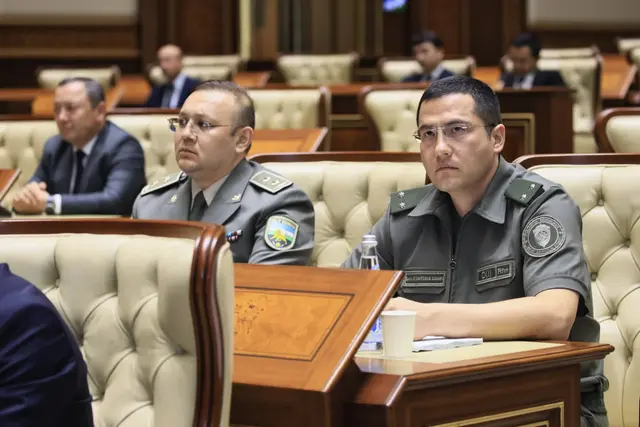
Broad Circle of Participants The forum brought together a representative group of experts. The American side was represented by former officials of the White House and the U.S. National Security Council, as well as scholars and international relations analysts from Harvard, Yale, Princeton, Berkeley, Oxford, and Cambridge.
The Uzbekistan delegation included heads and experts from the Committee for Industrial, Radiation and Nuclear Safety under the Cabinet of Ministers, the Institute of Nuclear Physics of the Academy of Sciences, the National Committee on Ecology and Climate Change, ISRS, and several leading national analytical and research structures.