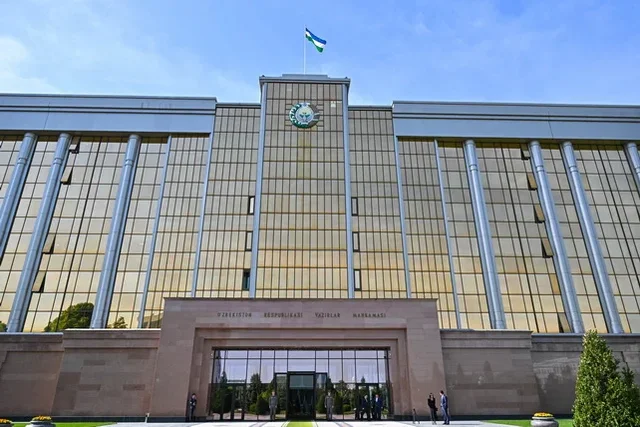
Tashkent, Uzbekistan (UzDaily.uz) — President of Uzbekistan Shavkat Mirziyoyev has outlined priorities for a new phase of reforms aimed at developing entrepreneurship, creating jobs and raising household incomes, according to the presidential press service.
On 25 November, the president reviewed proposals to improve business support and promote quality employment.
Since 2017, 11 million people in Uzbekistan have moved out of poverty. However, the authorities say businesses need to become more productive and conditions must be created for sustainable income growth.
Micro, small and medium-sized enterprises account for 75% of employment in the economy, but contribute only 55% of gross domestic product. Just 4% of micro-enterprises move into larger business categories, a rate almost four times below the international level.
The impact of lending on business expansion was also deemed insufficient. In high-income sectors such as information technology, logistics, finance and insurance, small businesses account for only 8%.
Against this backdrop, the proposals envisage a unified support system for entrepreneurs at every stage of business development, from setting up a company to expanding operations and entering foreign markets.
The proposed system will expand the use of loans, guarantees and sureties, leasing, factoring, venture financing and equity investment. The choice of instruments will depend on the stage of a company's development and its needs.
Entrepreneurs will also be offered advice and training, assistance with adopting modern technologies, attracting investors and entering export markets.
A separate set of proposals from the Central Bank focuses on improving businesses' access to financial services and strengthening competition among banks and other financial institutions.
These include introducing alternative methods of assessing creditworthiness, enabling secure data exchange between banks and fintech companies, and allowing businesses to receive offers from several banks through a single application. Mechanisms for out-of-court resolution of financial disputes and risk management were also considered.
Particular attention was given to creating a multi-level business support system extending from the national level to mahallas. Business incubators and project offices are proposed for regions, while district-level centres would support micro, small and medium-sized enterprises. Services for entrepreneurs would be provided through a one-stop-shop system.
The criteria for assessing the performance of hokim assistants will also change. Instead of focusing mainly on quantitative indicators, assessments will take account of the sustainability of businesses created, the retention of jobs and growth in turnover.
To raise household incomes directly, the authorities plan to implement 1,000 projects across the regions, with a total value of 81 trillion soums. The projects are expected to create 320,000 jobs. Other priorities include developing cooperation based on mahalla specialisations and growing high-value crops on household plots and leased land.
By 2030, the government aims to double the rate at which micro, small and medium-sized enterprises move into larger business categories, increase the sector's share of total employment to 80% and raise the proportion of the middle class to 90%. Efforts to reduce informal employment will also continue.
The proposals include increasing the share of loans to entrepreneurs backed by guarantees and sureties from 1% to 12% of total lending. The proportion of business financing provided by international financial institutions and market borrowing is expected to rise from 17% to 35%.
In employment policy, the proposed priorities include balancing labour market demand and supply, fully digitising services, and developing systems for assessing and internationally certifying professional qualifications. Increasing the number of formal jobs is another objective.
Mirziyoyev instructed the relevant authorities to prepare proposals for improving labour legislation, simplifying the formalisation of employment relationships and strengthening state oversight in this area. They were also tasked with ensuring a more balanced relationship between employers and employees.
Following the presentation, the responsible agencies were instructed to further develop the initiatives, allocate tasks among ministries and committees, and establish mechanisms for cooperation during the next phase of reforms.