Tashkent, Uzbekistan (UzDaily.uz) — For countries undergoing rapid economic change, building a world-class education system can seem deceptively simple: take what works elsewhere and bring it home.
But education is not a product that can simply be imported. What works in one country will not necessarily work in another, because schools are shaped by the communities, cultures and aspirations around them.
After more than two decades in education, and now building on GEMS’ 65+ years establishing and operating schools around world, I can confidently say that the strongest schools are not necessarily those that most closely resemble successful schools elsewhere. They are those that take the best ideas from around the world and make them work for the people they serve. That distinction matters particularly in Uzbekistan.
The country is undergoing rapid economic and social change. GDP grew 7.7% in 2025, and the Asian Development Bank forecasts growth of 7% in 2026. Meanwhile, foreign investment has reached record levels, surpassing $43 billion. Alongside this growth, Uzbekistan is actively reshaping its education system, with a new National Curriculum Framework, greater emphasis on digital education and AI, and efforts to make vocational education more accessible.
As businesses expand and families move or return to Uzbekistan, demand for high-quality education and internationally recognised qualifications is increasing. But this raises a more important question than simply how many schools are needed: what should international education look like in Uzbekistan?
The answer should not be to reproduce schools from elsewhere. It should be to bring international experience and make it relevant to the country.
For families, the appeal of international education is clear. It can offer globally recognised qualifications, strong English-language education and pathways to universities and careers around the world. For international businesses, the availability of high-quality schools can also help make a market more attractive to employees relocating with their families.
While these are important benefits, they are only part of the picture. A genuinely international education should broaden a student’s horizons while giving them the skills and confidence to participate in the country they are helping to build. In Uzbekistan, that means global perspectives and opportunities sitting alongside Uzbek language, history and culture, not in competition with them.
In practice, this might mean teaching an internationally benchmarked curriculum while ensuring Uzbek language, literature and history remain central. Coursework and assignments can be built around Uzbekistan’s own economy and industries – its logistics corridors, its textile and mining sectors, its growing tech scene – so that students are applying global frameworks to problems they recognise. It could also mean creating opportunities for students to engage with local businesses and community leaders, connecting what they learn in the classroom to the country around them.
This applies to teachers too. Bringing internationally experienced educators together with colleagues who have different professional backgrounds can create a powerful exchange of ideas and practice. International partnerships can help local schools improve teaching, management and leadership – yet recent research has also shown that the most successful partnerships emerge when educational leaders from overseas learn to value and integrate local educational wisdom, rather than imposing their own ideas.
There is a strong economic case for such partnerships. The World Bank estimates that Uzbekistan will need to create more than 400,000 jobs annually over the coming decade to accommodate its rapidly growing working-age population. The challenge is to provide better-paid, more productive and more secure jobs, yet the World Economic Forum estimates that, globally, 59% of workers will require training by 2030, with 11% at risk of being left behind. The country will need young people who can compete in an increasingly global economy, but who also understand the society in which they are building their careers.
That requires more than academic achievement. Young people will need to think critically, communicate across cultures, and adapt as the nature of work changes. International education has considerable experience in developing these capabilities, but the most effective approach is one that connects them to the needs of the local economy. As its international education sector develops, Uzbekistan can draw on the experience, expertise and proven approaches of education systems around the world, while shaping them around its own ambitions, communities and culture.
That is the real value of international education: not choosing between global and local, but bringing the two together. The strongest schools can meet international standards while reflecting the country in which they operate and preparing young people to contribute to its future. Ultimately, it is about taking the best of global education and making it work at home. That is what makes an education genuinely world-class.
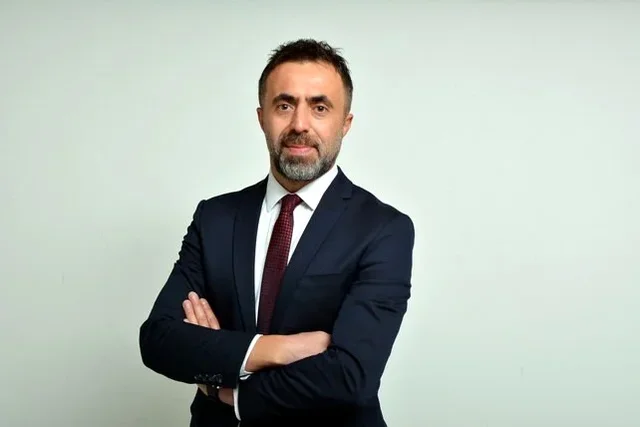
Robert Tarn CBE is CEO of GEMS School Management.