Tashkent, Uzbekistan (UzDaily.uz) — Uzbekistan and Switzerland have approved an agreement to return a further $252.5 million in misappropriated assets to the country. The funds will be allocated to healthcare and education through the Ishonch – 2030 Trust Fund, the Ministry of Economy and Finance of Uzbekistan said.
The agreement was approved on 24 November 2026. Under the second phase of the resource allocation strategy, it provides for a mechanism to return the assets and use them to finance priority social programmes.
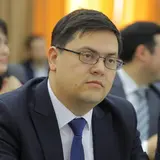
The document was signed by Uzbekistan's Deputy Minister of Economy and Finance Otabek Fazilkarimov, Swiss Ambassador to Uzbekistan Simone Giger and UN Resident Coordinator in Uzbekistan Sabine Mahl.
The Ishonch Fund, also known as the Uzbekistan Vision 2030 Fund, was established at the initiative of President Shavkat Mirziyoyev through cooperation between Uzbekistan, Switzerland and the United Nations. Its purpose is to return assets confiscated in Switzerland and ensure they are used for the benefit of Uzbekistan's population.
The fund was established in 2022 after Switzerland and Uzbekistan signed an agreement on restitution, or the return of illegally acquired assets for the benefit of the Uzbek people. It supports transparent and effective restitution through programmes that contribute to national reforms and the achievement of the UN Sustainable Development Goals (SDGs).
The fund is being used to return assets finally confiscated in criminal proceedings involving Gulnara Karimova. It will also serve as a mechanism for restitution of any additional assets that may be finally confiscated in future during the ongoing criminal proceedings in Switzerland.
The Swiss prosecutor's office launched an investigation into Karimova and her associates in 2012. In March 2020, a court in Uzbekistan sentenced her to 13 years in prison, including on charges of embezzlement and money laundering.
The fund operates in accordance with UN principles and values, as well as the key principles of the Global Forum on Asset Recovery (GFAR): transparency, accountability, participation and public benefit. According to the fund, it applies international best practices to ensure that restitution is principled, practical, timely and fair.
A total of $339.5 million has been allocated to the fund. To date, it has invested $87 million in a portfolio of programmes aimed at improving access to and the quality of healthcare and education services for people in Uzbekistan.
Funds are allocated through government programmes with the participation of the United Nations and the World Bank. Transparency, accountability and public participation are provided for in project selection, implementation and monitoring.
How the fund makes decisions
Ishonch is a restitution fund whose purpose is to return confiscated assets to Uzbekistan in a way that brings lasting positive changes to people's lives. All decisions are guided by this objective, with an emphasis on transparency and accountability.
The fund is managed by a Governing Committee comprising three co-chairs: representatives of the governments of Uzbekistan and Switzerland, and the UN Resident Coordinator. Decisions are made by consensus. If consensus cannot be reached, the matter is referred to a high-level Strategic Committee comprising Switzerland's Deputy State Secretary and Uzbekistan's Deputy Prime Minister.
The Governing Committee receives recommendations from the Civil Society Advisory Committee (CSAC). Its involvement helps the fund take into account actual needs and different perspectives while maintaining public trust. The advisory body serves as a link between civil society and decision-makers.
The fund invests in projects that meet the requirements of its Resource Allocation Strategy, which aims to improve access to and the quality of healthcare and education services in Uzbekistan.
During the first phase of resource allocation, $87 million was directed to healthcare and education. The funds were used to support maternal and child health, improve perinatal care, enhance education quality and develop teachers' digital skills.
The second phase provides for two main areas of funding.
In healthcare, the plans include improving medical care for children and adolescents, expanding disease prevention and early detection, including treatment options for certain types of cancer. The programme also предусматривает improving the professional qualifications of healthcare workers.
In education, funding will address schools' infrastructure needs, including support for the construction of new educational institutions. The strategy also provides for the introduction of digital technologies, teacher training and wider access to quality education.
Particular attention will be paid to rural areas and population groups with limited access to social services.
The fund's other operating principles include combating corruption, ensuring the targeted use of funds, evaluating project outcomes and involving civil society representatives in independent monitoring.