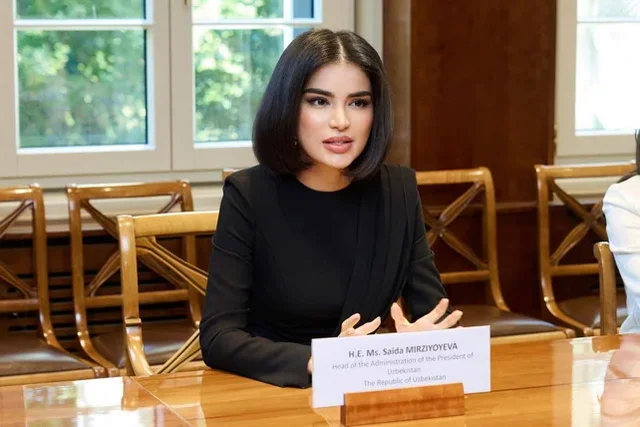
Tashkent, Uzbekistan (UzDaily.uz) — Head of the Presidential Administration of Uzbekistan Saida Mirziyoyeva addressed the general debate of the 81st session of the United Nations General Assembly in New York on 23 September, presenting Uzbekistan's position on key international and domestic issues.
The speech was delivered in Uzbek. Mirziyoyeva said that amid wars, geopolitical tensions, declining trust and growing inequality, Uzbekistan is focusing on openness, good-neighborly relations and dialogue. She identified human dignity as the central guiding principle of state policy.
According to Mirziyoyeva, development, peace and the protection of human dignity should be treated as interconnected objectives. She placed particular emphasis on young people, stressing the need to create conditions for access to education, professional training and the opportunity to determine their own future.
A significant part of her address focused on the future of the United Nations. Mirziyoyeva said the organization needs stronger capabilities to prevent conflicts, ensure the implementation of adopted decisions and take the positions of all states into account.
Uzbekistan supports UN Secretary-General's “UN80” initiative, aimed at adapting the organization to modern conditions, as well as the idea of expanding the UN Security Council to reflect current realities, she said. The country plans to chair the Non-Aligned Movement next year.
Mirziyoyeva also said that Uzbekistan has nominated its candidacy for a non-permanent seat on the UN Security Council for 2035–2036 and is counting on support from member states. She stressed that international law must be applied as a common rule for all countries, regardless of their interests.
Addressing Central Asia, Mirziyoyeva noted changes in relations among the countries of the region. According to her, the political will of Central Asian leaders has helped former disputes over borders, water and other issues gradually give way to partnership and cooperation.
Regarding Afghanistan, Mirziyoyeva called for abandoning an exclusively force-based or threat-based approach to the country. She said the international community should help create conditions that would enable the Afghan people to build peaceful lives.
Uzbekistan's domestic reforms were another major focus of the address. Mirziyoyeva said their effectiveness is assessed primarily through changes in people's lives.
According to figures she presented, the purchasing power of the population has doubled over the past decade, while the economy has grown from US$50 billion to US$147 billion. The volume of attracted foreign investment has exceeded US$150 billion, and exports have nearly tripled.
She also reported that the poverty rate had fallen to 4%, with almost 10 million people moving out of poverty. Preschool education coverage increased from 27% to 78%, while the share of the population with higher education rose from 9% to nearly 50%.
Average life expectancy increased from 66 to more than 75 years, while maternal and infant mortality rates declined fourfold, she said.
In the context of human capital development, Mirziyoyeva highlighted the importance of children's health and education. In the coming days, Uzbekistan will hold a high-level dialogue with the United Nations Population Fund on demographic stability and human capital, she said. An international event dedicated to child well-being is planned in Samarkand in October.
Environmental issues were addressed primarily in relation to the Aral Sea. Mirziyoyeva said the sea's desiccation resulted from decisions made over many years and the irrational use of natural resources.
Uzbekistan is creating vegetation cover on the dried seabed of the Aral Sea, introducing water-saving technologies and plans to increase the share of renewable energy sources to 54% by 2030, she said.
She also highlighted an Uzbek initiative that led the UN General Assembly to declare 2027–2036 the Decade of Action for Afforestation and Forest Restoration. The next step, she said, is to translate the initiative into practical projects.
Artificial intelligence was another key topic of the speech. Mirziyoyeva said technological development must remain human-centered. According to her, the use of AI should be accompanied by respect for human rights, safety, equal opportunities and accountability.
She stressed that technology should be used to improve quality of life rather than create a situation in which people must adapt themselves to technological changes. Uzbekistan supports the development of international dialogue on these issues, she said.
Mirziyoyeva also addressed the rule of law and judicial protection. She said state authorities must not stand above the law and that every person should have confidence in their ability to seek justice through the courts.
As one example, she cited the establishment of an international commercial court at the Tashkent International Financial Centre, which will operate on the principles of English law.
The speech also covered women's rights and efforts to combat forced labor. Mirziyoyeva said child labor and systemic forced labor had been eliminated in Uzbekistan, while accountability for domestic violence had been strengthened. A separate system has been established to support women's entrepreneurship, and women hold 39% of seats in parliament.
Concluding her address, Mirziyoyeva linked international cooperation, development and technology to the need to preserve human dignity. She said Uzbekistan intends to continue cooperation aimed at advancing intercultural and interfaith dialogue, education and tolerance.
According to Mirziyoyeva, the future will judge countries not only by the opportunities available to them but also by how they chose to use those opportunities.