Tashkent, Uzbekistan (UzDaily.uz) — Uzbekistan’s Inspection for Control over the Agro-Industrial Complex, known as Uzagroinspection, has proposed introducing administrative liability for failure to comply with its requirements, including those related to creating agricultural product reserves, registering machinery and undergoing technical inspections.
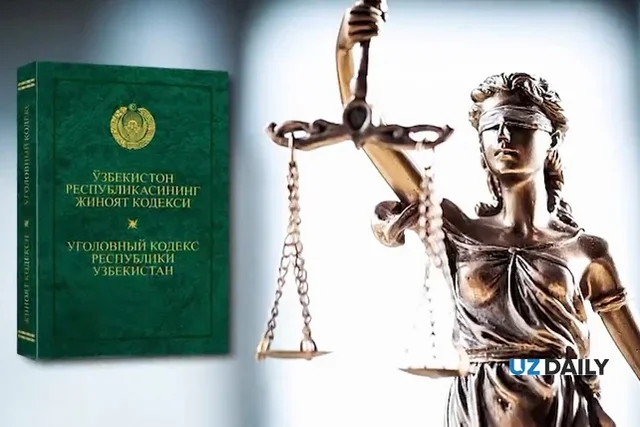
The relevant draft amendments and additions to the Code of Administrative Responsibility have been published on the portal for discussing draft regulatory legal acts (SOVAZ).
The draft proposes adding Article 198-10 to the Code of Administrative Responsibility. It would establish liability for obstructing the activities of Uzagroinspection.
For individuals, the proposed fine would range from 3 to 5 basic calculation values (BRV), equivalent to 1.32 million to 2.2 million soums. For officials, the penalty could range from 5 to 10 BRV, or 2.2 million to 4.4 million soums.
If the same violation is committed again within one year, the fine for individuals would increase to 5–10 BRV. For officials, the proposed penalty would be 10–15 BRV, or 4.4 million to 6.6 million soums.
The draft would also authorize Uzagroinspection to draw up cases under Parts 2 and 3 of Article 125 of the Code of Administrative Responsibility involving agricultural and road construction machinery.
Part 2 of Article 125 establishes liability for operating a vehicle without registration or a technical inspection, as well as for using machinery that exceeds established emissions and noise limits or lacks a fire extinguisher, first-aid kit or emergency stop sign. The fine is set at 50% of the BRV, or 220,000 soums.
Part 3 concerns the operation of vehicles with defective braking systems, steering mechanisms or coupling devices. The penalty is 1 BRV, or 440,000 soums.
The draft also provides for liability for failing to comply with inspection requirements related to creating agricultural product reserves, as well as registering agricultural, land reclamation and road construction machinery and having it undergo technical inspections.
The document is currently at the public discussion stage. Comments and proposals will be accepted until 10 October.
If adopted, the law would enter into force three months after its official publication.