Tashkent, Uzbekistan (UzDaily.uz) — Good governance is about people. Its success is measured not by the policies announced or the institutions built, but by whether people's everyday lives get better. In India, this thinking is increasingly guided by Seva (public service), and by the belief that development lasts when citizens take active part.
Swachh Bharat Mission (SBM) is a visible example of this approach. Prime Minister Shri Narendra Modi launched SBM on October 2, 2014 on the birth anniversary of Mahatma Gandhi. Today, SBM has become a mass movement, with citizens and institutions such as schools and local organisations working alongside government. Social campaigns like 'Swachhata Hi Seva' and 'Swachhata Pakhwada' have encouraged people to assume responsibility and act themselves.
The idea of Seva runs deep in India's civilisation, and in governance it means putting the citizen at the centre. Several initiatives have been implemented in the past decade to improve governance and service delivery. Jal Jeevan Mission is bringing drinking water to rural homes, Ayushman Bharat is widening access to healthcare, Ujjwala Yojana has provided cleaner cooking fuel while Jan Dhan Yojana has brought underserved people into the banking system. The needs differ, but the objective is the same of bringing public services closer to people. Technology has added a new dimension and made service delivery much more effective and efficient. India's Digital Public Infrastructure, including Aadhaar, UPI and DigiLocker, lets citizens directly access government services on connected digital platforms and removes the human interface. This lowers costs and makes services easier to reach at very large scale. Public participation has also grown alongside it.
Jal Jeevan Mission also illustrates how the focus of public service delivery is evolving from infrastructure creation towards sustained, citizen-centred service delivery. In 2019, only about 17% of rural households had tap-water connections; according to the Government of India, this had risen to around 81.61% of the 19.36 crore identified rural households by 2026. The restructured Jal Jeevan Mission 2.0, extended up to December 2028, places greater emphasis on sustainability, digital monitoring, operation and maintenance, and community participation. The programme includes a national digital framework called “Sujalam Bharat” and greater involvement of Gram Panchayats and Village Water and Sanitation Committees.
Seva Pakhwada is another important nationwide service-oriented campaign launched in 2023 that aims to promote the spirit of Seva, volunteerism, civic responsibility, environmental stewardship and active youth participation. In 2024, more than 27 lakh programmes were reportedly held during a 15-day Seva Pakhwada, with over 28 crore people taking part. This year, the Seva Pakhwada is being observed from September 17 to October 02, 2026 across districts of the country. The programme will focus on cleanliness, sanitation, environmental protection, water conservation, tree plantation, health awareness, blood donation, and promotion of sustainable lifestyles. A key component of the campaign is cleanliness and waste collection drives and segregation and scientific disposal of waste. The initiative will be conducted in the spirit of “Jan Bhagidari se Jan Andolan”, encouraging maximum participation of young people and communities. Through structured activities, Seva Pakhwada seeks to create sustainable behavioural change and showcase youth-led impact stories contributing towards a cleaner, greener and more responsible society.
Uzbekistan is transforming its governance and public services, with a digital-government agenda focused on citizen-friendly services, inclusion, transparency and efficiency. This gives India and Uzbekistan a natural basis for sharing experience. This potential was also recognised at the 4th India–Central Asia Dialogue held in New Delhi in June 2025, where the participating countries noted the importance of India Stack in accelerating digital transformation and delivering public services at scale. India agreed to provide assistance in developing Digital Public Infrastructure in Central Asian countries, and the Ministers agreed to establish an India–Central Asia Digital Partnership Forum, with Uzbekistan offering to host its inaugural meeting. This provides a concrete framework for cooperation in digital public services, financial connectivity, innovation and citizen-centred service delivery.
Together, we can go beyond exchanging technology and practices, and build people-centred solutions for the challenges of the 21st century. Good governance is not about government doing everything for the people. It is about creating conditions where government, citizens, communities, innovators and businesses work together to improve lives. That is the deeper meaning of Seva, and the promise of a true development partnership between India and Uzbekistan.
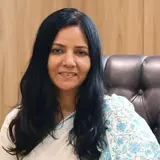
Ms. Smita Pant
Ambassador Extraordinary and Plenipotentiary of India to the Republic of Uzbekistan, Served in Indian missions in Madrid, London, and Abu Dhabi, and as Consul General in Ho Chi Minh City, Vietnam.