Tashkent, Uzbekistan (UzDaily.uz) — For four days in September, journalists and young delegates from Central Asian countries filled the high-altitude streets of Xining as part of an exchange program designed to turn a week of travel and interaction into a lasting bridge between generations. The exchange program “Together for the Future: Central Asia’s Gen Z in China’s Summer Capital” was held from 17 to 20 September and brought together delegates from Kazakhstan, Kyrgyzstan, Uzbekistan and Tajikistan in Qinghai Province.
Xining is the administrative center of Qinghai Province and one of the largest cities on the Qinghai-Tibet Plateau. Located in the Huangshui Valley at an altitude of about 2,261 meters above sea level, the city is known for its relatively cool summers and is often referred to as China’s “summer capital.” The Huangshui River, a tributary of the Yellow River, runs through Xining, which remains an important transportation, educational and cultural hub in northwestern China.
The event was organized by the Publicity Department of the Xining Municipal Committee of the Communist Party of China, together with the Information Office of the People’s Government of Qinghai Province, the Foreign Affairs Office of Qinghai Province and the Qinghai branch of China News Service.
At the source of three rivers
Opening the program on 18 September, Sun Haidong, deputy head of the Publicity Department of the Qinghai Provincial Committee of the Communist Party of China, welcomed the delegates, saying that autumn in Xining greeted visitors with “high skies, light clouds and a refreshing breeze.”
Sun placed the visit in a broader historical context, recalling that the ancient Silk Road, once marked by the sound of caravan bells, established routes for trade and cultural exchange between China and Central Asia more than 2,000 years ago. He said Qinghai remains a living crossroads where these connections continue to develop.
The reference to the “source of three rivers” is linked to the Sanjiangyuan area, which literally means “source of three rivers.” It is home to the headwaters of the Yangtze, Yellow River and Lancangjiang rivers, known outside China as the Mekong. The area is often called China’s “water tower” because of its importance for water supplies across large parts of the country and neighboring regions of Asia. Sanjiangyuan National Park covers about 190,700 square kilometers and is among China’s largest protected areas.
A second welcome address at the beginning of the delegates’ tour of Xining returned to the same historical theme: for thousands of years, the Huangshui Valley was a place where peoples from East and West lived alongside each other and enriched one another’s cultures along the routes of the ancient Silk Road.
The opening ceremony concluded with a flag handover. Organizers presented the program’s flag to youth representatives, including a student from Kyrgyzstan, symbolically entrusting the incoming generation with responsibility for preserving these ties.
The city’s future at its exhibition center
The first stop after the opening ceremony was the Xining City Exhibition Center, located in the northern part of the city’s Central Square. According to the organizers, the center is one of the key venues through which the city presents itself to the outside world, bringing together its history, current development and urban planning vision in a single space.
Inside, delegates were shown Xining’s urban development, infrastructure and master plan through models, maps and interactive displays. The models demonstrated the connections between residential districts, transport corridors, public spaces, industrial areas and natural zones.
For guests visiting the high-altitude city for the first time, the center provided a starting point: delegates first “read” the city through its models and then compared the concept presented there with Xining’s actual streets, squares and new districts.
Snow leopards on the plateau
At the Qinghai-Tibet Plateau Wildlife Zoo in Xining’s Chengxi district, delegates saw animals rarely found in captivity elsewhere. The zoo specializes in species inhabiting the high-altitude plateau, including snow leopards, Pallas’s cats, Chinese desert cats and lynxes.
According to the organizers, the zoo houses 15 snow leopards, one of the world’s largest captive populations of the species. The facility also serves a conservation function, with specialists involved in rescuing injured animals, breeding programs and environmental education.
The snow leopard is considered one of Eurasia’s most elusive and difficult-to-observe predators. It lives in harsh mountain environments at high altitudes and requires extensive territories with a stable food supply. The zoo’s work therefore extends beyond displaying animals to visitors and includes specialist training, research and support for conservation initiatives. In recent years, Xining has increasingly promoted its image as the “snow leopard capital.”
Tibetan heritage: medicine and art
A visit to the Qinghai Provincial Museum of Tibetan Medicine and Culture allowed delegates to explore the region’s intangible cultural heritage in greater depth. The museum’s exhibitions cover Tibetan medicine, religious art, traditional clothing, architecture and the history of cultural contacts along the Silk Road.
The museum’s centerpiece is a giant thangka measuring 618 meters in length and about 2.5 meters in width. It is considered one of the longest works of its kind in the world. The scroll contains hundreds of narrative and decorative motifs and tens of thousands of images depicting medical knowledge, mythology, history, geography and the everyday culture of the Tibetan people.
Visitors walked along the entire scroll, following the development of Tibetan medicine through a single continuous work of art. Nearby display cases contained surgical instruments once used by Tibetan doctors, along with materials on medicinal plants, diagnosis and traditional treatment methods.
The theme continued at the Xining Intangible Cultural Heritage Center. Tradition bearers demonstrated hand-weaving of Tibetan carpets, paper cutting, dough modeling and Qinghai’s distinctive “qingxiu” embroidery. Delegates were invited to try some of the techniques themselves, not only as a tourist activity but also as a way of understanding how craft skills are passed from one generation to the next.
Organizers emphasized that such practices are increasingly linked to cultural tourism in the Huangshui region. Under this approach, traditional crafts are viewed not simply as museum artifacts but as a living economic sector capable of creating jobs, supporting local communities and attracting young artisans.
Green energy on the “roof of the world”
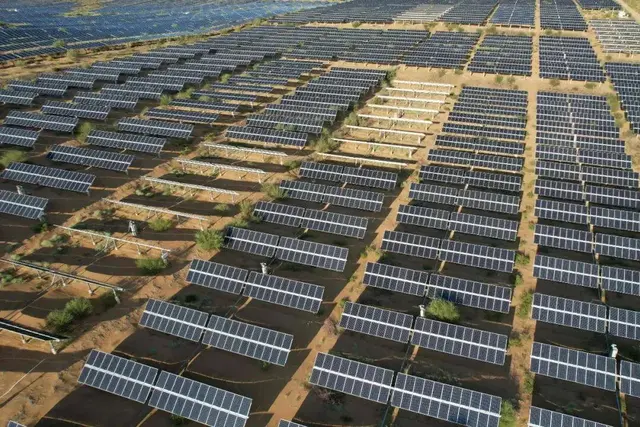
Delegates saw another side of Qinghai’s development at the province’s Clean Energy Dispatch and Green Computing Center. Organizers describe it as the first center of its kind at the provincial level in China.
Guests were shown how the center monitors solar, wind and hydropower generation and matches it with the needs of data centers and computing enterprises. The system is intended to help Qinghai use the advantages of its high-altitude environment — abundant sunshine, significant wind potential and available land — to develop the digital economy.
The center’s work includes forecasting renewable energy generation, monitoring energy consumption and carbon emissions, tracking the origin of “green” electricity and coordinating the energy system with computing loads. Qinghai already has a number of projects focused on using clean energy to power computing infrastructure and data centers.
For the delegation, the facility provided an example of how environmental policy can be combined with technological development. While Qinghai’s traditional image is associated with pastures, monasteries and mountain landscapes, the region’s new strategy also includes data centers, smart energy grids and low-carbon industry.
From the loom to export markets
At Shengyuan Carpet Group Co., Ltd., delegates saw how traditional craftsmanship has developed into an export-oriented business. The Xining-based manufacturer was established in 2007 and produces handmade Tibetan carpets and tapestries, as well as carpet coverings for hotels, cruise ships and major public facilities.
The company combines several stages of production, from spinning and dyeing to design and weaving. Its production facilities can manufacture both traditional handmade products and modern carpet coverings for commercial interiors.
Delegates were shown the design process, selection of dyes and hand-weaving techniques and learned how the company combines commercial production with the preservation of Tibetan patterns and traditional methods. Its products are supplied to markets in Europe, North America, the Middle East, Australia and other regions.
The story of Shengyuan shows that craftsmanship can remain competitive not only because of its cultural value. It has found new applications in architecture, the hotel industry, interior design and the decoration of transport infrastructure. As a result, young specialists can find opportunities not only in workshops but also in industrial design, logistics, marketing and international trade.
Passing the baton to a new generation
The final scheduled part of the program was the youth dialogue “Youth Connects the Future,” held on 20 September at Qinghai Minzu University. Delegates from Central Asia joined young people and entrepreneurs from Qinghai in workshops on cloisonné thangka techniques and silver and copper craftsmanship, tasted Chinese tea and learned about local traditions.
The discussion focused on the role of young people in developing the Silk Road Economic Belt and prospects for cooperation in environmental protection, digital technologies and cultural tourism. The dialogue format combined the official agenda with practical interaction, as participants discussed how traditional industries are adapting to new markets and the role of social media, universities and youth entrepreneurship in this process.
In their closing remarks, organizers described the week not simply as an excursion, calling on participants to become “young ambassadors” who would take what they had seen and heard in Qinghai back to their home countries. In this sense, the program was intended not only to introduce participants to the Chinese region but also to establish horizontal ties among young journalists, students, entrepreneurs and representatives of civil society organizations from Central Asia.
At the source of three rivers
The final stop after the university dialogue was Qinghai Lake, China’s largest inland saltwater lake. Covering more than 4,600 square kilometers, its ecosystem is important for migratory birds, rare fish species and wetlands in northwestern China.
In Chinese tradition, the lake is known as the “island of birds” and the “fish storehouse.” Delegates learned about the ecological restoration of coastal areas, visited an observation site for the spawning migration of the endemic Qinghai naked carp, Gymnocypris przewalskii, and had an opportunity to observe birds in the coastal wetlands.
The Qinghai naked carp is a rare endemic fish adapted to the lake’s cold, brackish waters. Restoring its population has become one of the region’s notable conservation tasks. Along with restrictions on fishing and the restoration of spawning grounds, attention is being paid to protecting the rivers along which the fish migrates to reproduce.
The trip to the lake provided a symbolic conclusion to the program. Over several days, participants saw several interconnected aspects of Qinghai: the historical heritage of the Silk Road, Tibetan medicine and art, the conservation of rare animals, clean energy, modern manufacturing and the restoration of aquatic ecosystems.
Qinghai, often described as the “source of three rivers” and China’s “water tower,” is increasingly positioning itself as a platform for cultural and youth exchanges under the Belt and Road Initiative. For delegates from Central Asia, the trip provided an opportunity to see the region not only as a geographic source of rivers and natural resources, but also as a space where traditions, technology and international cooperation are shaping a new agenda for Generation Z.