Tashkent, Uzbekistan (UzDaily.uz) — The Second Ferghana Peace Forum in Khujand outlined priorities for further strengthening trust, good-neighbourly relations and practical cooperation among the countries of the Ferghana Valley.
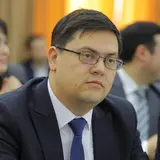
Eldor Aripov, Director of the Institute for Strategic and Regional Studies under the President of the Republic of Uzbekistan (ISRS), addressed the Second Ferghana Peace Forum, entitled “The Ferghana Valley: A Space of Peace, Trust and Prosperity,” taking place on 28–29 September in Khujand, Sughd Region, Tajikistan.
Established at the initiative of President Shavkat Mirziyoyev of Uzbekistan, the forum brings together representatives of government institutions, the expert community, academia and civil society from Uzbekistan, Kyrgyzstan and Tajikistan for the second consecutive year.
While the inaugural forum in Ferghana marked an important step towards creating a shared platform for dialogue, Eldor Aripov said that the current meeting in Khujand seeks to give this process a more practical dimension by translating mutual understanding into joint initiatives and projects.
The Ferghana Process as a Reflection of a New Regional Reality
In his remarks, the ISRS Director noted that the Ferghana Peace Forum is gradually becoming a distinct mechanism for regional cooperation, reflecting Central Asia’s growing agency.
This means that the region’s states are increasingly able both to shape their own security and development agenda and to advance it collectively at the international level.
As an example, Eldor Aripov cited the UN General Assembly’s adoption in 2026 of three initiatives put forward by Central Asian states concerning the peaceful resolution of border disputes, stronger regional cooperation and economic integration, and the promotion of peace for future generations.
Their adoption without a vote, he said, demonstrates strong international support for regional initiatives and shows that Central Asia is increasingly advancing a constructive agenda of its own.
At the same time, Eldor Aripov stressed that agreements between states must translate into tangible improvements in people’s lives.
“Security is more than the absence of conflict. It means being able to study, work, trade and travel freely, maintain family ties, share resources and look to the future with confidence,” he said.
The next stage of the Ferghana Process should therefore focus on establishing a lasting framework for practical cooperation centred on the interests of people living in border areas.
Four Priorities for the Next Stage of Cooperation
Against this backdrop, Eldor Aripov identified four priority areas that could give fresh impetus to the development of the Ferghana Valley.
First: Turn Border Areas into Centres of Growth
The ISRS Director noted that, historically, the Ferghana Valley has brought people together, serving as a crossroads of trade routes, cultures and human interaction.
Today, this historical role can take on renewed economic significance through the development of cross-border infrastructure, logistics, e-commerce, tourism routes and markets in border areas.
The combined market, substantial workforce and production capacity of the three countries provide a foundation for joint ventures and collaborative projects in agricultural processing, light industry, mechanical engineering and other sectors.
Economic connectivity should thus become a practical means of strengthening trust between neighbours.
Second: Invest in People-to-People Ties
Lasting peace cannot be secured through intergovernmental agreements alone. It also requires strong, direct ties between societies.
Eldor Aripov therefore emphasised the need to expand educational and youth exchanges, strengthen cooperation between universities and research centres, implement joint cultural projects, and foster contacts among journalists, entrepreneurs and civil society representatives.
Particular attention was given to the youth dimension of the Ferghana Process.
In June 2026, an initiative for young peacebuilders from Kyrgyzstan, Tajikistan and Uzbekistan was launched in Ferghana.
To give this work a lasting foundation, Eldor Aripov proposed establishing a “Central Asian Young Peacebuilders Club” in Ferghana under the auspices of the Ferghana Peace Forum.
Another practical proposal was to organise summer camps for young community leaders from border regions, using existing recreational camp facilities in the Ferghana Region.
He stressed that the younger generation should play a leading role in promoting a culture of trust and good-neighbourly relations across Central Asia.
Third: Manage Shared Resources and Risks Together
Eldor Aripov devoted particular attention to shared challenges that transcend national borders.
Water resources, land conditions, climate change, environmental threats and demographic pressures directly affect all three countries’ parts of the Ferghana Valley.
Under these circumstances, he noted, it is essential to move from fragmented responses to joint risk management.
Among the practical measures proposed were joint monitoring of environmental and social risks, data sharing, the introduction of green technologies and more efficient use of natural resources.
This approach would help address emerging problems more effectively and prevent them from escalating into wider social tensions.
Fourth: Unlock the Potential of Cooperation between Border Regions
According to the ISRS Director, direct cooperation between the border regions of the three countries remains an important source of further development.
Many issues that directly affect people’s daily lives are addressed at the local level, from trade and transport to agriculture, the environment, education and the use of infrastructure.
Eldor Aripov therefore called for more active direct engagement among local authorities, entrepreneurs, farmers, universities and civil society organisations.
Possible mechanisms include regular meetings between representatives of border regions, joint business forums, and partnerships between cities and municipalities.
“Economic ties strengthen the shared interest in good-neighbourly relations while creating greater scope for resolving disagreements through political and diplomatic means,” he emphasised.
From a Forum to a Sustained Ferghana Process
A separate part of Eldor Aripov’s address focused on the institutional development of the Ferghana Peace Forum.
He recalled that, at the Seventh Consultative Meeting of the Heads of State of Central Asia, President Shavkat Mirziyoyev proposed transforming the Ferghana Peace Forum into a regular international forum.
In the ISRS Director’s view, institutionalisation should ensure continuity without turning the Ferghana Process into a cumbersome bureaucratic structure.
Particular importance should therefore be attached to establishing a standing expert mechanism capable of supporting the forum’s initiatives from concept to implementation.
To this end, he proposed forming a project group comprising representatives of strategic research institutes in Uzbekistan, Kyrgyzstan and Tajikistan, as well as international organisations.
The group could provide expert support for the forum’s initiatives, develop specific projects and facilitate their implementation.
The Ferghana Valley: A Laboratory for a New Regional Reality
Concluding his remarks, Eldor Aripov stressed that the distinctive value of the Ferghana Process lies in its ability to connect political agreements with people’s practical needs and interests.
“The Ferghana Valley is a laboratory for a new regional reality, in which the security of one’s neighbours is seen as part of one’s own security, and their development as an opportunity for shared growth,” the ISRS Director said.
He noted that the success of the Ferghana Peace Forum would be measured not only by the regularity of its meetings, but above all by the extent to which the ideas discussed translate into new projects, lasting ties and joint initiatives.
“Peace in the Ferghana Valley must become not only a historic achievement, but also an enduring foundation for the prosperity of its peoples,” Eldor Aripov concluded.
The Second Ferghana Peace Forum thus marked a transition to the next stage of regional cooperation: from building trust to establishing mechanisms for shared development.
In this context, the Ferghana Valley is emerging as more than a geographical area. It is becoming one of the clearest examples of how Central Asia is shaping a new culture of good-neighbourly relations, rooted in mutual responsibility, practical cooperation and a shared commitment to peace.
Background: The Second Ferghana Peace Forum is organised by the Center for Strategic Research under the President of the Republic of Tajikistan and the Executive Authority of Sughd Region, with the support of the Government of the Republic of Tajikistan.
The forum provides a platform for open dialogue among experts, institutions and civil society on strengthening peace, trust, good-neighbourly relations and sustained cooperation among the countries and peoples of the Ferghana Valley.